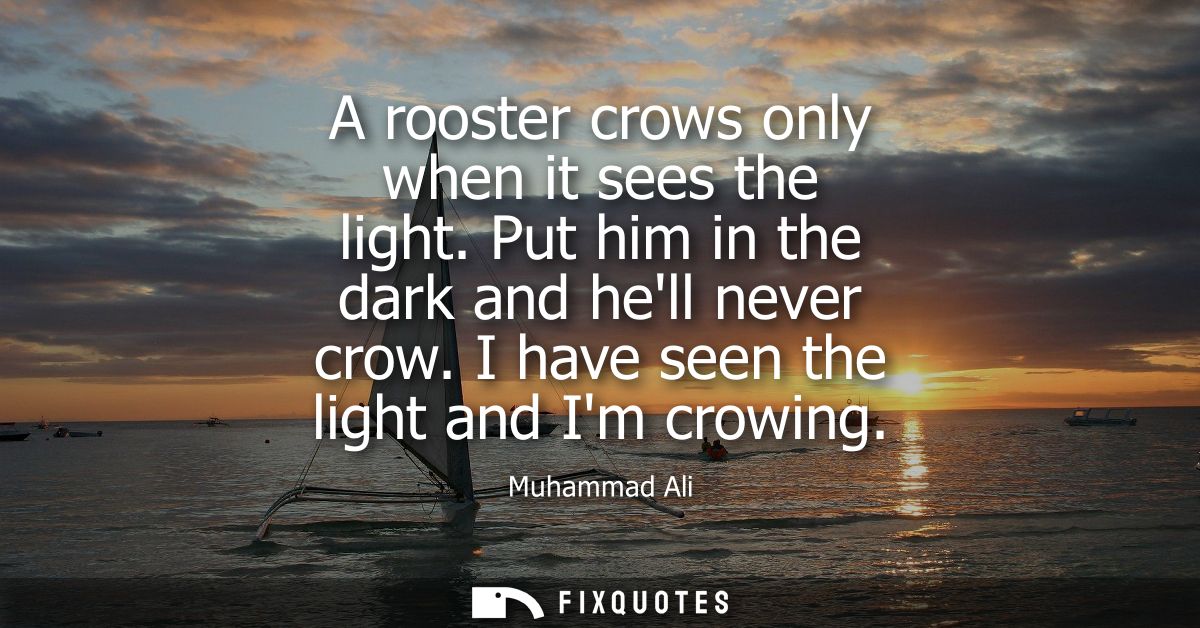
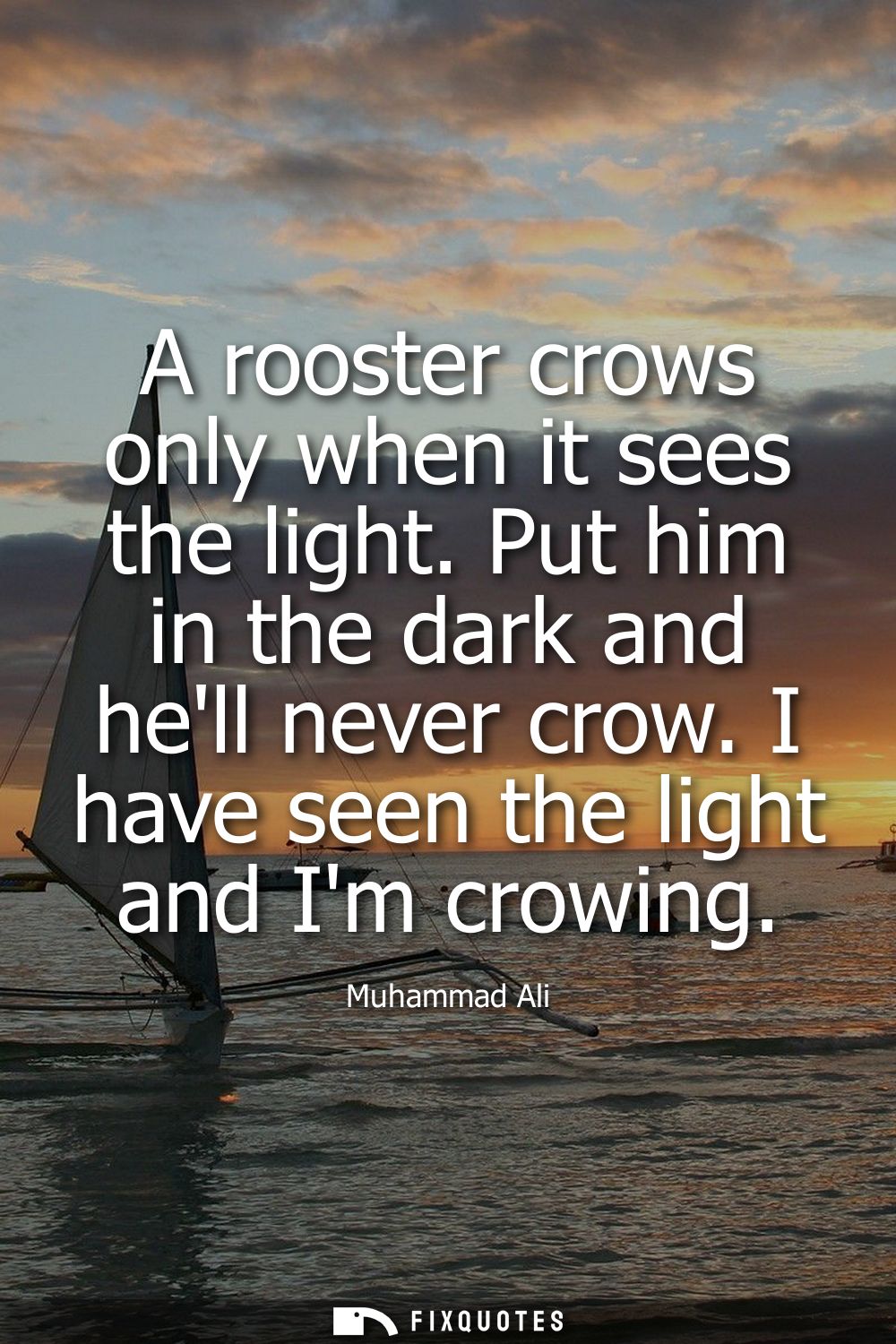
"A rooster crows only when it sees the light. Put him in the dark and he'll never crow. I have seen the light and I'm crowing"
About this Quote
Ali frames confidence as a kind of natural law. The rooster doesn’t crow to be liked; it crows because the conditions have changed. That’s the subtext doing the heavy lifting: if you’re annoyed by Ali’s talking, you’re really annoyed by what the light reveals - that he’s arrived, that he’s unavoidable, that the old rules of humility were written for people kept in the dark. In a sport that historically tried to package fighters as compliant entertainers, Ali insists on authorship. He narrates himself, loudly.
The line also works as camouflage. It’s playful, almost folksy, which softens the edge of a radical act: a Black athlete in the 1960s and 70s claiming the right to be seen on his own terms, not just through promoters, sportswriters, or patriotic scripts. “I have seen the light” flirts with religious language, but he flips salvation into self-recognition. The crow is both celebration and warning: the day has broken, and he’s not going back into the dark.
Quote Details
| Topic | Motivational |
|---|---|
| Source | Help us find the source |
| Cite |
Citation Formats
APA Style (7th ed.)
Ali, Muhammad. (2026, January 17). A rooster crows only when it sees the light. Put him in the dark and he'll never crow. I have seen the light and I'm crowing. FixQuotes. https://fixquotes.com/quotes/a-rooster-crows-only-when-it-sees-the-light-put-24940/
Chicago Style
Ali, Muhammad. "A rooster crows only when it sees the light. Put him in the dark and he'll never crow. I have seen the light and I'm crowing." FixQuotes. January 17, 2026. https://fixquotes.com/quotes/a-rooster-crows-only-when-it-sees-the-light-put-24940/.
MLA Style (9th ed.)
"A rooster crows only when it sees the light. Put him in the dark and he'll never crow. I have seen the light and I'm crowing." FixQuotes, 17 Jan. 2026, https://fixquotes.com/quotes/a-rooster-crows-only-when-it-sees-the-light-put-24940/. Accessed 12 Feb. 2026.