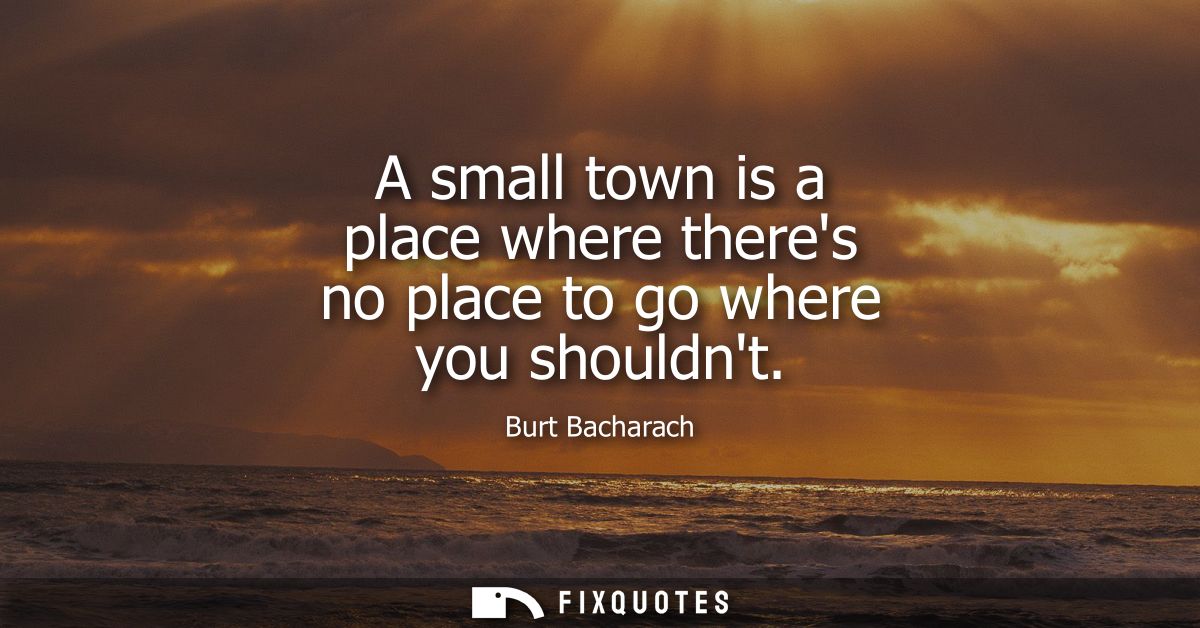
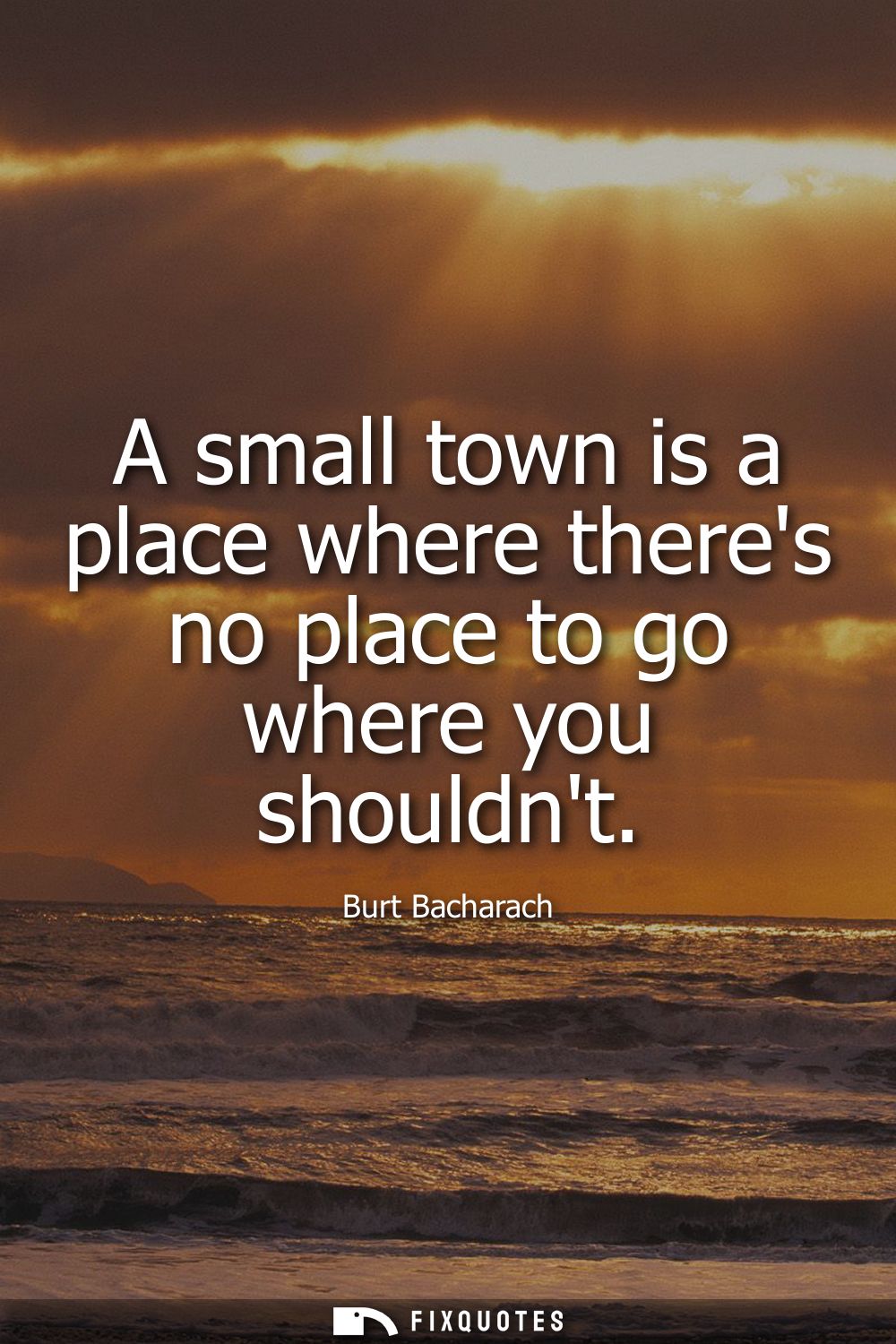
"A small town is a place where there's no place to go where you shouldn't"
About this Quote
The genius is the moral grammar. “Shouldn’t” suggests wrongdoing without naming it, letting the listener supply their own forbidden corner: the bar where your ex works, the diner booth where rumors are minted, the street you avoid because it’s where your family story curdled. Bacharach frames constraint as etiquette, which is exactly how small-town surveillance works best: not as policing, but as propriety. It’s a punchline built from soft power.
Context matters. Bacharach wrote in an era when American pop sold escape fantasies with immaculate chord changes. His music often sounds like motion - airport lounges, city lights, adult longing with a passport. This quip flips that sensibility into a cramped civic psychology: the place where you can’t disappear, because everyone already has a version of you. It’s affectionate and faintly allergic, the kind of observation that comes from someone who understands that intimacy and claustrophobia share a wall.
Quote Details
| Topic | Witty One-Liners |
|---|---|
| Source | Help us find the source |
| Cite |
Citation Formats
APA Style (7th ed.)
Bacharach, Burt. (2026, January 17). A small town is a place where there's no place to go where you shouldn't. FixQuotes. https://fixquotes.com/quotes/a-small-town-is-a-place-where-theres-no-place-to-46291/
Chicago Style
Bacharach, Burt. "A small town is a place where there's no place to go where you shouldn't." FixQuotes. January 17, 2026. https://fixquotes.com/quotes/a-small-town-is-a-place-where-theres-no-place-to-46291/.
MLA Style (9th ed.)
"A small town is a place where there's no place to go where you shouldn't." FixQuotes, 17 Jan. 2026, https://fixquotes.com/quotes/a-small-town-is-a-place-where-theres-no-place-to-46291/. Accessed 30 Mar. 2026.