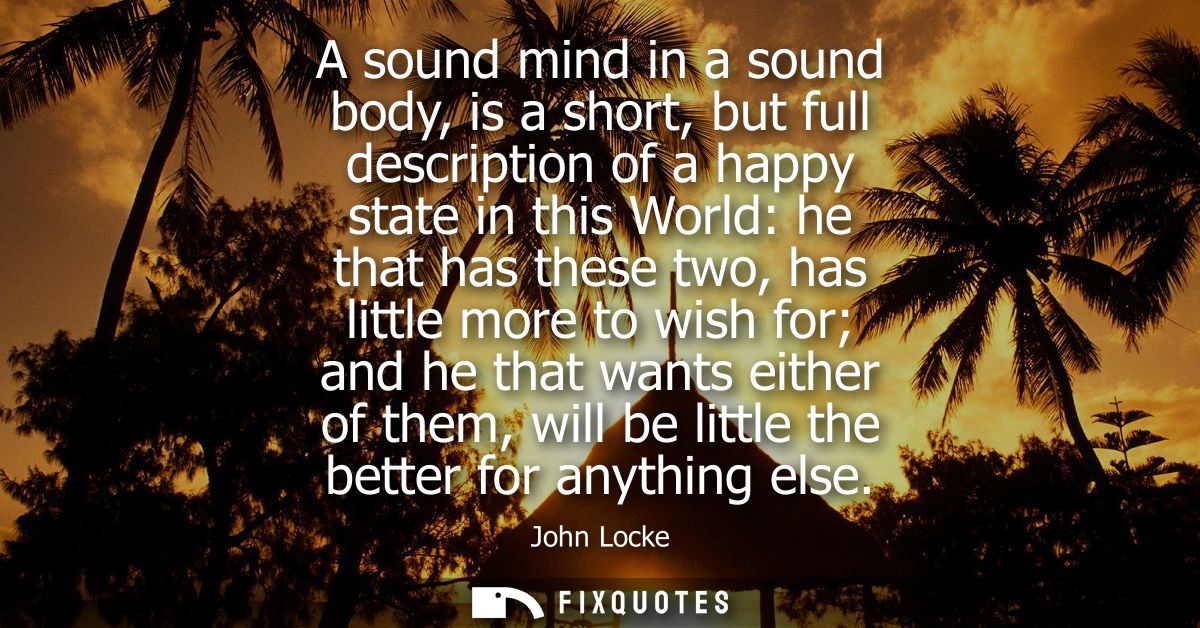
"A sound mind in a sound body, is a short, but full description of a happy state in this World: he that has these two, has little more to wish for; and he that wants either of them, will be little the better for anything else"
About this Quote
The subtext is more bracing than the tone suggests. Locke demotes wealth, status, even learning when they’re detached from the basic equipment needed to use them. “He that wants either… will be little the better for anything else” is a warning against ornamental advantage: money can’t buy composure; education can’t compensate for a body that can’t sustain work or attention; social power is brittle if the person wielding it is internally fractured. It’s also an early-modern rebuke to aristocratic leisure, implying that privilege without disciplined health is a kind of fraud.
Context matters: Locke is writing in a period obsessed with forming citizens fit for a new commercial, scientific, and constitutional order. His “happy state” is worldly on purpose, suspicious of metaphysical consolation. Happiness here isn’t ecstasy; it’s functional freedom. A mind that can judge and a body that can act - that’s the minimum viable toolkit for autonomy, and the foundation on which all the nicer things (virtue, prosperity, even “reason” itself) precariously sit.
Quote Details
| Topic | Health |
|---|---|
| Source | John Locke, Some Thoughts Concerning Education (1693). Contains the passage beginning “A sound mind in a sound body…” in Locke’s essay on education/health. |
| Cite |
Citation Formats
APA Style (7th ed.)
Locke, John. (2026, January 17). A sound mind in a sound body, is a short, but full description of a happy state in this World: he that has these two, has little more to wish for; and he that wants either of them, will be little the better for anything else. FixQuotes. https://fixquotes.com/quotes/a-sound-mind-in-a-sound-body-is-a-short-but-full-32120/
Chicago Style
Locke, John. "A sound mind in a sound body, is a short, but full description of a happy state in this World: he that has these two, has little more to wish for; and he that wants either of them, will be little the better for anything else." FixQuotes. January 17, 2026. https://fixquotes.com/quotes/a-sound-mind-in-a-sound-body-is-a-short-but-full-32120/.
MLA Style (9th ed.)
"A sound mind in a sound body, is a short, but full description of a happy state in this World: he that has these two, has little more to wish for; and he that wants either of them, will be little the better for anything else." FixQuotes, 17 Jan. 2026, https://fixquotes.com/quotes/a-sound-mind-in-a-sound-body-is-a-short-but-full-32120/. Accessed 7 Mar. 2026.