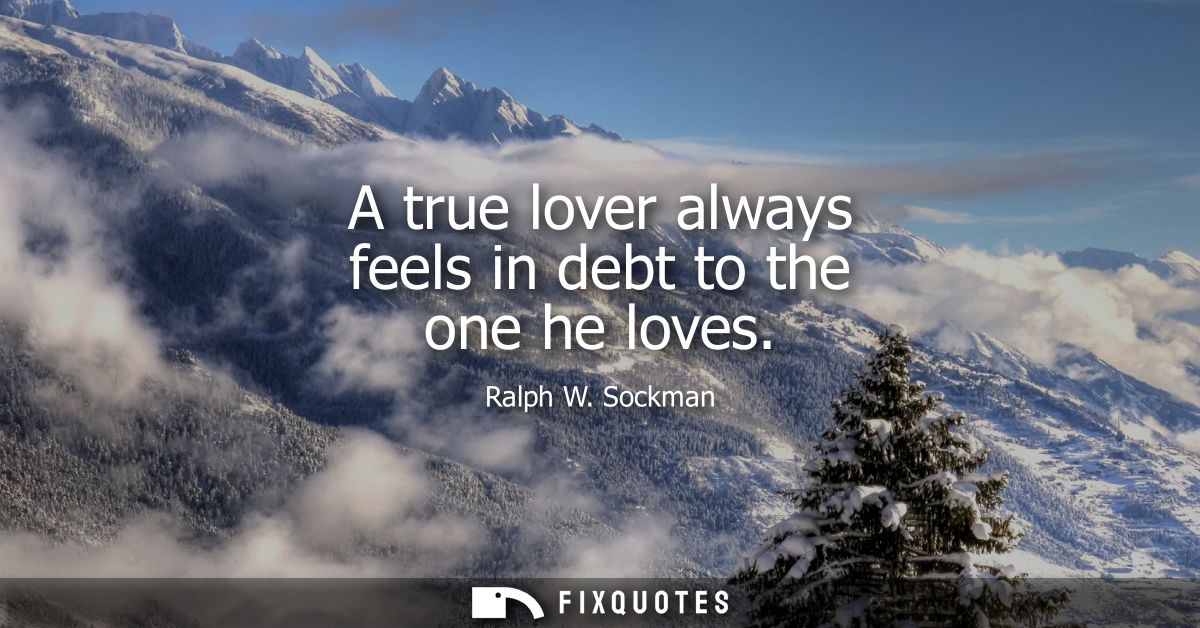
"A true lover always feels in debt to the one he loves"
About this Quote
Debt is an odd, bracing metaphor to hang on love because it makes romance sound less like a rush of feeling and more like an obligation you can never quite square. Sockman, a prominent American Protestant preacher and radio voice in the mid-20th century, chooses it deliberately. He’s pushing against the consumer version of affection that keeps score in the believer’s favor: I gave, therefore I’m owed. In his framing, the moral arithmetic flips. The lover doesn’t feel entitled; he feels answerable.
The intent is pastoral and corrective. Sockman is preaching a discipline of gratitude: if you truly see the beloved clearly, you experience their presence as gift, not as entitlement. “Always” is doing heavy work here. It doesn’t describe a temporary blush of appreciation; it proposes a lasting posture. The debt is not meant to be repaid and closed out like a loan. It’s a standing acknowledgment that care received exceeds anything you can “deserve,” so the only honest response is continued care.
The subtext also carries Sockman’s theological DNA. In Christian rhetoric, indebtedness often signals grace: you live because you’ve been given life; you love because you’ve been loved first. Sockman domesticates that cosmic idea into everyday intimacy. If that sounds risky - debt can slide into guilt or power imbalance - that’s the edge of the line. He’s betting on a nobler reading: indebtedness as humility, the antidote to possessiveness, the refusal to turn another person into a paycheck for your needs.
The intent is pastoral and corrective. Sockman is preaching a discipline of gratitude: if you truly see the beloved clearly, you experience their presence as gift, not as entitlement. “Always” is doing heavy work here. It doesn’t describe a temporary blush of appreciation; it proposes a lasting posture. The debt is not meant to be repaid and closed out like a loan. It’s a standing acknowledgment that care received exceeds anything you can “deserve,” so the only honest response is continued care.
The subtext also carries Sockman’s theological DNA. In Christian rhetoric, indebtedness often signals grace: you live because you’ve been given life; you love because you’ve been loved first. Sockman domesticates that cosmic idea into everyday intimacy. If that sounds risky - debt can slide into guilt or power imbalance - that’s the edge of the line. He’s betting on a nobler reading: indebtedness as humility, the antidote to possessiveness, the refusal to turn another person into a paycheck for your needs.
Quote Details
| Topic | Romantic |
|---|---|
| Source | Help us find the source |
More Quotes by Ralph
Add to List