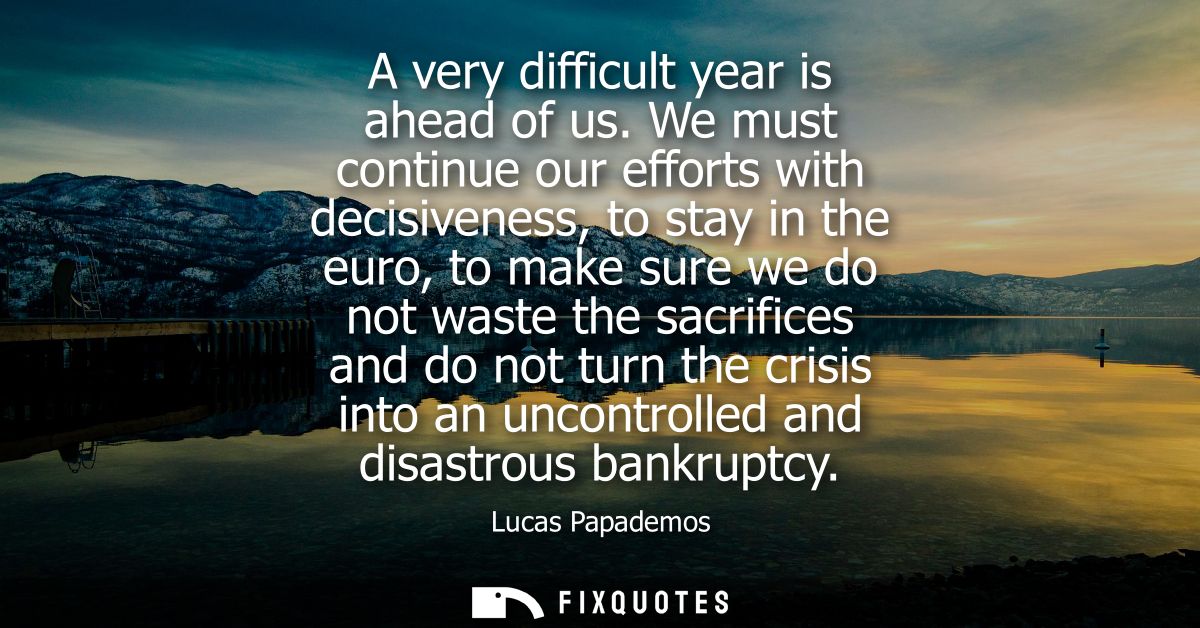
"A very difficult year is ahead of us. We must continue our efforts with decisiveness, to stay in the euro, to make sure we do not waste the sacrifices and do not turn the crisis into an uncontrolled and disastrous bankruptcy"
About this Quote
The most revealing phrase is “stay in the euro.” It’s presented as a civic virtue rather than a contested strategy, turning a monetary arrangement into a moral commitment. That move matters in a crisis where legitimacy is brittle: he’s not just defending austerity; he’s defending Greece’s place in Europe’s political imagination. The euro becomes shorthand for stability, modernity, and belonging, even as the terms of rescue packages were widely experienced as humiliating.
“Do not waste the sacrifices” is the emotional lever. It converts sunk costs into political capital, urging citizens to keep paying because they’ve already paid. The word “sacrifices” sanctifies wage cuts, unemployment, and pension reductions, asking people to treat economic hardship as an offering with a promised payoff. It’s also a warning to strike movements and anti-austerity parties: protest isn’t framed as pressure for better terms; it’s framed as sabotage.
Then comes the hard edge: “uncontrolled and disastrous bankruptcy.” Fear isn’t incidental here; it’s the governing tool. The sentence is designed to close the exit doors, making continuity feel like courage and change feel like panic.
Quote Details
| Topic | Money |
|---|---|
| Source | Help us find the source |
| Cite |
Citation Formats
APA Style (7th ed.)
Papademos, Lucas. (2026, January 16). A very difficult year is ahead of us. We must continue our efforts with decisiveness, to stay in the euro, to make sure we do not waste the sacrifices and do not turn the crisis into an uncontrolled and disastrous bankruptcy. FixQuotes. https://fixquotes.com/quotes/a-very-difficult-year-is-ahead-of-us-we-must-102304/
Chicago Style
Papademos, Lucas. "A very difficult year is ahead of us. We must continue our efforts with decisiveness, to stay in the euro, to make sure we do not waste the sacrifices and do not turn the crisis into an uncontrolled and disastrous bankruptcy." FixQuotes. January 16, 2026. https://fixquotes.com/quotes/a-very-difficult-year-is-ahead-of-us-we-must-102304/.
MLA Style (9th ed.)
"A very difficult year is ahead of us. We must continue our efforts with decisiveness, to stay in the euro, to make sure we do not waste the sacrifices and do not turn the crisis into an uncontrolled and disastrous bankruptcy." FixQuotes, 16 Jan. 2026, https://fixquotes.com/quotes/a-very-difficult-year-is-ahead-of-us-we-must-102304/. Accessed 12 Feb. 2026.