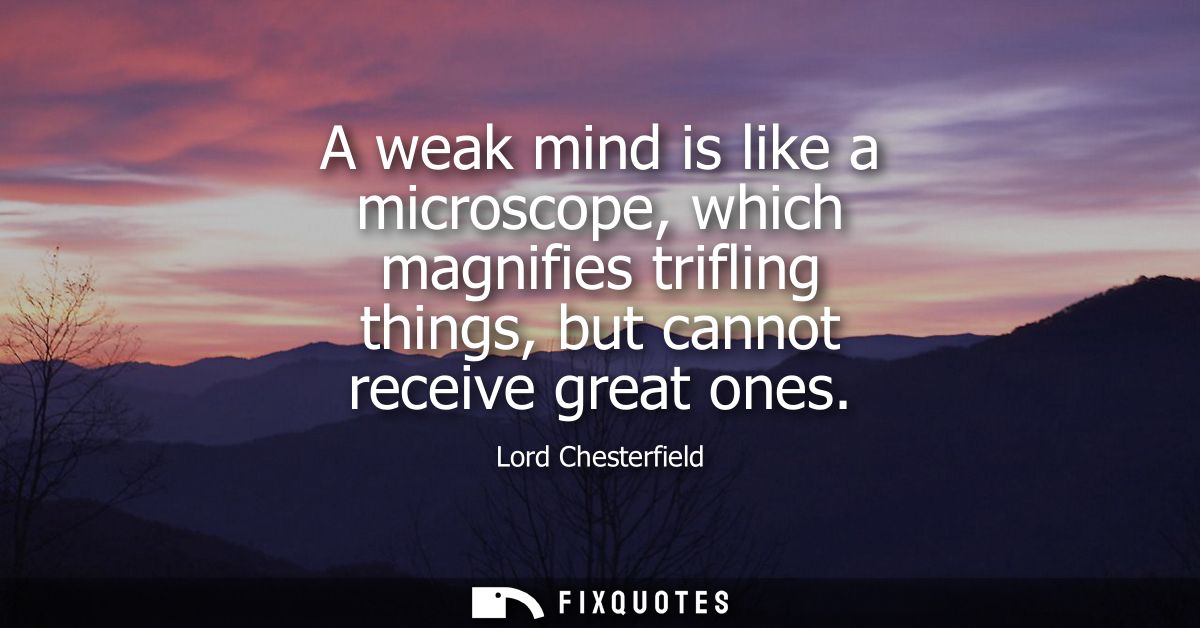
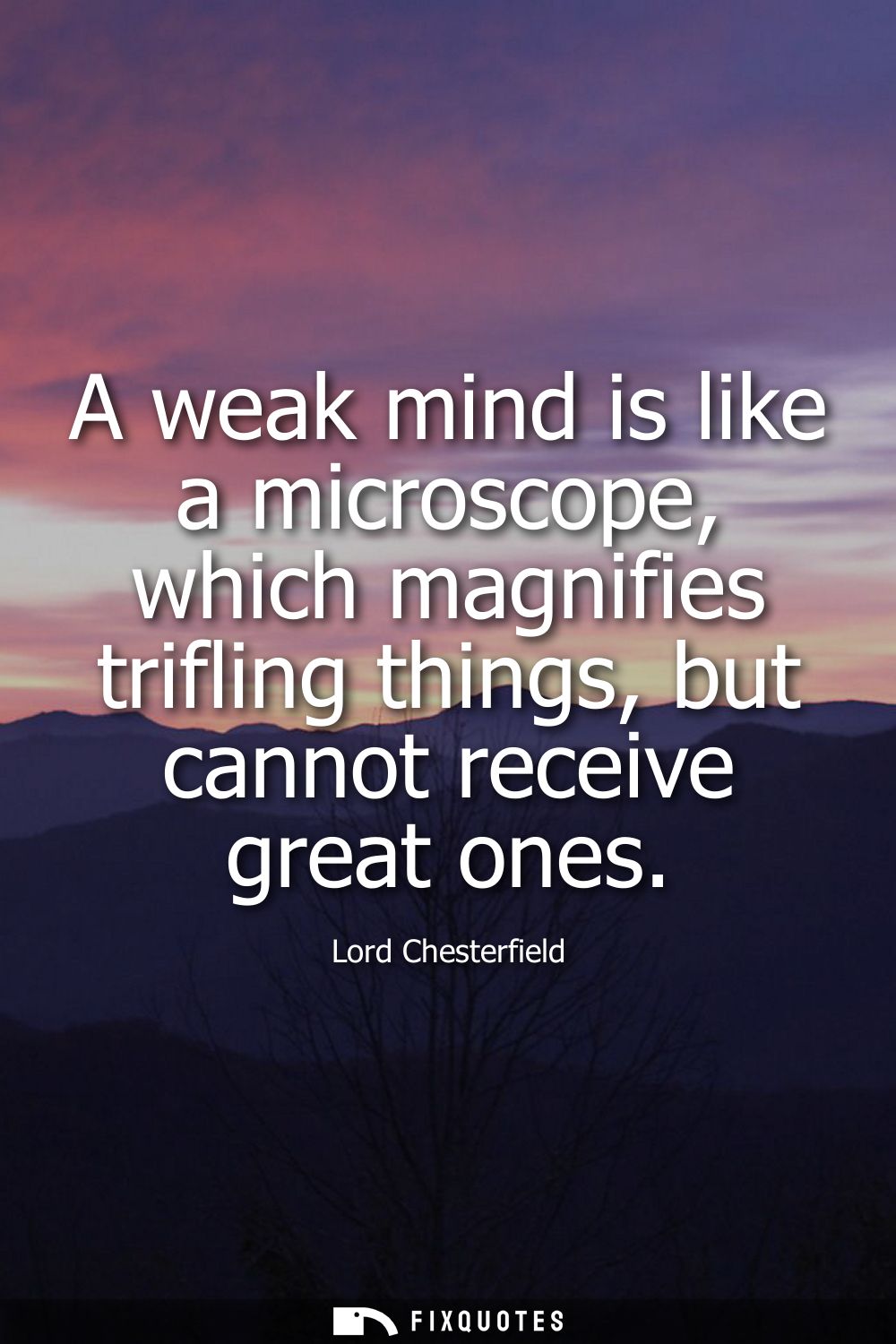
"A weak mind is like a microscope, which magnifies trifling things, but cannot receive great ones"
About this Quote
Chesterfield’s jab lands because it flatters the reader while pretending to diagnose the problem. A “weak mind” isn’t empty; it’s busy, even industrious, peering through a microscope at specks of scandal, protocol, and petty grievance. The insult is surgical: you can have acuity without judgment. Microscopes don’t lie, but they also don’t tell you what matters. By choosing an instrument of precision, Chesterfield implies that small-mindedness often masquerades as rigor - the pedant’s greatest defense.
The subtext is aristocratic and managerial. Chesterfield, a statesman famous for coaching social polish, is drawing a line between the sort of attention that wins you points at court (catching tiny errors, reciting minutiae, policing manners) and the mental scale required for real governance. “Cannot receive great ones” is a striking phrase: greatness isn’t merely missed, it can’t even be taken in. The mind here is not a sovereign intellect but a vessel with the wrong aperture.
Context matters. In an 18th-century Britain of faction, patronage, and expanding empire, “great things” meant strategy, consequence, and long horizons - not just ideas, but decisions that carried bodies and money. Chesterfield’s metaphor warns against a politics of trivia, where the loudest competence is the ability to nitpick. It’s also a personal ethic: cultivate breadth, proportion, and taste, or you’ll become the kind of clever that mistakes irritation for insight. The line reads like advice, but it operates as social sorting: the truly fit to lead are those who can see the large shape of events without being hypnotized by dust on the glass.
The subtext is aristocratic and managerial. Chesterfield, a statesman famous for coaching social polish, is drawing a line between the sort of attention that wins you points at court (catching tiny errors, reciting minutiae, policing manners) and the mental scale required for real governance. “Cannot receive great ones” is a striking phrase: greatness isn’t merely missed, it can’t even be taken in. The mind here is not a sovereign intellect but a vessel with the wrong aperture.
Context matters. In an 18th-century Britain of faction, patronage, and expanding empire, “great things” meant strategy, consequence, and long horizons - not just ideas, but decisions that carried bodies and money. Chesterfield’s metaphor warns against a politics of trivia, where the loudest competence is the ability to nitpick. It’s also a personal ethic: cultivate breadth, proportion, and taste, or you’ll become the kind of clever that mistakes irritation for insight. The line reads like advice, but it operates as social sorting: the truly fit to lead are those who can see the large shape of events without being hypnotized by dust on the glass.
Quote Details
| Topic | Wisdom |
|---|
More Quotes by Lord
Add to List