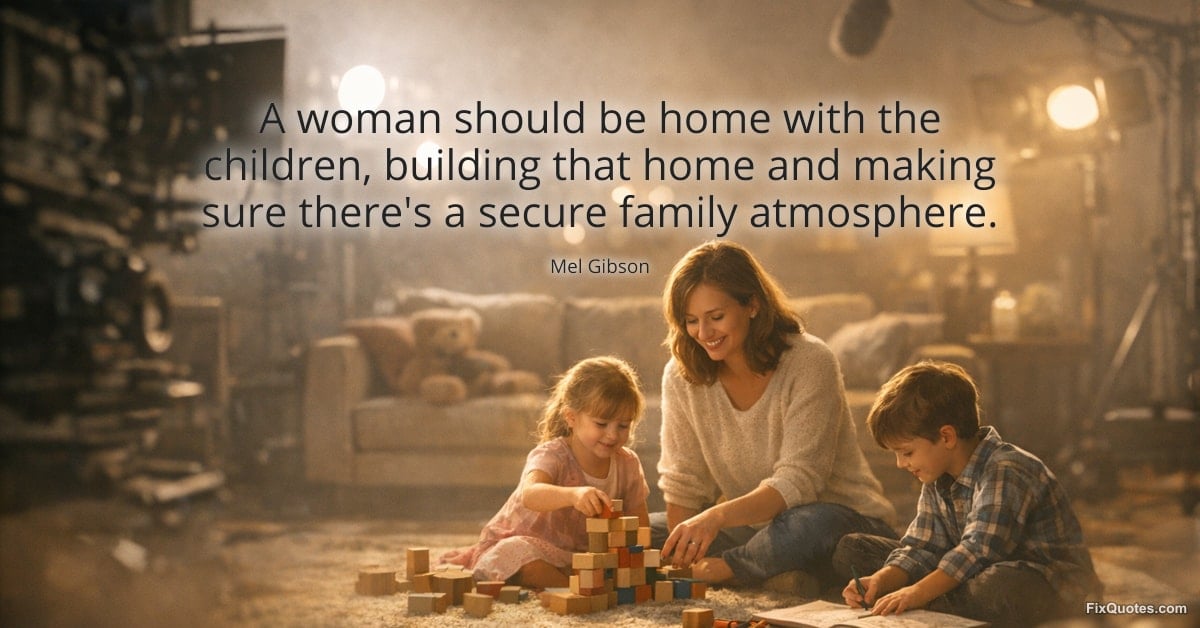
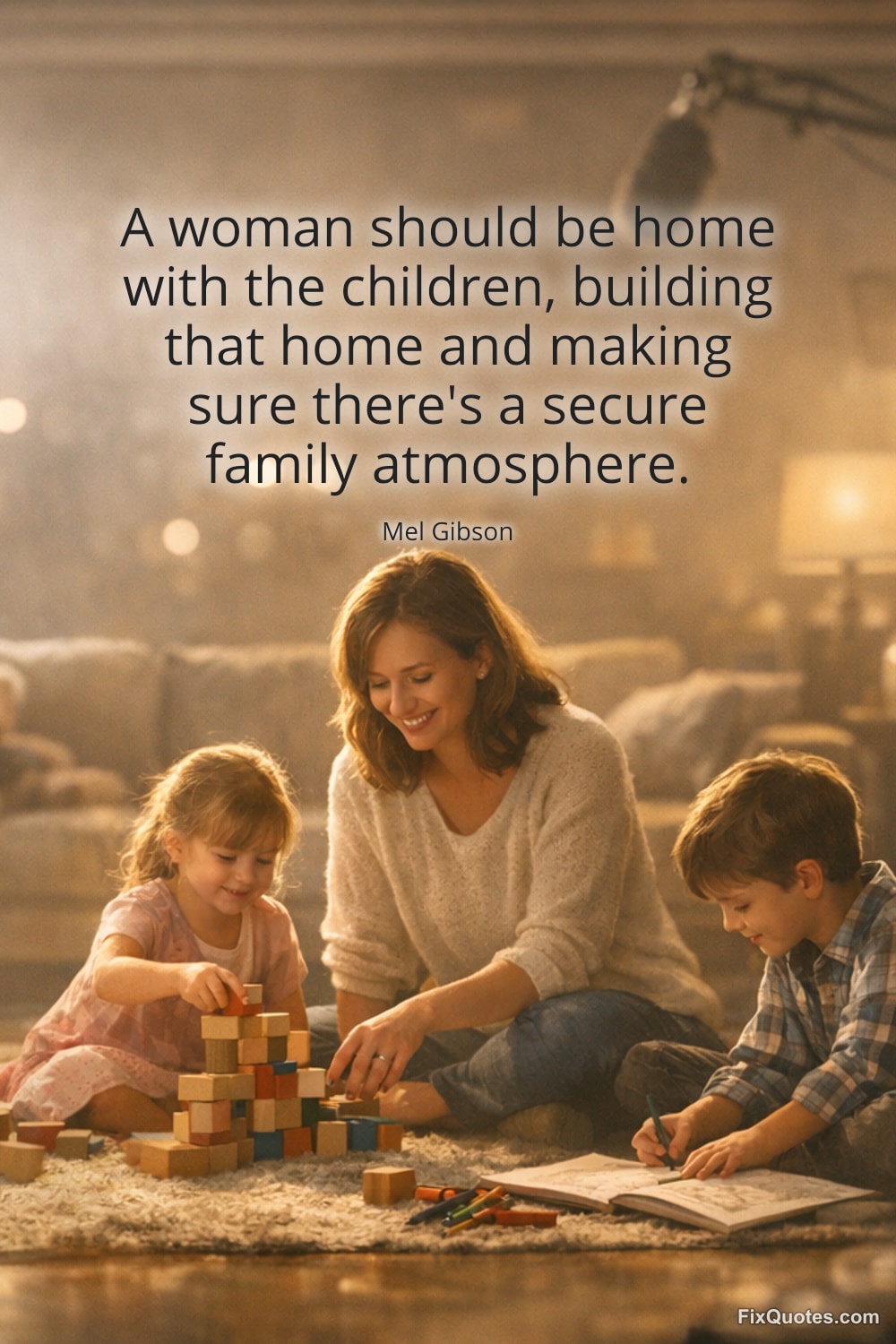
"A woman should be home with the children, building that home and making sure there's a secure family atmosphere"
About this Quote
The intent is straightforward: reaffirm a gendered division of labor where domestic stability is framed as women’s work. The phrasing does a lot of quiet coercion. “Should” isn’t advice; it’s moral pressure. “Secure family atmosphere” is the kicker, borrowing the language of safety and child welfare to make the claim feel less like control and more like care. It’s a rhetorical move that collapses complex realities - economics, single parenthood, ambition, childcare costs, unequal pay - into a sentimental image of mom-as-foundation.
The subtext is even sharper: if a home feels unstable, the implied culprit is the woman who isn’t “building” it correctly. Men’s role is conspicuously absent, as if fatherhood is naturally external, optional, or primarily financial. That omission isn’t accidental; it’s how patriarchal norms sustain themselves without ever naming power.
Context matters because Gibson isn’t just any actor; he’s a lightning rod. Public controversies around his personal life and public statements make lines like this read less like a private value and more like a cultural flare - the kind that invites applause from traditionalists and alarm from anyone who hears autonomy being negotiated away under the soothing banner of “family.”
Quote Details
| Topic | Mother |
|---|---|
| Source | Later attribution: Compelling Conversations: Questions and Quotations on Tim... (Eric H. Roth, Toni Aberson, 2010) modern compilationISBN: 9780982617809 · ID: o81RAgAAQBAJ
Evidence:
... A woman should be home with the children, building that home and making sure there's a secure family atmosphere.” —Mel Gibson (1956–), film director, actor 11. “The best way to keep children at home is make the home atmosphere pleasant ... |
| Cite |
Citation Formats
APA Style (7th ed.)
Gibson, Mel. (2026, February 9). A woman should be home with the children, building that home and making sure there's a secure family atmosphere. FixQuotes. https://fixquotes.com/quotes/a-woman-should-be-home-with-the-children-building-163403/
Chicago Style
Gibson, Mel. "A woman should be home with the children, building that home and making sure there's a secure family atmosphere." FixQuotes. February 9, 2026. https://fixquotes.com/quotes/a-woman-should-be-home-with-the-children-building-163403/.
MLA Style (9th ed.)
"A woman should be home with the children, building that home and making sure there's a secure family atmosphere." FixQuotes, 9 Feb. 2026, https://fixquotes.com/quotes/a-woman-should-be-home-with-the-children-building-163403/. Accessed 12 Mar. 2026.