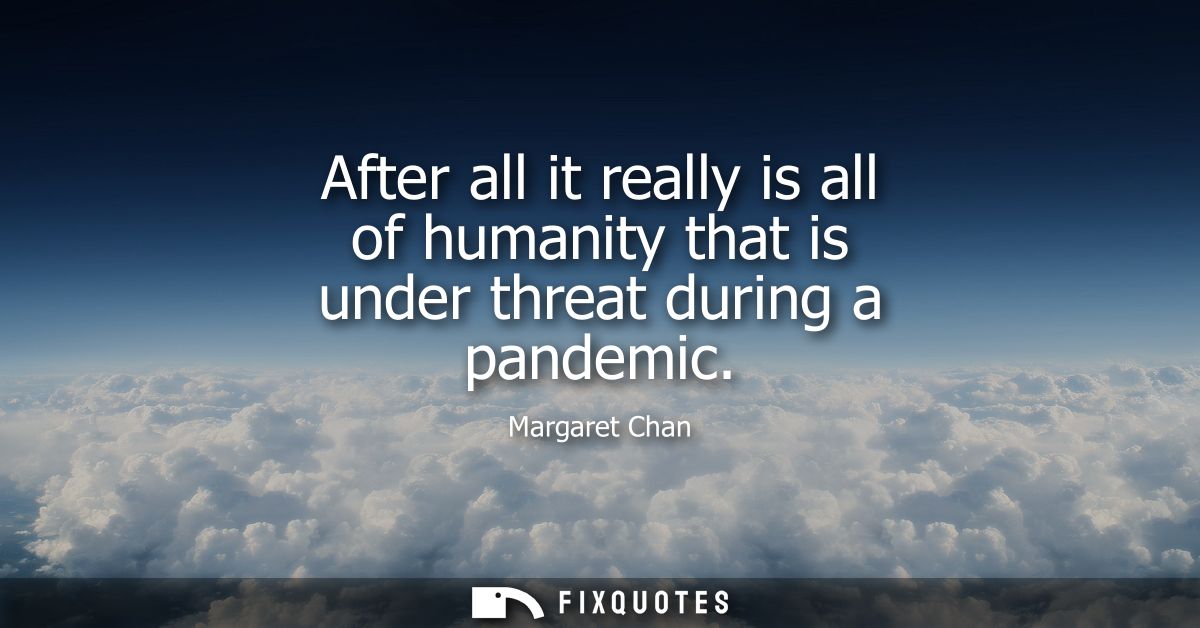
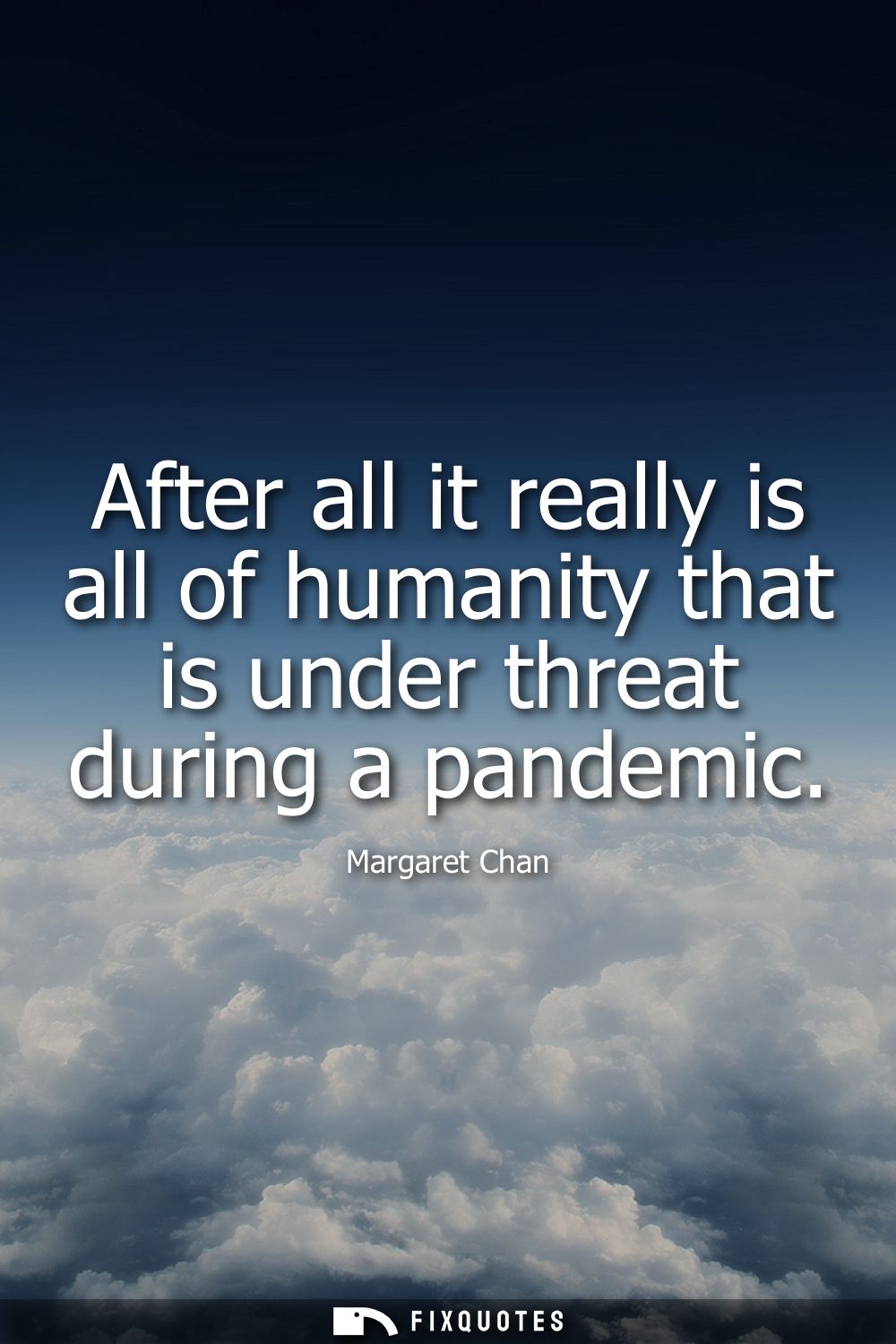
"After all it really is all of humanity that is under threat during a pandemic"
About this Quote
The phrase “really is” reads like a corrective, an attempt to puncture complacency and the comforting fiction that borders, wealth, or modern medicine can fully insulate anyone. The subtext is about political behavior: pandemics expose the limits of sovereignty and the cost of delayed cooperation. If “all of humanity” is under threat, then hoarding resources, slow-walking transparency, or treating global health as charity becomes not just unethical but irrationally self-defeating.
Context matters here: Chan’s WHO years were shaped by SARS’s legacy and later crises like H1N1 and Ebola, when public trust, international coordination, and the legitimacy of global institutions were constantly tested. The sentence is an argument for solidarity, but it’s also an indictment. It implies that the true danger isn’t only the pathogen; it’s the human tendency to fragment into competing interests precisely when collective action is most necessary.
Quote Details
| Topic | Health |
|---|---|
| Source | Help us find the source |
| Cite |
Citation Formats
APA Style (7th ed.)
Chan, Margaret. (2026, January 16). After all it really is all of humanity that is under threat during a pandemic. FixQuotes. https://fixquotes.com/quotes/after-all-it-really-is-all-of-humanity-that-is-112946/
Chicago Style
Chan, Margaret. "After all it really is all of humanity that is under threat during a pandemic." FixQuotes. January 16, 2026. https://fixquotes.com/quotes/after-all-it-really-is-all-of-humanity-that-is-112946/.
MLA Style (9th ed.)
"After all it really is all of humanity that is under threat during a pandemic." FixQuotes, 16 Jan. 2026, https://fixquotes.com/quotes/after-all-it-really-is-all-of-humanity-that-is-112946/. Accessed 12 Feb. 2026.