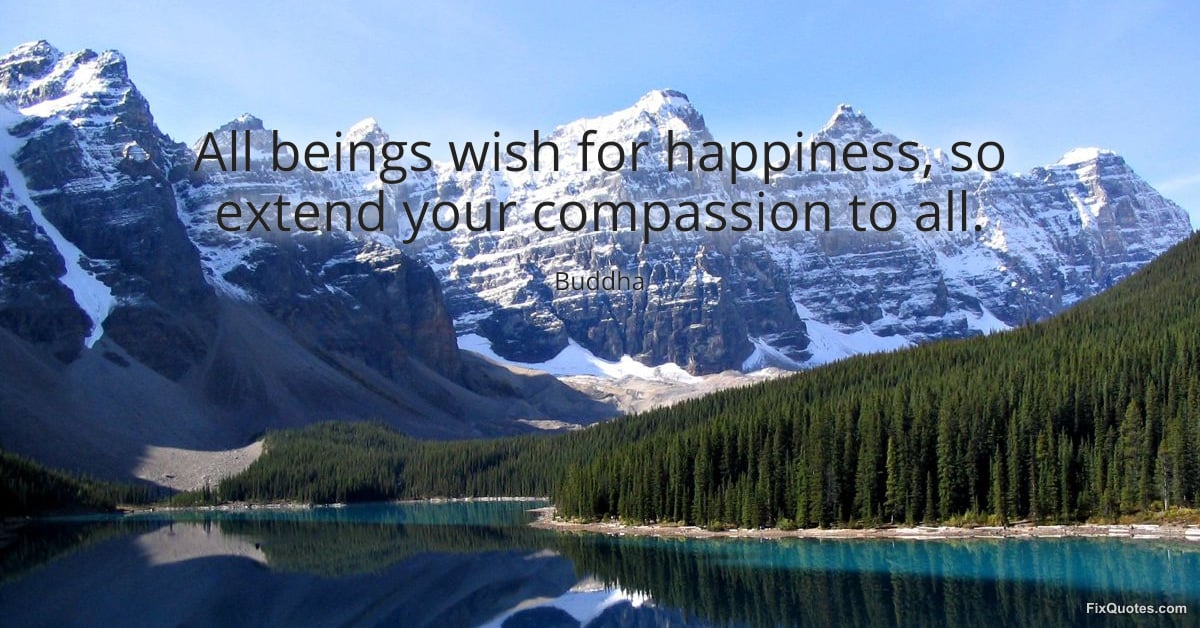
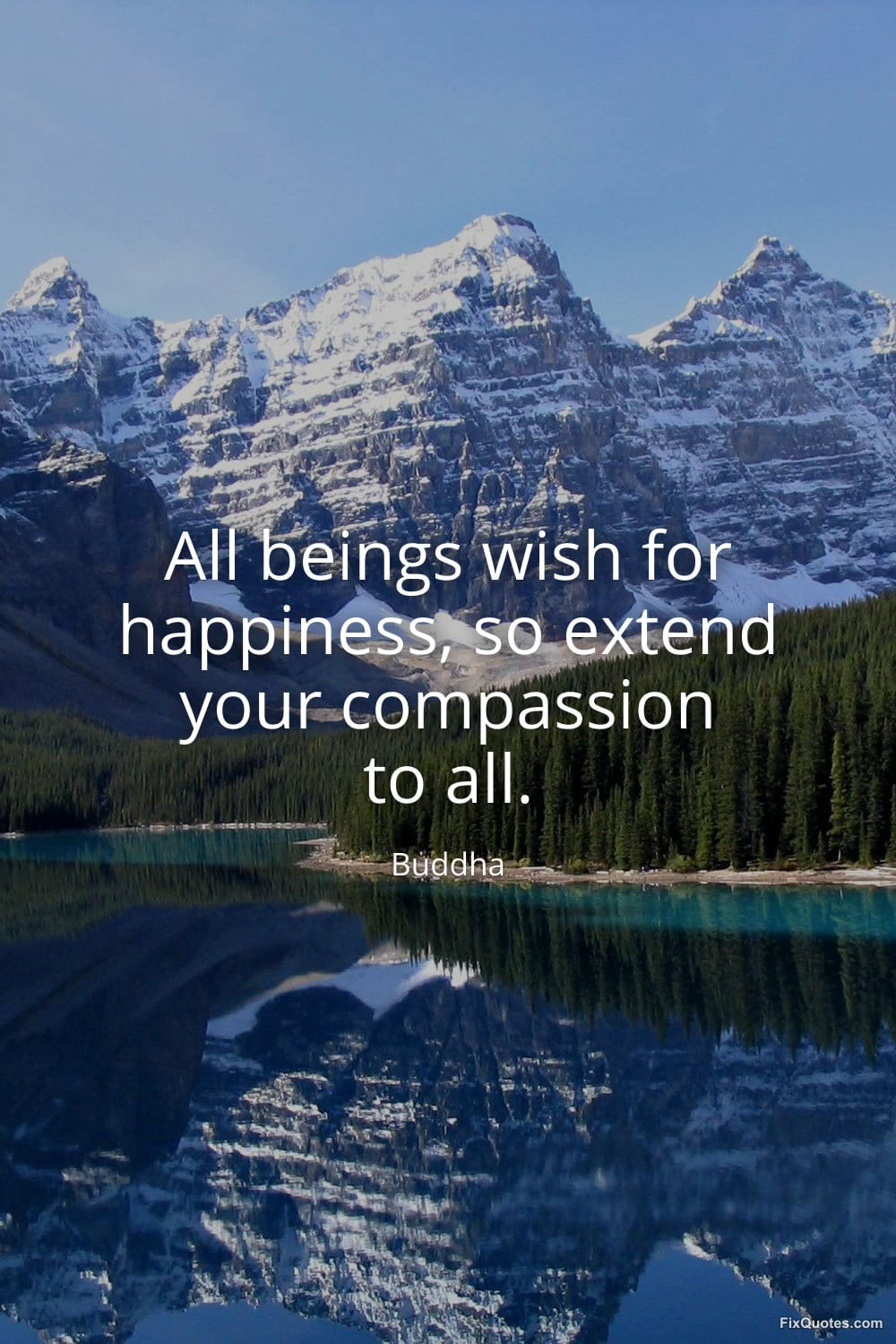
"All beings wish for happiness, so extend your compassion to all"
About this Quote
A moral universe gets built here in a single move: not from doctrine, tribe, or divine favoritism, but from shared vulnerability. Buddha starts with a plain observation: every being wants happiness. That premise is almost disarmingly modest. It does not ask whether others are wise, good, useful, or like us. It asks only that we recognize a common condition. From there, compassion becomes less a saintly extra than a rational consequence.
That is the quote's force. It shifts ethics away from reward and punishment and toward perception. If suffering and the desire for well-being are universal, then cruelty begins to look like a failure of understanding before it is a failure of character. The subtext is radical: the boundary between self and other, which usually organizes human selfishness, is morally unstable. Your pain matters to you for the same reason another's pain matters to them.
In the context of Buddhist thought, this line carries the weight of a larger project. Compassion is not mere sentimentality; it is a discipline tied to insight. To see clearly is to see interdependence, impermanence, and the futility of clinging to the self as if it were sealed off from the world. That is why the quote remains so durable. It offers a demanding standard in deceptively gentle language. Not "be kind because virtue is admirable", but be compassionate because reality, properly understood, leaves you very little excuse not to.
That is the quote's force. It shifts ethics away from reward and punishment and toward perception. If suffering and the desire for well-being are universal, then cruelty begins to look like a failure of understanding before it is a failure of character. The subtext is radical: the boundary between self and other, which usually organizes human selfishness, is morally unstable. Your pain matters to you for the same reason another's pain matters to them.
In the context of Buddhist thought, this line carries the weight of a larger project. Compassion is not mere sentimentality; it is a discipline tied to insight. To see clearly is to see interdependence, impermanence, and the futility of clinging to the self as if it were sealed off from the world. That is why the quote remains so durable. It offers a demanding standard in deceptively gentle language. Not "be kind because virtue is admirable", but be compassionate because reality, properly understood, leaves you very little excuse not to.
Quote Details
| Topic | Kindness |
|---|---|
| Source | Help us find the source |
| Cite |
Citation Formats
APA Style (7th ed.)
Buddha. (2026, March 10). All beings wish for happiness, so extend your compassion to all. FixQuotes. https://fixquotes.com/quotes/all-beings-wish-for-happiness-so-extend-your-185932/
Chicago Style
Buddha. "All beings wish for happiness, so extend your compassion to all." FixQuotes. March 10, 2026. https://fixquotes.com/quotes/all-beings-wish-for-happiness-so-extend-your-185932/.
MLA Style (9th ed.)
"All beings wish for happiness, so extend your compassion to all." FixQuotes, 10 Mar. 2026, https://fixquotes.com/quotes/all-beings-wish-for-happiness-so-extend-your-185932/. Accessed 3 Apr. 2026.
More Quotes by Buddha
Add to List