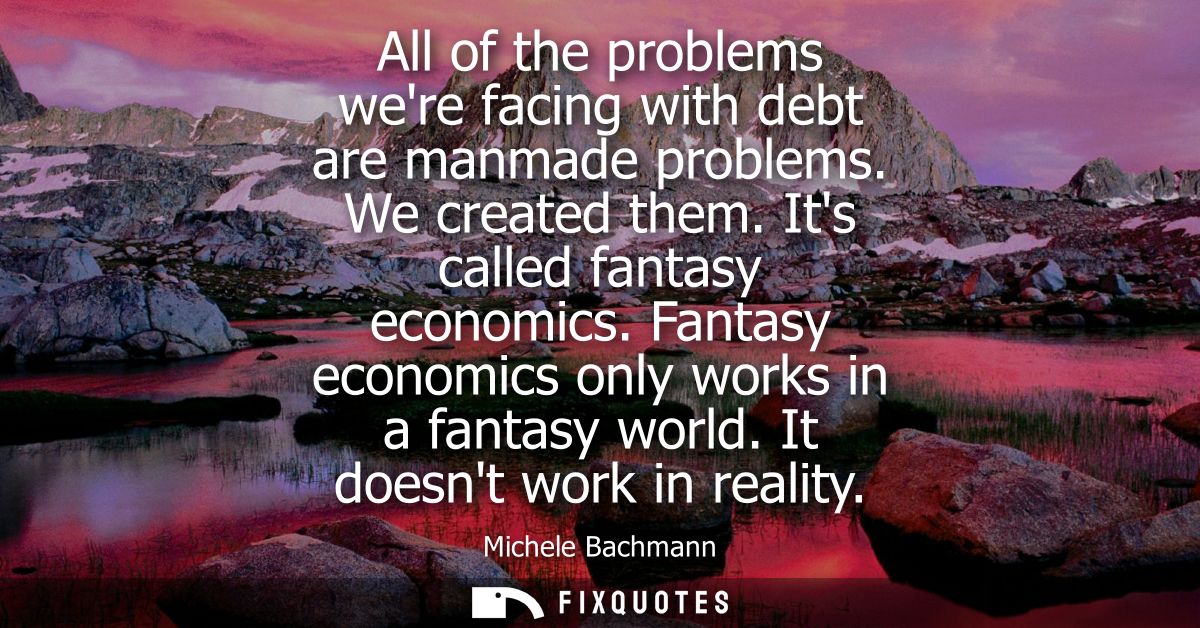
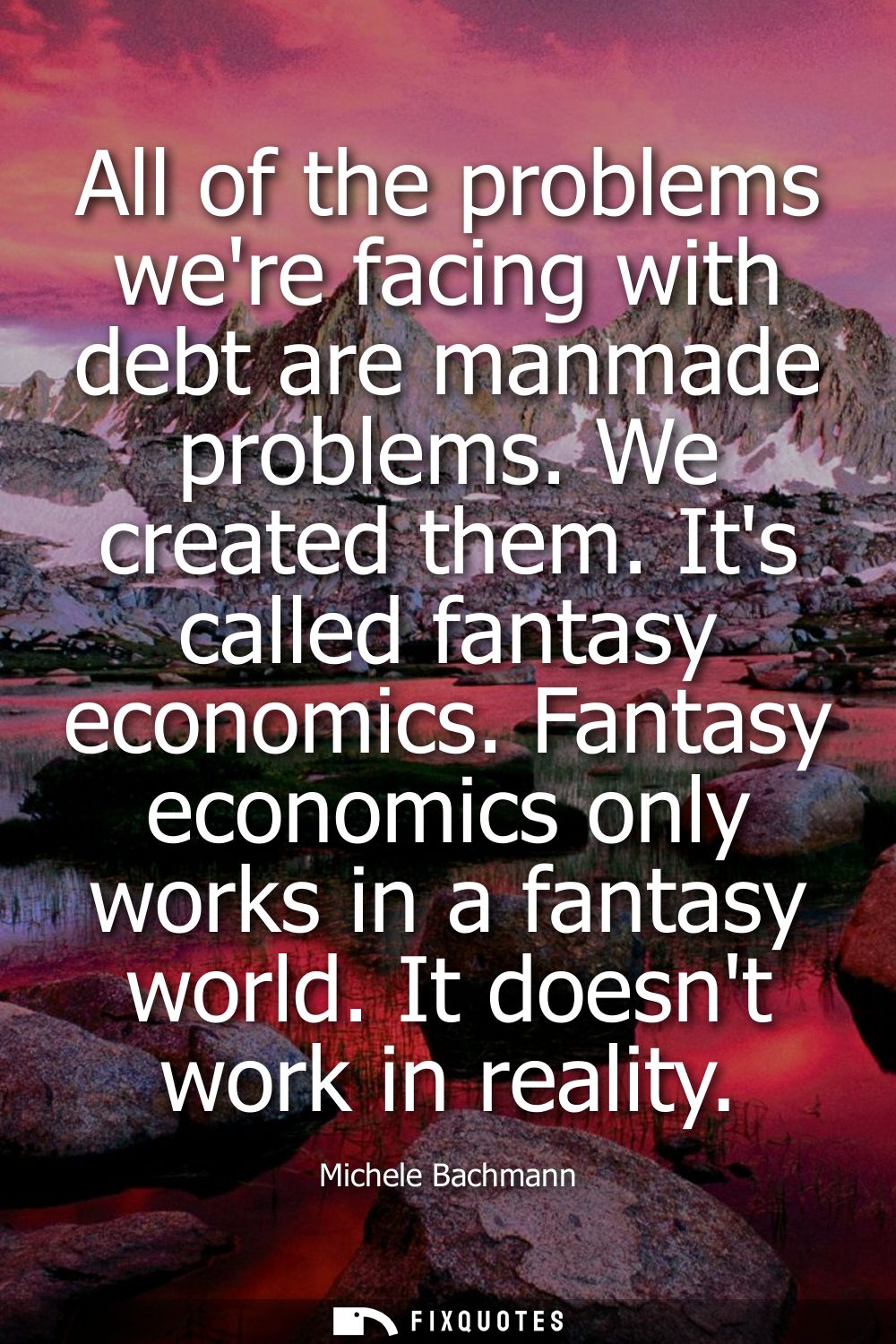
"All of the problems we're facing with debt are manmade problems. We created them. It's called fantasy economics. Fantasy economics only works in a fantasy world. It doesn't work in reality"
About this Quote
The phrasing is built for television. Short declarative sentences, repetition, and the “we created them” pivot that implicates everyone while quietly pointing at the people in charge. “Fantasy” also smuggles in a particular conservative assumption: that debt is less a tool than a temptation, a symptom of leaders promising benefits without paying for them. It flattens complicated debates about deficits, monetary policy, and recession-era stimulus into a single, emotionally satisfying contrast: reality versus make-believe.
The subtext is austerity as common sense. If debt comes from fantasy, the cure is sobriety: cuts, restraint, and suspicion of government as a dispenser of pain-free prosperity. That framing mattered in the post-2008, Tea Party-era environment, when anger at bailouts and Washington dealmaking created an audience primed to hear deficit politics as a story about discipline and betrayal. It’s less an economic argument than an identity signal: grown-ups versus dreamers, taxpayers versus spenders, “reality” as a partisan home base.
Quote Details
| Topic | Money |
|---|---|
| Source | Help us find the source |
| Cite |
Citation Formats
APA Style (7th ed.)
Bachmann, Michele. (2026, January 16). All of the problems we're facing with debt are manmade problems. We created them. It's called fantasy economics. Fantasy economics only works in a fantasy world. It doesn't work in reality. FixQuotes. https://fixquotes.com/quotes/all-of-the-problems-were-facing-with-debt-are-95982/
Chicago Style
Bachmann, Michele. "All of the problems we're facing with debt are manmade problems. We created them. It's called fantasy economics. Fantasy economics only works in a fantasy world. It doesn't work in reality." FixQuotes. January 16, 2026. https://fixquotes.com/quotes/all-of-the-problems-were-facing-with-debt-are-95982/.
MLA Style (9th ed.)
"All of the problems we're facing with debt are manmade problems. We created them. It's called fantasy economics. Fantasy economics only works in a fantasy world. It doesn't work in reality." FixQuotes, 16 Jan. 2026, https://fixquotes.com/quotes/all-of-the-problems-were-facing-with-debt-are-95982/. Accessed 1 Apr. 2026.