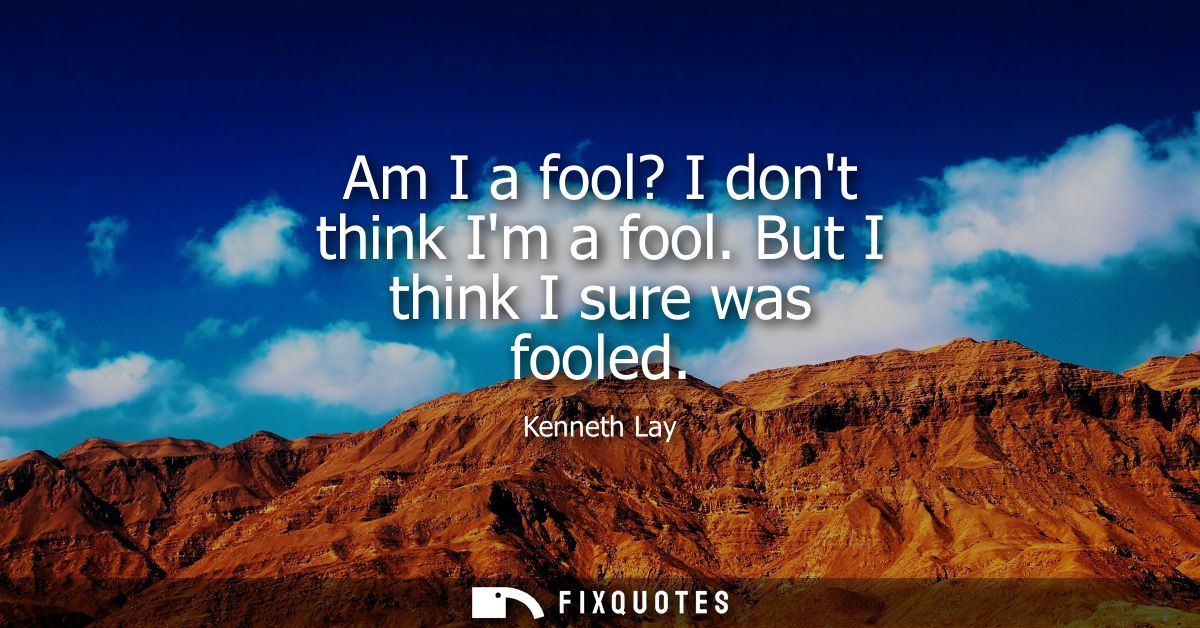
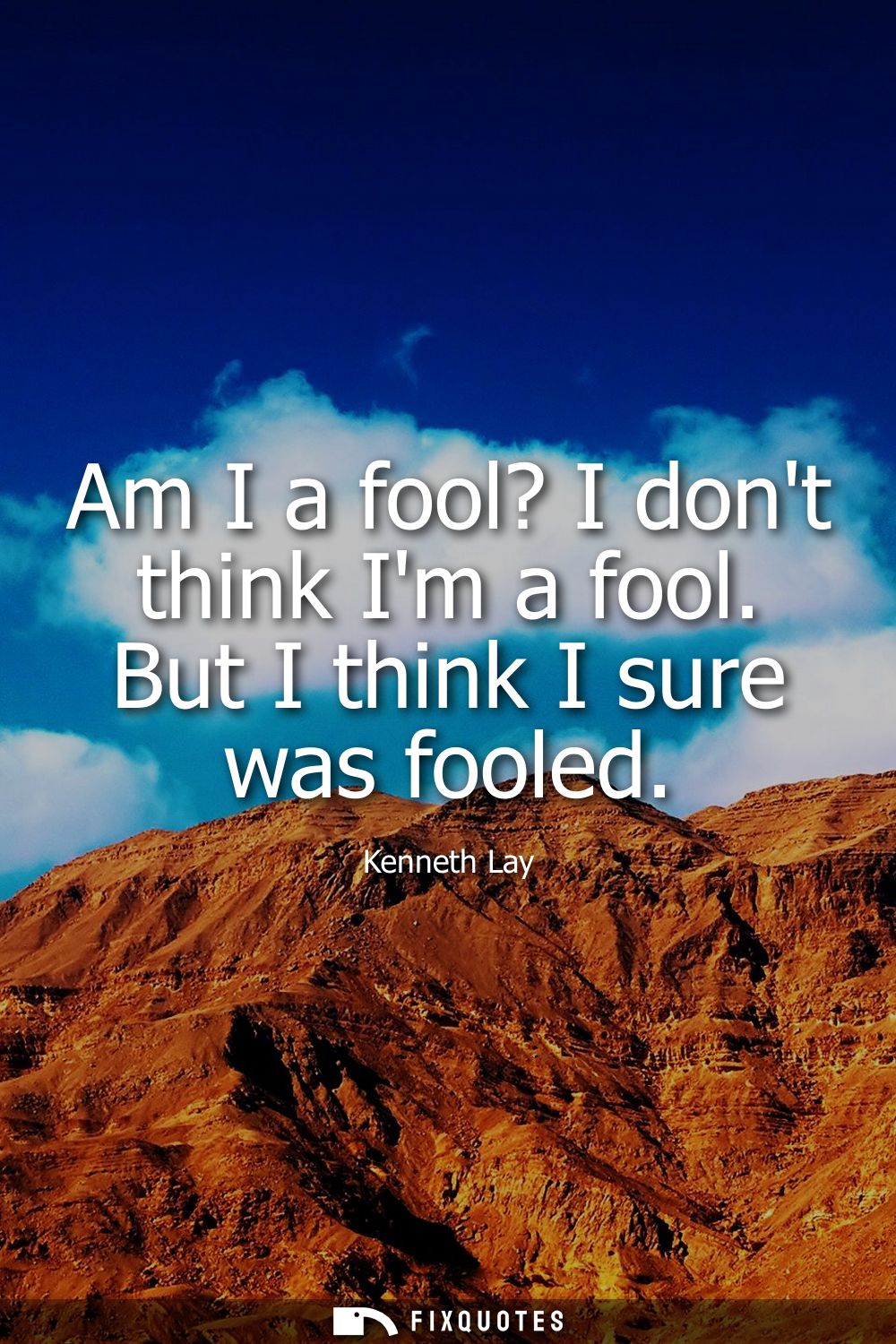
"Am I a fool? I don't think I'm a fool. But I think I sure was fooled"
About this Quote
The line tries to do two things at once: salvage dignity and outsource guilt. Kenneth Lay isn’t asking a real question so much as staging a defense in miniature, built on a neat distinction between being stupid and being deceived. “Am I a fool?” sets up the public’s accusation; “I don’t think I’m a fool” answers it with a CEO’s reflexive self-certainty. Then the pivot: “But I think I sure was fooled.” That “sure” is doing heavy lifting, a folksy intensifier meant to sound candid, even wounded, as if the speaker is less architect than mark.
Context matters because Lay isn’t a random executive caught in a bad quarter; he’s the face of Enron, a company whose collapse became shorthand for corporate fraud, accounting magic, and elite impunity. The subtext is crisis management: if you can recast yourself as the victim of smarter, sneakier subordinates, you might dodge the harsher moral category. Foolishness implies incompetence; being fooled implies trust, and trust reads as a human flaw rather than a criminal one.
The quote also reveals a cultural script of white-collar scandal: the leader as simultaneously omniscient (visionary, decisive) and powerless (misled, betrayed) depending on which posture offers legal and reputational cover. It lands because it’s almost plausible in ordinary life, then curdles under the circumstances. Coming from Lay, the sentiment isn’t humility; it’s an attempt to launder authority into innocence without ever relinquishing the authority that made the deception possible.
Context matters because Lay isn’t a random executive caught in a bad quarter; he’s the face of Enron, a company whose collapse became shorthand for corporate fraud, accounting magic, and elite impunity. The subtext is crisis management: if you can recast yourself as the victim of smarter, sneakier subordinates, you might dodge the harsher moral category. Foolishness implies incompetence; being fooled implies trust, and trust reads as a human flaw rather than a criminal one.
The quote also reveals a cultural script of white-collar scandal: the leader as simultaneously omniscient (visionary, decisive) and powerless (misled, betrayed) depending on which posture offers legal and reputational cover. It lands because it’s almost plausible in ordinary life, then curdles under the circumstances. Coming from Lay, the sentiment isn’t humility; it’s an attempt to launder authority into innocence without ever relinquishing the authority that made the deception possible.
Quote Details
| Topic | Betrayal |
|---|---|
| Source | Help us find the source |
| Cite |
Citation Formats
APA Style (7th ed.)
Lay, Kenneth. (2026, January 14). Am I a fool? I don't think I'm a fool. But I think I sure was fooled. FixQuotes. https://fixquotes.com/quotes/am-i-a-fool-i-dont-think-im-a-fool-but-i-think-i-133772/
Chicago Style
Lay, Kenneth. "Am I a fool? I don't think I'm a fool. But I think I sure was fooled." FixQuotes. January 14, 2026. https://fixquotes.com/quotes/am-i-a-fool-i-dont-think-im-a-fool-but-i-think-i-133772/.
MLA Style (9th ed.)
"Am I a fool? I don't think I'm a fool. But I think I sure was fooled." FixQuotes, 14 Jan. 2026, https://fixquotes.com/quotes/am-i-a-fool-i-dont-think-im-a-fool-but-i-think-i-133772/. Accessed 12 Feb. 2026.
More Quotes by Kenneth
Add to List