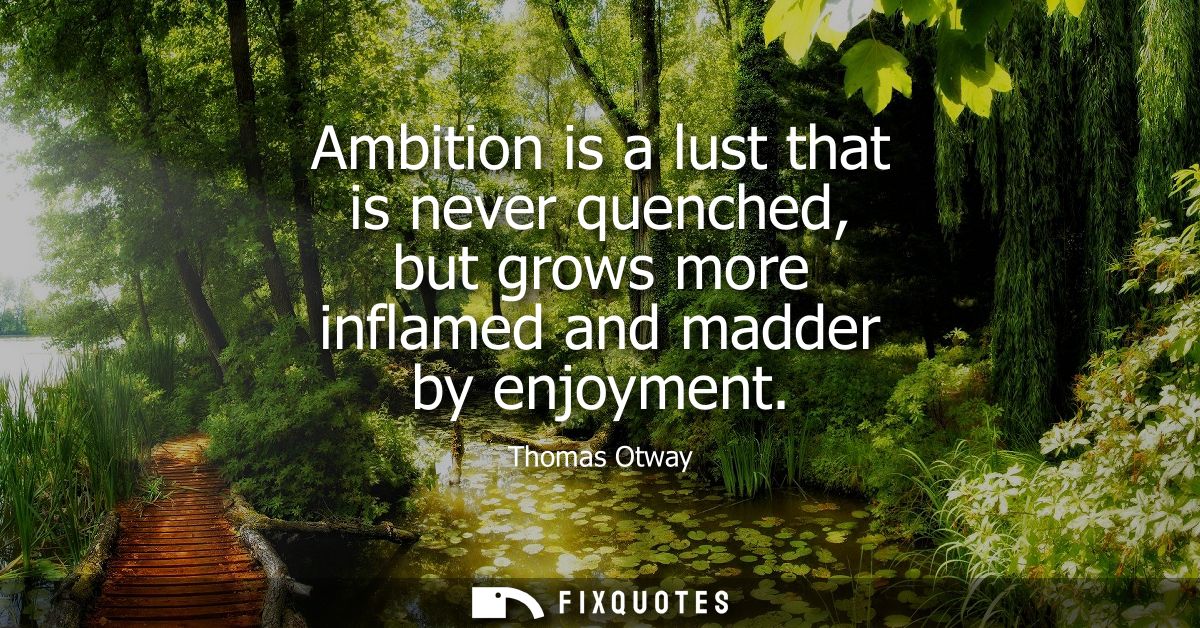
"Ambition is a lust that is never quenched, but grows more inflamed and madder by enjoyment"
About this Quote
Ambition, in Otway's hands, isn’t the tidy self-help virtue modern culture likes to brand as “drive.” It’s appetite: bodily, compulsive, and humiliatingly resistant to satisfaction. Calling it “a lust” does two things at once. It strips ambition of its noble costume and drags it into the realm of craving, where rational plans collapse into impulse. It also implies secrecy and shame: lust is something you manage in private until it starts managing you.
The line’s sting is in its perversity: enjoyment doesn’t calm the hunger, it accelerates it. Otway is describing a feedback loop, the psychology of escalation long before we had that language. Success isn’t a finish line; it’s proof of concept. Once you’ve tasted power, recognition, or advantage, the mind recalibrates. What felt like triumph becomes baseline, and the next desire has to be louder, riskier, “madder” to register. That word “madder” is doing heavy lifting: ambition isn’t merely endless, it’s corrosive to judgment, a force that turns people into their own worst strategists.
Context matters. Otway wrote in Restoration England, a period fascinated by status games, court intrigue, and the theater of public reputation. His dramas thrive on the way political ambition and romantic possessiveness mirror each other: both promise fulfillment, both breed paranoia. The intent isn’t to flatter strivers; it’s to warn them. Ambition, he suggests, doesn’t reward you with peace. It rewards you with a more demanding version of yourself.
The line’s sting is in its perversity: enjoyment doesn’t calm the hunger, it accelerates it. Otway is describing a feedback loop, the psychology of escalation long before we had that language. Success isn’t a finish line; it’s proof of concept. Once you’ve tasted power, recognition, or advantage, the mind recalibrates. What felt like triumph becomes baseline, and the next desire has to be louder, riskier, “madder” to register. That word “madder” is doing heavy lifting: ambition isn’t merely endless, it’s corrosive to judgment, a force that turns people into their own worst strategists.
Context matters. Otway wrote in Restoration England, a period fascinated by status games, court intrigue, and the theater of public reputation. His dramas thrive on the way political ambition and romantic possessiveness mirror each other: both promise fulfillment, both breed paranoia. The intent isn’t to flatter strivers; it’s to warn them. Ambition, he suggests, doesn’t reward you with peace. It rewards you with a more demanding version of yourself.
Quote Details
| Topic | Wisdom |
|---|---|
| Source | Help us find the source |
More Quotes by Thomas
Add to List