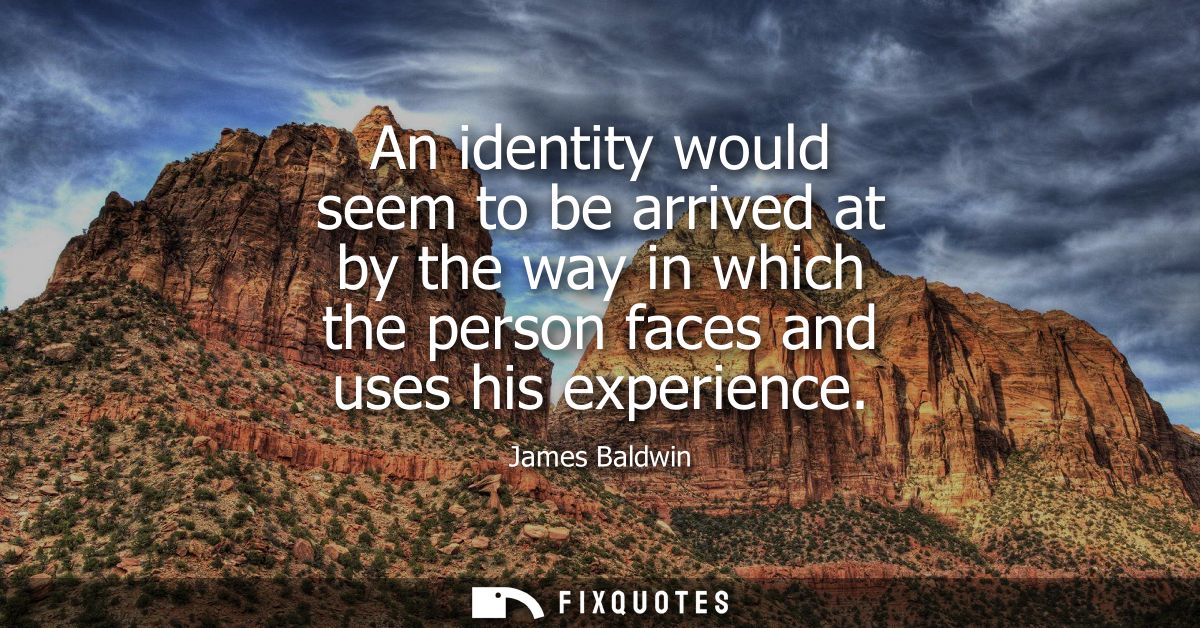
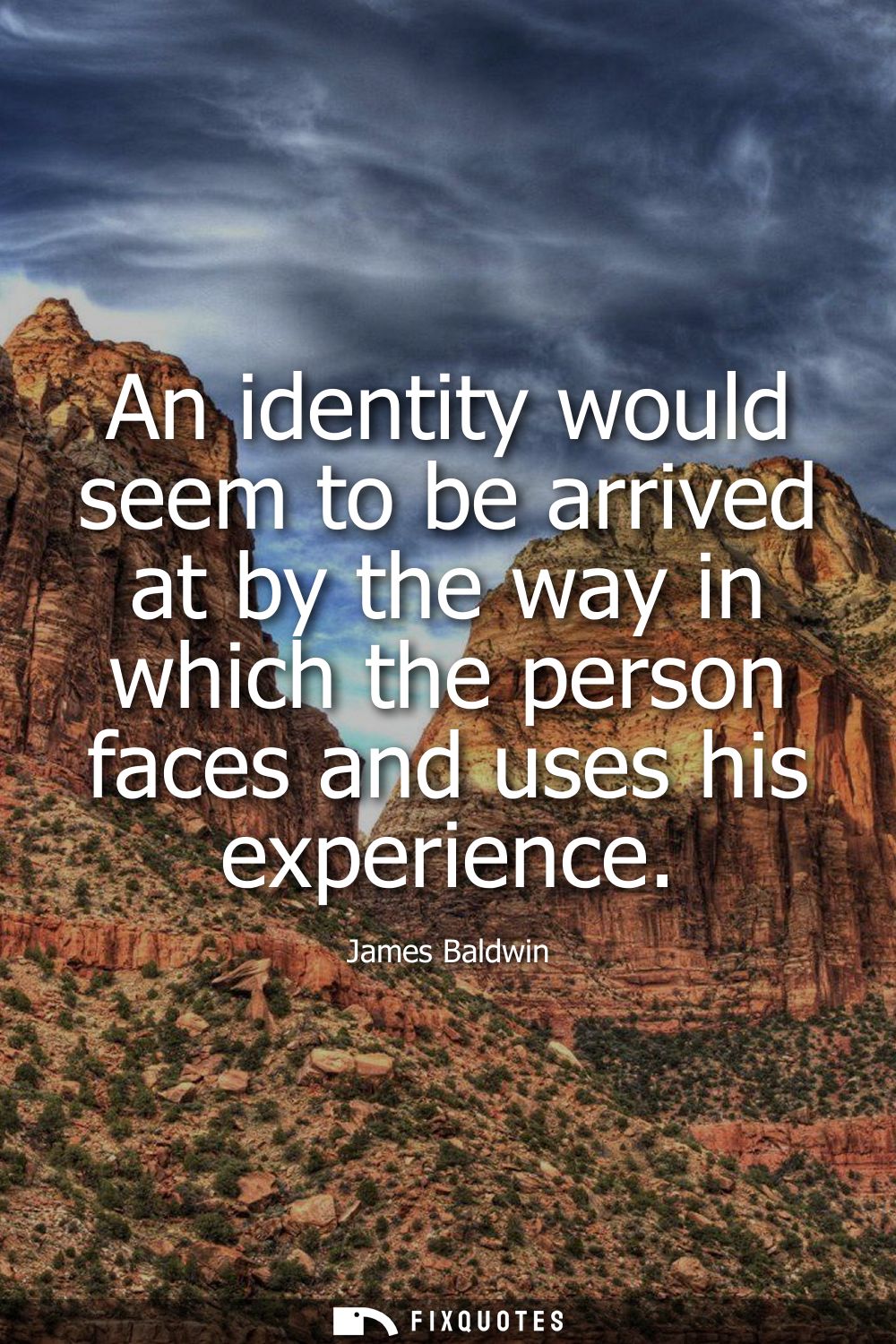
"An identity would seem to be arrived at by the way in which the person faces and uses his experience"
About this Quote
For an educator, this is a quiet manifesto against passive learning and inherited labels. In classrooms, "identity" often gets treated as a demographic fact or a personality type. Baldwin frames it as a consequence of choices: how you metabolize setbacks, how you interpret belonging and exclusion, whether you turn embarrassment into avoidance or into competence. Theres a moral undertone without moralizing. Hes not promising that experience is fair; hes insisting that meaning is made in the response.
The context of the late 19th and early 20th century helps: a period obsessed with classifications - racial, social, vocational - and with theories that pretended character was fixed by biology or station. Baldwin counters with an ethic of formation. Identity, in this view, is less a label you discover than a posture you earn, and the subtext is bracing: if you want a different self, you dont wait for different circumstances. You learn to handle the ones you have.
Quote Details
| Topic | Self-Improvement |
|---|---|
| Source | Help us find the source |
| Cite |
Citation Formats
APA Style (7th ed.)
Baldwin, James. (2026, January 16). An identity would seem to be arrived at by the way in which the person faces and uses his experience. FixQuotes. https://fixquotes.com/quotes/an-identity-would-seem-to-be-arrived-at-by-the-105958/
Chicago Style
Baldwin, James. "An identity would seem to be arrived at by the way in which the person faces and uses his experience." FixQuotes. January 16, 2026. https://fixquotes.com/quotes/an-identity-would-seem-to-be-arrived-at-by-the-105958/.
MLA Style (9th ed.)
"An identity would seem to be arrived at by the way in which the person faces and uses his experience." FixQuotes, 16 Jan. 2026, https://fixquotes.com/quotes/an-identity-would-seem-to-be-arrived-at-by-the-105958/. Accessed 12 Feb. 2026.