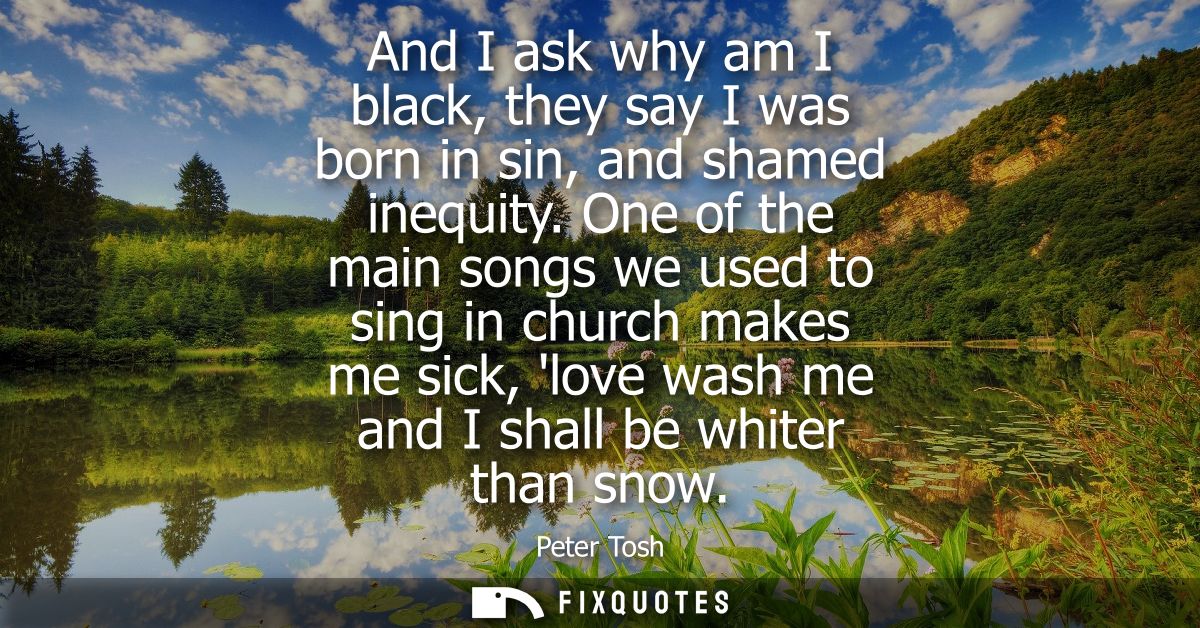
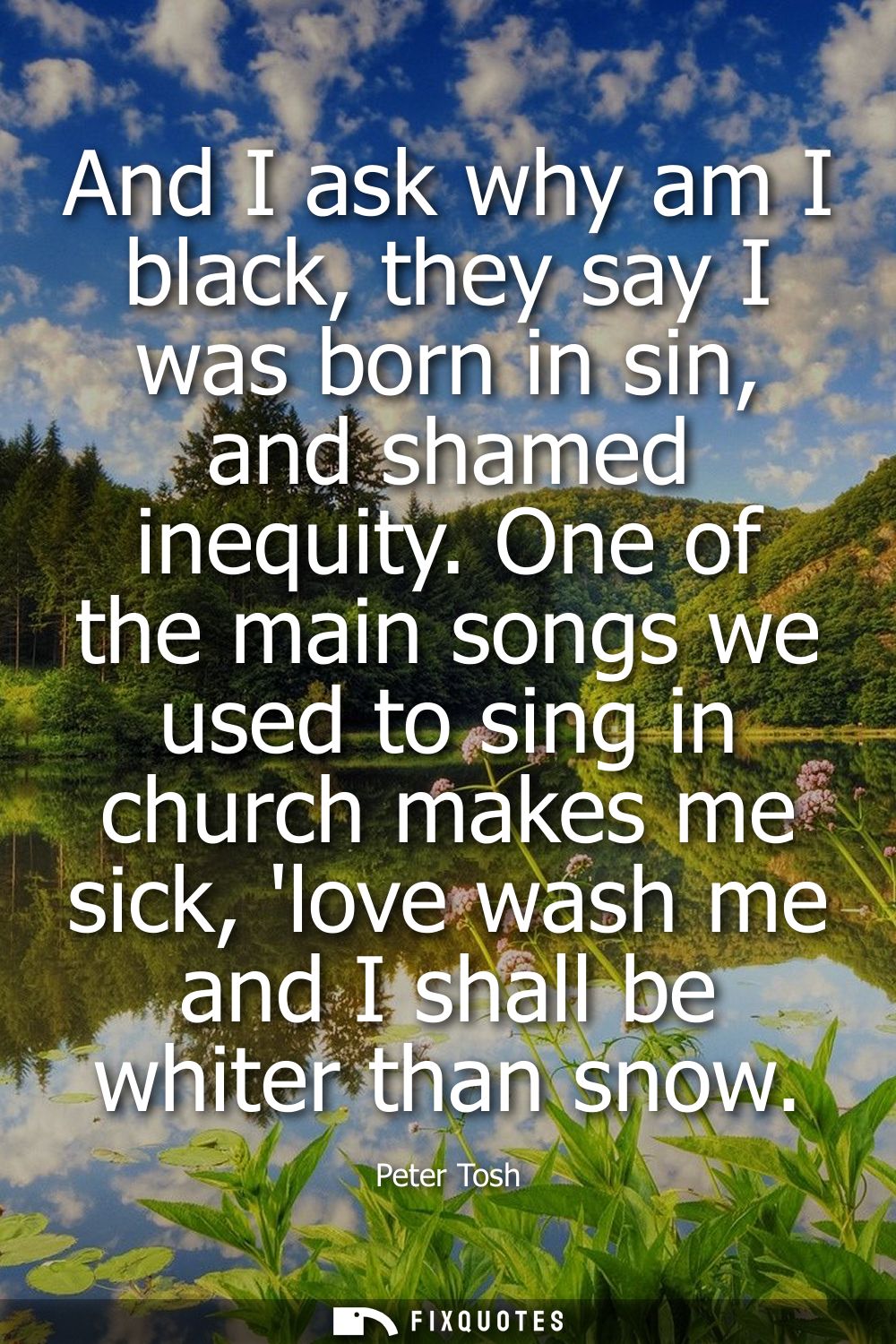
"And I ask, why am I black? They say I was born in sin, and shamed inequity. One of the main songs we used to sing in church makes me sick, 'Love wash me and I shall be whiter than snow'"
About this Quote
His opening question, "why am I black", mimics the interrogations Black people are forced to perform for others - as if existence requires a defense. The answer he reports back ("born in sin") isn’t theology so much as social discipline: a way to naturalize inequality, to turn history into destiny. "Shamed inequity" is the pivot. Shame is the emotion institutions deploy when they want compliance without debate; inequity is the structure that benefits from that silence.
Tosh’s disgust - "makes me sick" - matters. He’s not offering a polite critique for interfaith dialogue; he’s registering bodily recoil, the moment faith’s comfort curdles into complicity. Coming from a Jamaican reggae icon steeped in Rastafari-inflected resistance, the context is crucial: reggae as counter-sermon, a public pulpit for people who know the official pulpit often served empire. He’s demanding a spirituality that doesn’t ask Black people to imagine themselves cleaner by imagining themselves whiter.
Quote Details
| Topic | Equality |
|---|---|
| Source | Help us find the source |
| Cite |
Citation Formats
APA Style (7th ed.)
Tosh, Peter. (2026, February 16). And I ask, why am I black? They say I was born in sin, and shamed inequity. One of the main songs we used to sing in church makes me sick, 'Love wash me and I shall be whiter than snow'. FixQuotes. https://fixquotes.com/quotes/and-i-ask-why-am-i-black-they-say-i-was-born-in-135771/
Chicago Style
Tosh, Peter. "And I ask, why am I black? They say I was born in sin, and shamed inequity. One of the main songs we used to sing in church makes me sick, 'Love wash me and I shall be whiter than snow'." FixQuotes. February 16, 2026. https://fixquotes.com/quotes/and-i-ask-why-am-i-black-they-say-i-was-born-in-135771/.
MLA Style (9th ed.)
"And I ask, why am I black? They say I was born in sin, and shamed inequity. One of the main songs we used to sing in church makes me sick, 'Love wash me and I shall be whiter than snow'." FixQuotes, 16 Feb. 2026, https://fixquotes.com/quotes/and-i-ask-why-am-i-black-they-say-i-was-born-in-135771/. Accessed 12 Mar. 2026.