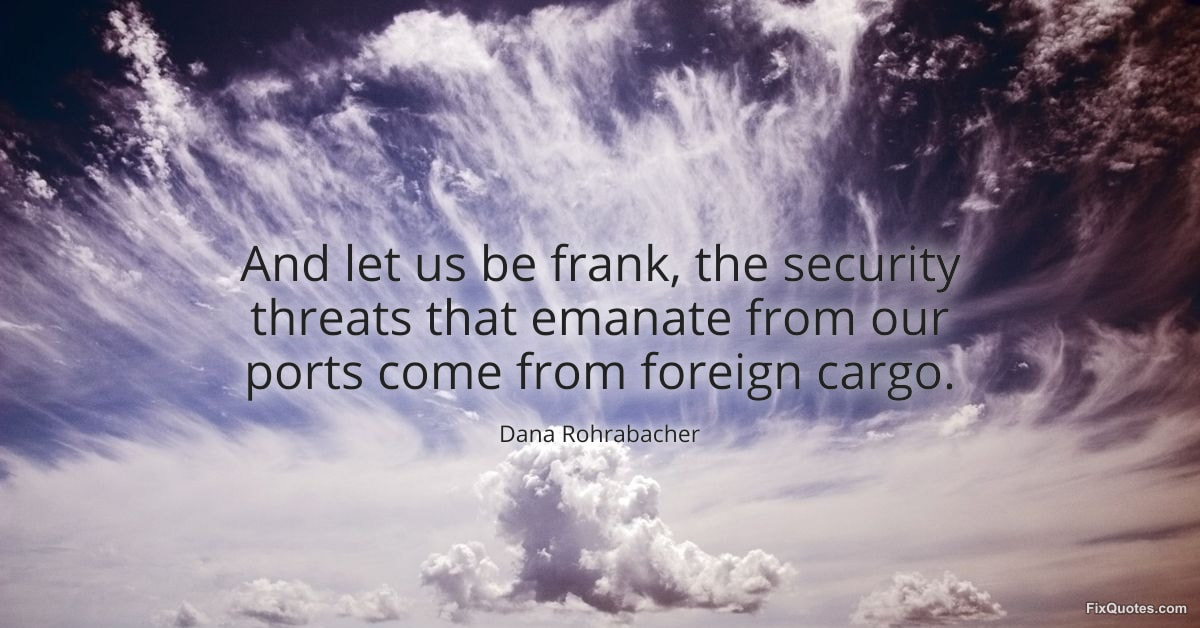
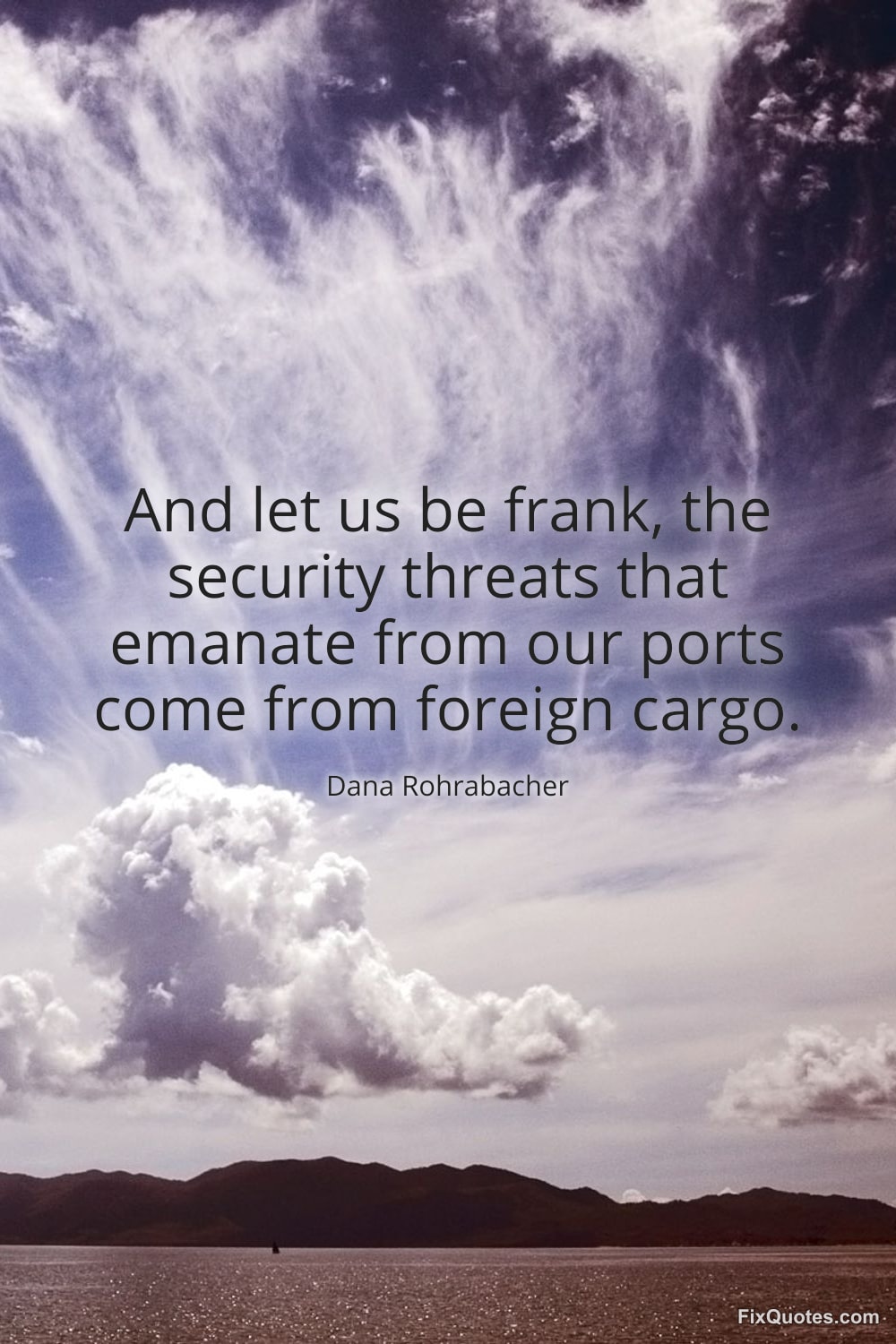
"And let us be frank, the security threats that emanate from our ports come from foreign cargo"
About this Quote
The phrase “foreign cargo” is the payload. It collapses a complex supply chain into a single, externalized suspect category, rhetorically relocating the source of risk outside the nation’s boundaries even as the ports are “our” infrastructure, “our” regulators, and “our” inspection regimes. That “our/foreign” contrast is not accidental; it’s a nationalism shortcut that makes border control feel like identity defense. Cargo becomes a proxy for people, and trade becomes a proxy for immigration anxiety, without the quote ever needing to say either word.
Context matters: post-9/11 port-security debates often fused legitimate concerns about container screening with broader arguments for hardened borders and suspicion of outsiders. By insisting threats “come from foreign cargo,” Rohrabacher frames security as a matter of blocking the outside, not fixing the inside. It’s a political rerouting: fear is steered toward external sources, while accountability for domestic oversight quietly slips out the back.
Quote Details
| Topic | War |
|---|---|
| Source | Help us find the source |
| Cite | Cite this Quote |
Citation Formats
APA Style (7th ed.)
Rohrabacher, Dana. (2026, January 17). And let us be frank, the security threats that emanate from our ports come from foreign cargo. FixQuotes. https://fixquotes.com/quotes/and-let-us-be-frank-the-security-threats-that-38981/
Chicago Style
Rohrabacher, Dana. "And let us be frank, the security threats that emanate from our ports come from foreign cargo." FixQuotes. January 17, 2026. https://fixquotes.com/quotes/and-let-us-be-frank-the-security-threats-that-38981/.
MLA Style (9th ed.)
"And let us be frank, the security threats that emanate from our ports come from foreign cargo." FixQuotes, 17 Jan. 2026, https://fixquotes.com/quotes/and-let-us-be-frank-the-security-threats-that-38981/. Accessed 4 Feb. 2026.