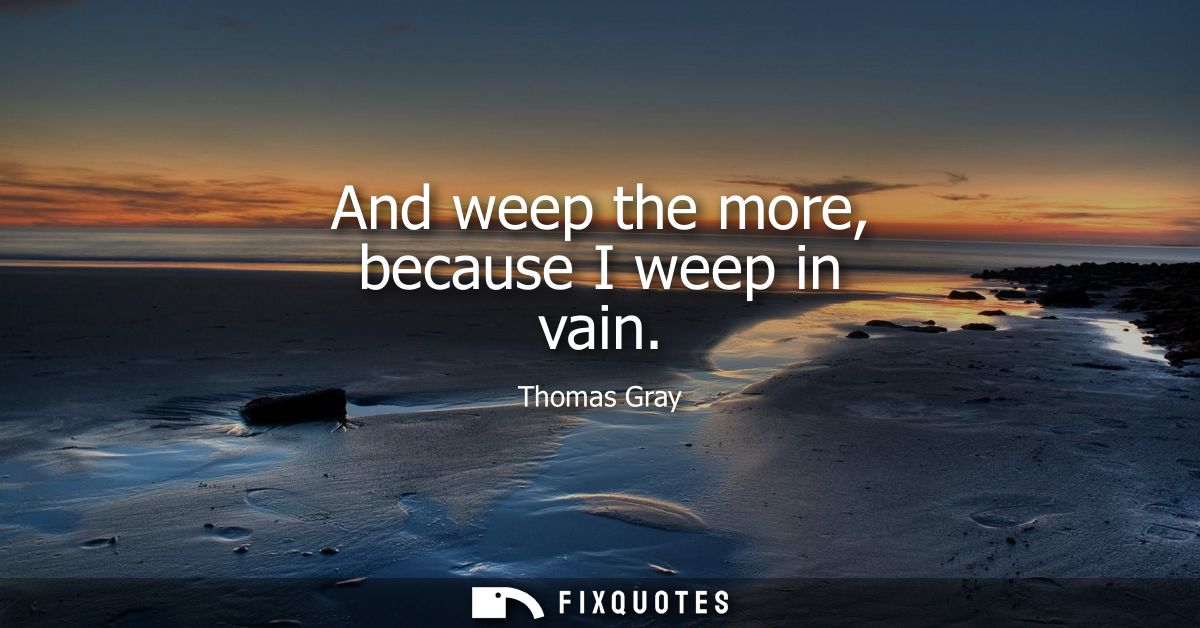
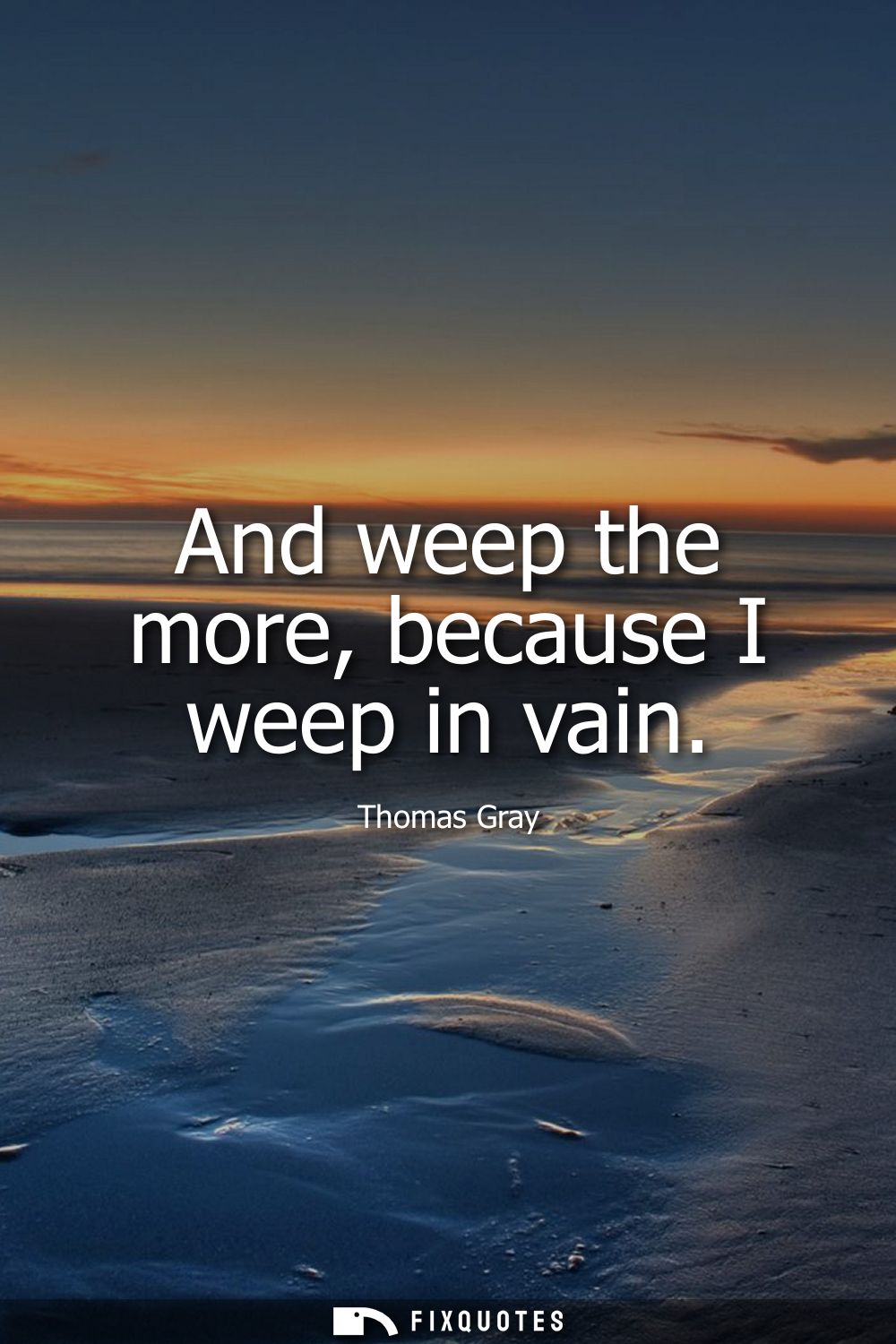
"And weep the more, because I weep in vain"
About this Quote
Grief, in Gray's line, isn’t just an emotion; it’s a performance punished by its own futility. "Weep the more" sounds at first like permission, almost tenderness, but the pivot lands hard: "because I weep in vain". The logic is cruelly circular. Cry harder, not because tears heal, but because the person you’re crying for can’t be reached, changed, revived. The line weaponizes reason against feeling, turning consolation into indictment.
Gray is writing in the high-key elegiac mode that 18th-century readers prized: controlled sorrow, polished like marble, where restraint makes the anguish sharper. The diction is plain, yet the architecture is exquisitely sad. "And" drops us mid-thought, as if this is only one beat in a longer cascade of lament, suggesting exhaustion rather than theatrical flourish. The repetition of "weep" works like a tolling bell. It mimics the mind looping on loss, unable to metabolize it into closure.
Subtextually, the speaker isn’t only mourning the absent object; he’s mourning the failure of mourning itself. Tears become evidence of devotion and also of helplessness, a reminder that feeling is not agency. That tension fits Gray’s moment: a culture balancing Enlightenment rationality with an emerging taste for sensibility, where the ability to feel deeply was both moral credential and private torment. The line captures the modern ache of knowing your grief is real, your love sincere, and none of it makes the world give anything back.
Gray is writing in the high-key elegiac mode that 18th-century readers prized: controlled sorrow, polished like marble, where restraint makes the anguish sharper. The diction is plain, yet the architecture is exquisitely sad. "And" drops us mid-thought, as if this is only one beat in a longer cascade of lament, suggesting exhaustion rather than theatrical flourish. The repetition of "weep" works like a tolling bell. It mimics the mind looping on loss, unable to metabolize it into closure.
Subtextually, the speaker isn’t only mourning the absent object; he’s mourning the failure of mourning itself. Tears become evidence of devotion and also of helplessness, a reminder that feeling is not agency. That tension fits Gray’s moment: a culture balancing Enlightenment rationality with an emerging taste for sensibility, where the ability to feel deeply was both moral credential and private torment. The line captures the modern ache of knowing your grief is real, your love sincere, and none of it makes the world give anything back.
Quote Details
| Topic | Heartbreak |
|---|---|
| Source | Help us find the source |
| Cite |
Citation Formats
APA Style (7th ed.)
Gray, Thomas. (2026, January 16). And weep the more, because I weep in vain. FixQuotes. https://fixquotes.com/quotes/and-weep-the-more-because-i-weep-in-vain-121899/
Chicago Style
Gray, Thomas. "And weep the more, because I weep in vain." FixQuotes. January 16, 2026. https://fixquotes.com/quotes/and-weep-the-more-because-i-weep-in-vain-121899/.
MLA Style (9th ed.)
"And weep the more, because I weep in vain." FixQuotes, 16 Jan. 2026, https://fixquotes.com/quotes/and-weep-the-more-because-i-weep-in-vain-121899/. Accessed 5 Apr. 2026.
More Quotes by Thomas
Add to List