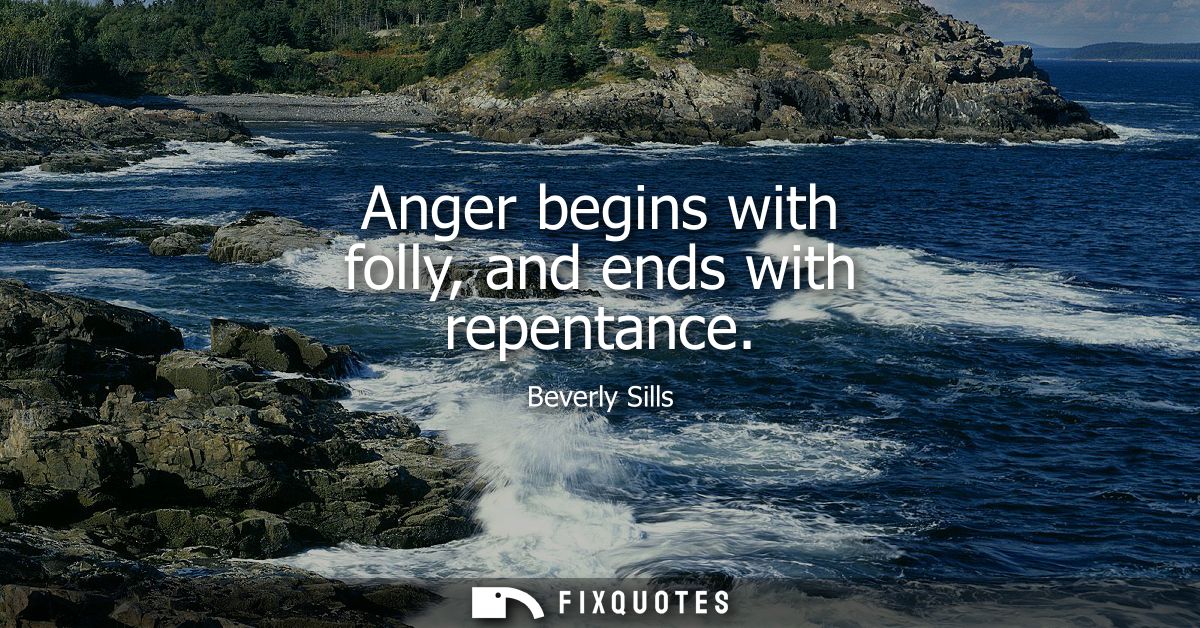
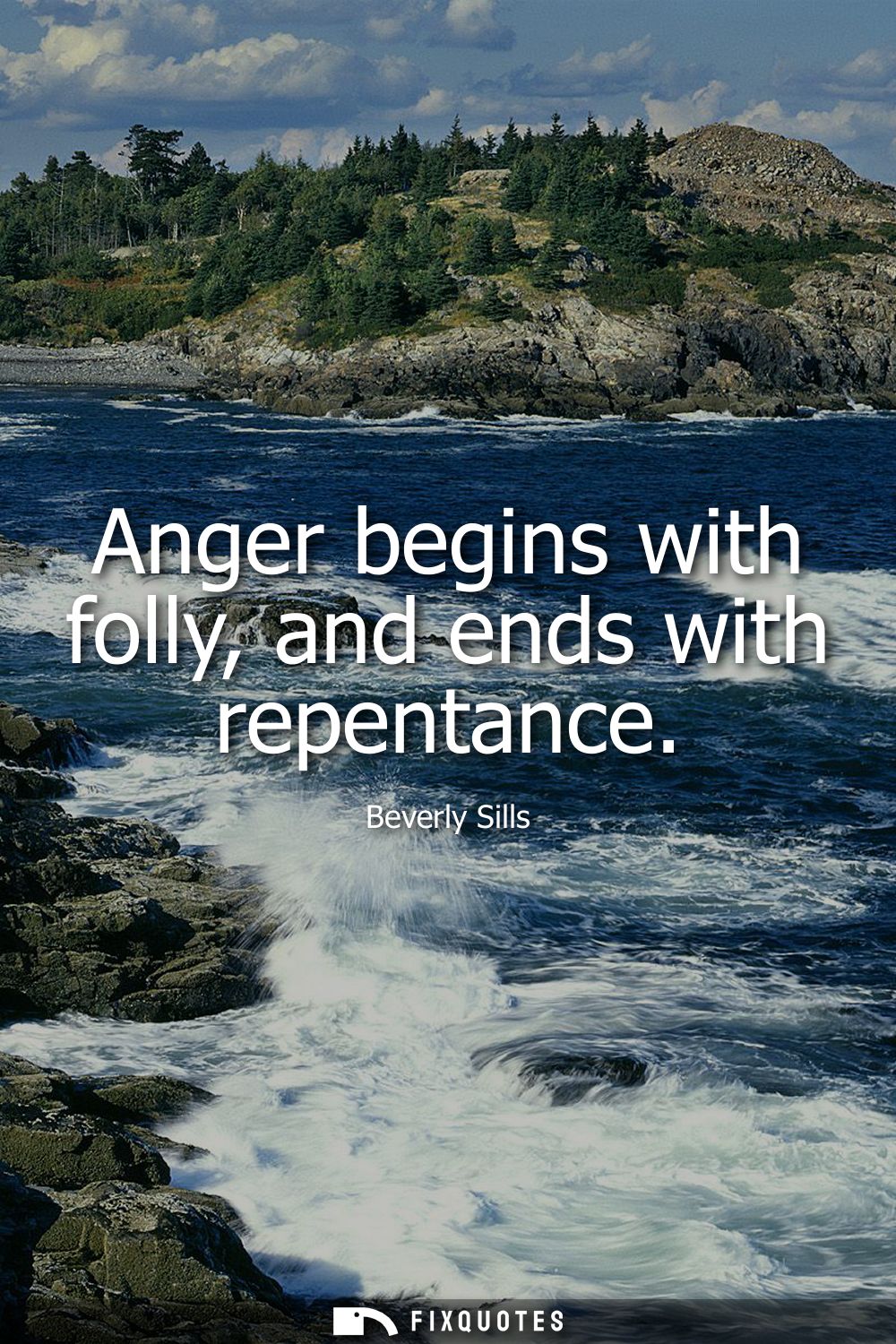
"Anger begins with folly, and ends with repentance"
About this Quote
Anger, in Beverly Sills's framing, is less a righteous flame than a botched performance: it starts with "folly" - a lapse in judgment, timing, or self-knowledge - and it ends with the cleanup, "repentance". The line has the brisk moral clarity of a rehearsal note. Don’t romanticize the outburst; look at the mistake that cued it, and listen for the regret that follows like an unwanted encore.
Coming from a celebrated opera singer, the quote carries backstage realism. Opera is built on emotion so big it can shake chandeliers, but it’s also built on control: breath, phrasing, discipline, restraint. Sills isn’t condemning feeling; she’s warning about the moment emotion stops being expressive and starts being clumsy. "Begins" and "ends" make anger sound predictable, almost mechanical - a short narrative arc you can spot from the first bar. That’s the practical subtext: if anger reliably resolves into repentance, then anger isn’t power, it’s debt.
The word choice matters. "Folly" implies not evil but foolishness, the kind that comes from pride, impatience, or the need to be right on the spot. "Repentance" isn’t just apology; it’s self-indictment, the private recognition that you’ve handed someone a version of yourself you didn’t mean to debut. Sills offers a culture critique, too: anger often sells as authenticity, but she recasts it as an avoidable misread - an emotional wrong note that the audience remembers long after the sound is gone.
Coming from a celebrated opera singer, the quote carries backstage realism. Opera is built on emotion so big it can shake chandeliers, but it’s also built on control: breath, phrasing, discipline, restraint. Sills isn’t condemning feeling; she’s warning about the moment emotion stops being expressive and starts being clumsy. "Begins" and "ends" make anger sound predictable, almost mechanical - a short narrative arc you can spot from the first bar. That’s the practical subtext: if anger reliably resolves into repentance, then anger isn’t power, it’s debt.
The word choice matters. "Folly" implies not evil but foolishness, the kind that comes from pride, impatience, or the need to be right on the spot. "Repentance" isn’t just apology; it’s self-indictment, the private recognition that you’ve handed someone a version of yourself you didn’t mean to debut. Sills offers a culture critique, too: anger often sells as authenticity, but she recasts it as an avoidable misread - an emotional wrong note that the audience remembers long after the sound is gone.
Quote Details
| Topic | Anger |
|---|---|
| Source | Help us find the source |
| Cite |
Citation Formats
APA Style (7th ed.)
Sills, Beverly. (2026, January 17). Anger begins with folly, and ends with repentance. FixQuotes. https://fixquotes.com/quotes/anger-begins-with-folly-and-ends-with-repentance-38428/
Chicago Style
Sills, Beverly. "Anger begins with folly, and ends with repentance." FixQuotes. January 17, 2026. https://fixquotes.com/quotes/anger-begins-with-folly-and-ends-with-repentance-38428/.
MLA Style (9th ed.)
"Anger begins with folly, and ends with repentance." FixQuotes, 17 Jan. 2026, https://fixquotes.com/quotes/anger-begins-with-folly-and-ends-with-repentance-38428/. Accessed 12 Feb. 2026.
More Quotes by Beverly
Add to List