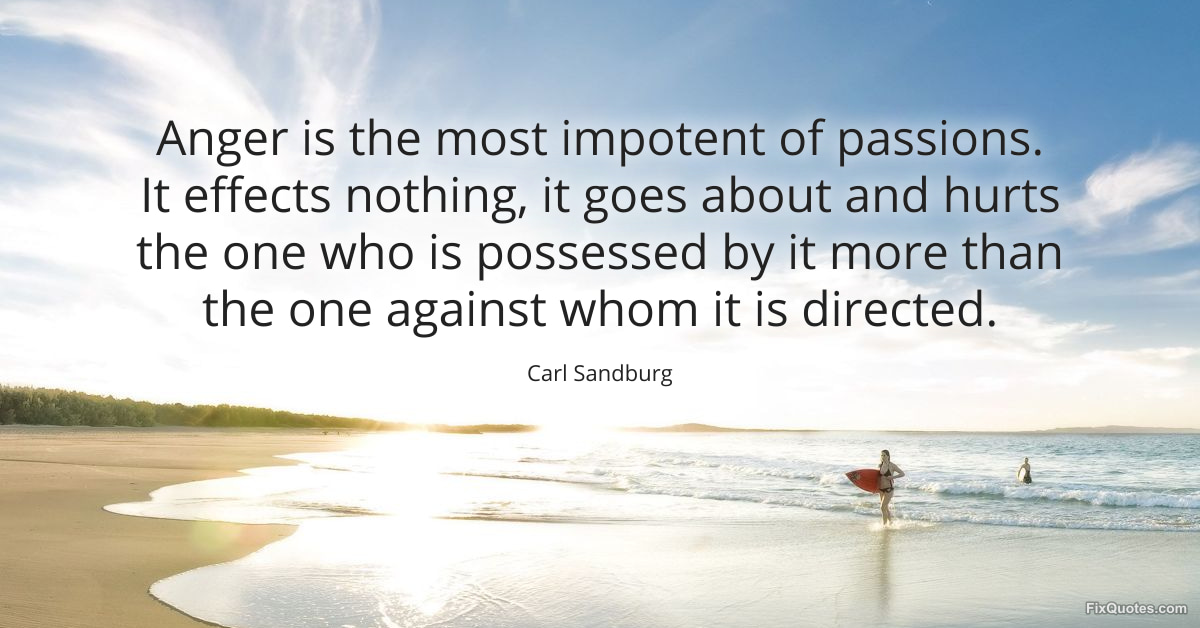
"Anger is the most impotent of passions. It effects nothing, it goes about and hurts the one who is possessed by it more than the one against whom it is directed"
About this Quote
The subtext is less moral scolding than pragmatic self-preservation. Sandburg isn’t arguing that anger is “bad”; he’s arguing it’s inefficient. The real injury is internal: anger “hurts the one who is possessed by it,” making the emotion sound like a hostile takeover. You don’t wield anger; anger wields you. That framing undercuts the ego-boost anger can provide - the fantasy that rage is evidence of clarity, courage, or virtue.
Context matters: Sandburg’s America was defined by labor conflict, war, and rapid industrial change - arenas where anger was abundant and often justified. A poet who reported on working people and wrote through the nation’s upheavals, Sandburg knew the difference between heat and force. The quote reads like counsel from someone who’s watched fury burn through communities and organizers alike: outrage can light the match, but by itself it rarely builds the house.
Quote Details
| Topic | Anger |
|---|---|
| Source | Help us find the source |
| Cite |
Citation Formats
APA Style (7th ed.)
Sandburg, Carl. (2026, February 16). Anger is the most impotent of passions. It effects nothing, it goes about and hurts the one who is possessed by it more than the one against whom it is directed. FixQuotes. https://fixquotes.com/quotes/anger-is-the-most-impotent-of-passions-it-effects-150262/
Chicago Style
Sandburg, Carl. "Anger is the most impotent of passions. It effects nothing, it goes about and hurts the one who is possessed by it more than the one against whom it is directed." FixQuotes. February 16, 2026. https://fixquotes.com/quotes/anger-is-the-most-impotent-of-passions-it-effects-150262/.
MLA Style (9th ed.)
"Anger is the most impotent of passions. It effects nothing, it goes about and hurts the one who is possessed by it more than the one against whom it is directed." FixQuotes, 16 Feb. 2026, https://fixquotes.com/quotes/anger-is-the-most-impotent-of-passions-it-effects-150262/. Accessed 1 Apr. 2026.