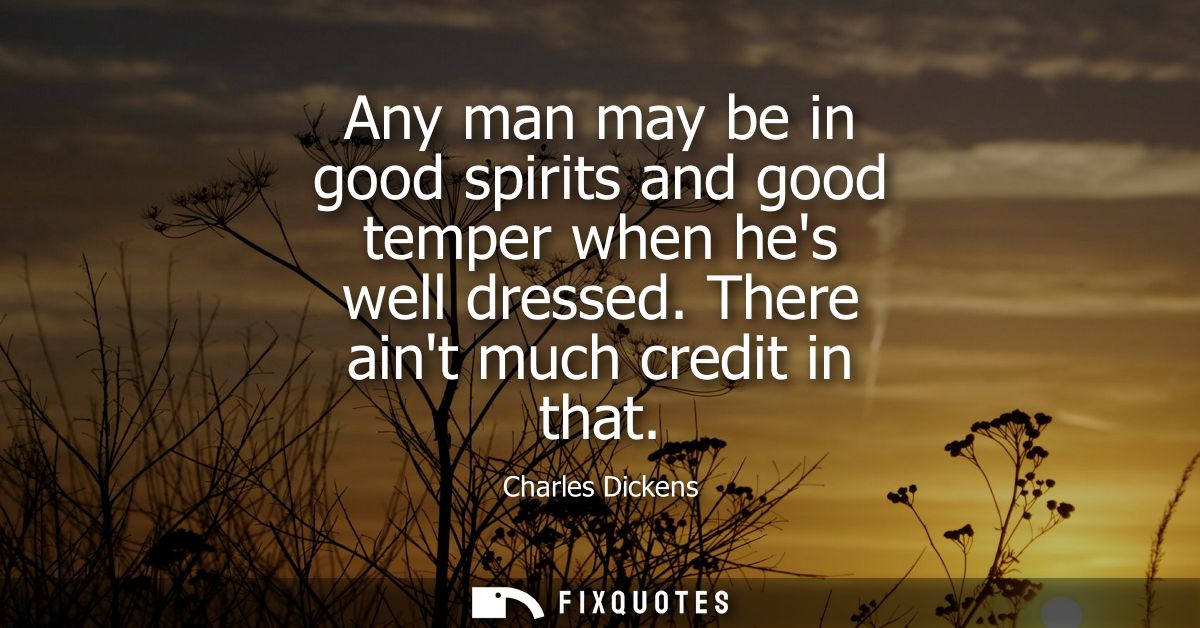
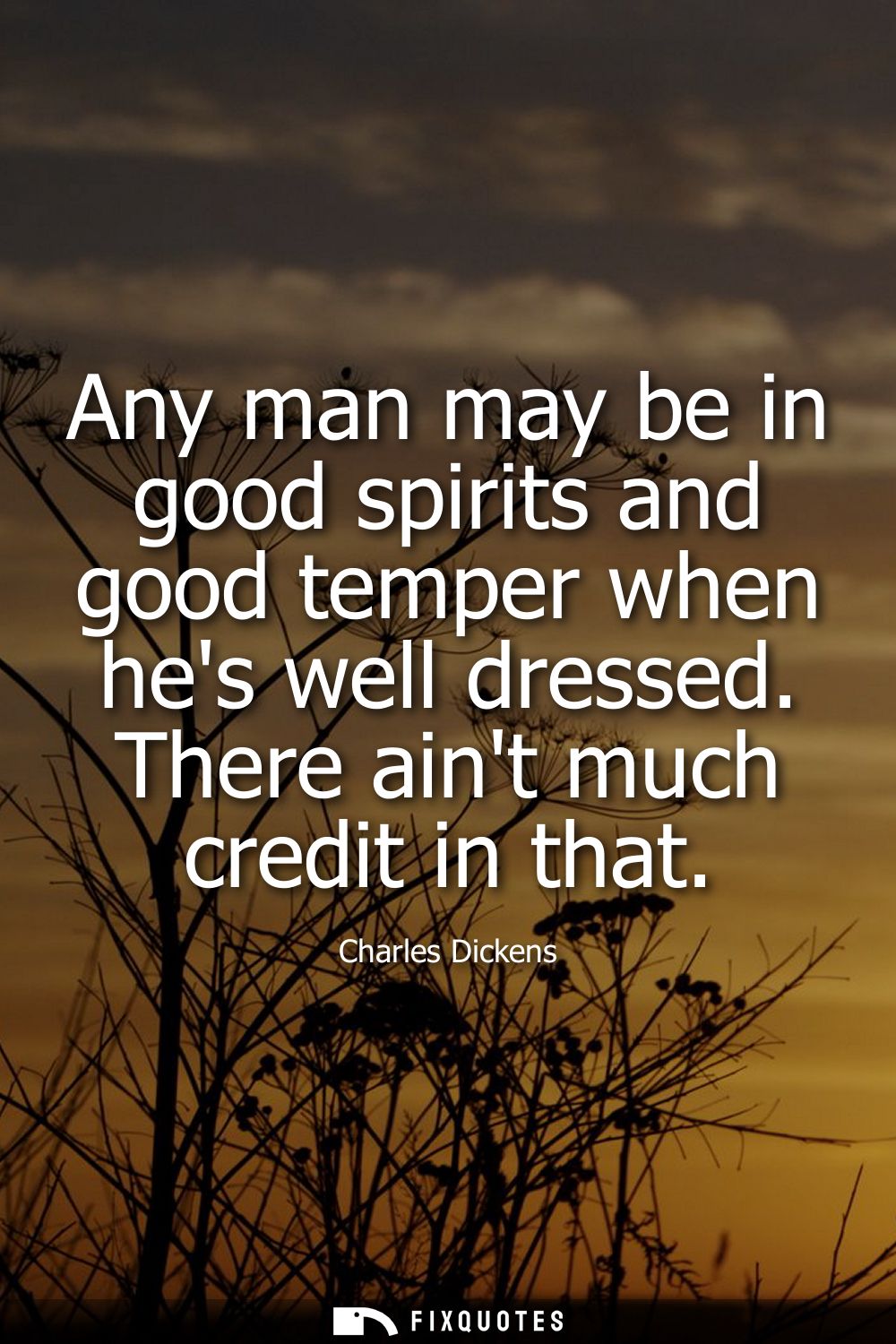
"Any man may be in good spirits and good temper when he's well dressed. There ain't much credit in that"
About this Quote
The phrasing matters. “Any man” turns the observation into a social rule, not a personal confession. “Well dressed” functions as shorthand for insulation: money, status, the soft power of looking like you belong. Dickens, who wrote with relentless attention to how institutions grind down the poor, understands clothing as both armor and passport. Dress doesn’t just lift your spirits; it changes how others read you, and that feedback loop makes cheerfulness easy.
The vernacular “ain’t” is doing quiet work, too. It pulls the sentiment out of drawing-room morality and into the street, where judgments are blunter and hypocrisies more visible. In a culture that often mistakes respectability for goodness, Dickens is asking for a harsher accounting: don’t congratulate yourself for decency purchased at retail. Credit is what you earn when comfort isn’t underwriting your kindness.
Quote Details
| Topic | Witty One-Liners |
|---|---|
| Source | Help us find the source |
| Cite |
Citation Formats
APA Style (7th ed.)
Dickens, Charles. (2026, January 15). Any man may be in good spirits and good temper when he's well dressed. There ain't much credit in that. FixQuotes. https://fixquotes.com/quotes/any-man-may-be-in-good-spirits-and-good-temper-30502/
Chicago Style
Dickens, Charles. "Any man may be in good spirits and good temper when he's well dressed. There ain't much credit in that." FixQuotes. January 15, 2026. https://fixquotes.com/quotes/any-man-may-be-in-good-spirits-and-good-temper-30502/.
MLA Style (9th ed.)
"Any man may be in good spirits and good temper when he's well dressed. There ain't much credit in that." FixQuotes, 15 Jan. 2026, https://fixquotes.com/quotes/any-man-may-be-in-good-spirits-and-good-temper-30502/. Accessed 12 Feb. 2026.