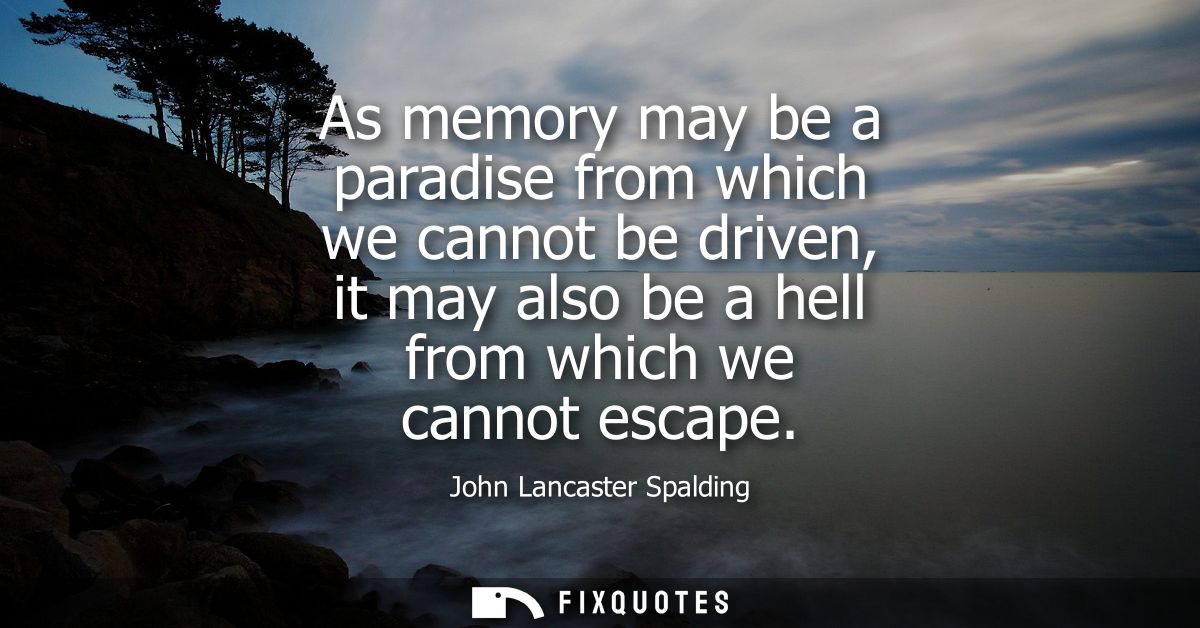
"As memory may be a paradise from which we cannot be driven, it may also be a hell from which we cannot escape"
About this Quote
Memory is usually sold as a soft-focus sanctuary: childhood summers, lost loves, the comforting story you tell yourself about how you became you. Spalding flips that sentimental bargain into a moral warning. The line works because it refuses to let memory stay decorative. It makes memory architectural: a place you inhabit, not a scrapbook you browse. And once you accept that metaphor, the claustrophobia lands. Paradise and hell aren’t destinations you choose; they’re enclosures with locked gates.
Spalding, a late-19th-century American Catholic bishop, lived in an era obsessed with interior life and moral accounting: conscience, sin, redemption, the long echo of choices. In that context, “cannot be driven” hints at the inviolable core of the self, something no external authority can confiscate. It’s a defiant claim about human dignity: even poverty, illness, or political upheaval can’t evict you from the private refuge of recollection.
Then comes the twist: the same sovereignty is also a life sentence. “Cannot escape” implies memory’s punitive power - guilt that keeps replaying, grief that won’t resolve, humiliation that stays fresh decades later. The subtext is theological without being preachy: you carry your own judgment seat. There’s no exile from the mind, no border checkpoint where you can leave your past behind.
The quote endures because it captures a modern psychological truth before the vocabulary existed. Trauma, nostalgia, rumination, identity - Spalding compresses all of it into one clean, double-edged sentence.
Spalding, a late-19th-century American Catholic bishop, lived in an era obsessed with interior life and moral accounting: conscience, sin, redemption, the long echo of choices. In that context, “cannot be driven” hints at the inviolable core of the self, something no external authority can confiscate. It’s a defiant claim about human dignity: even poverty, illness, or political upheaval can’t evict you from the private refuge of recollection.
Then comes the twist: the same sovereignty is also a life sentence. “Cannot escape” implies memory’s punitive power - guilt that keeps replaying, grief that won’t resolve, humiliation that stays fresh decades later. The subtext is theological without being preachy: you carry your own judgment seat. There’s no exile from the mind, no border checkpoint where you can leave your past behind.
The quote endures because it captures a modern psychological truth before the vocabulary existed. Trauma, nostalgia, rumination, identity - Spalding compresses all of it into one clean, double-edged sentence.
Quote Details
| Topic | Nostalgia |
|---|
More Quotes by John
Add to List