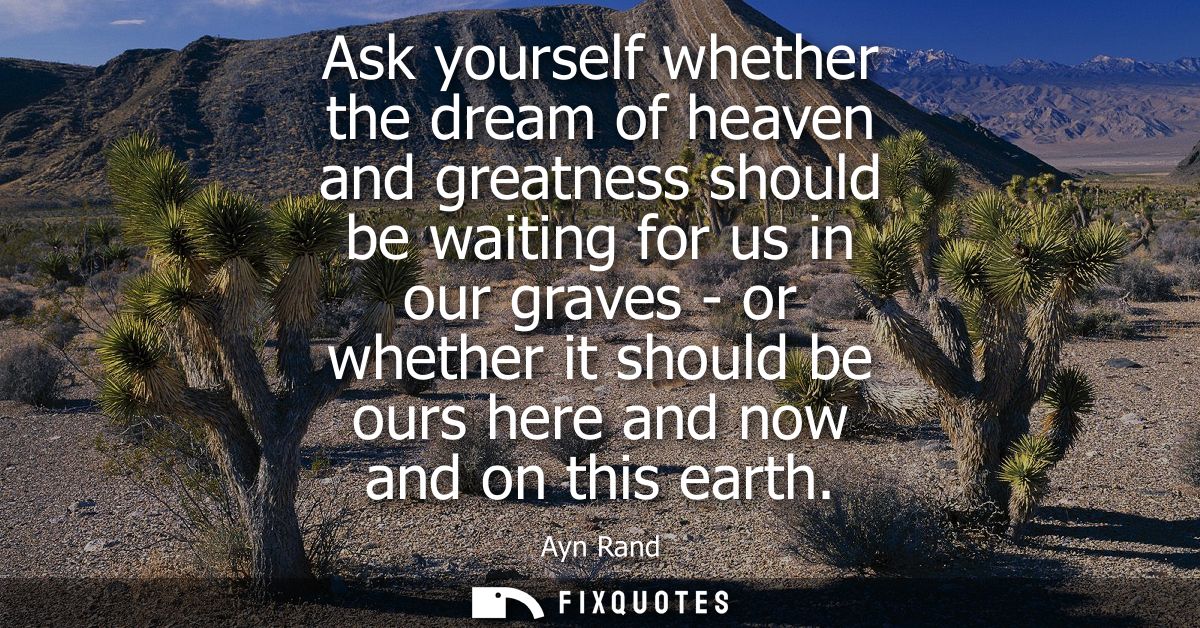
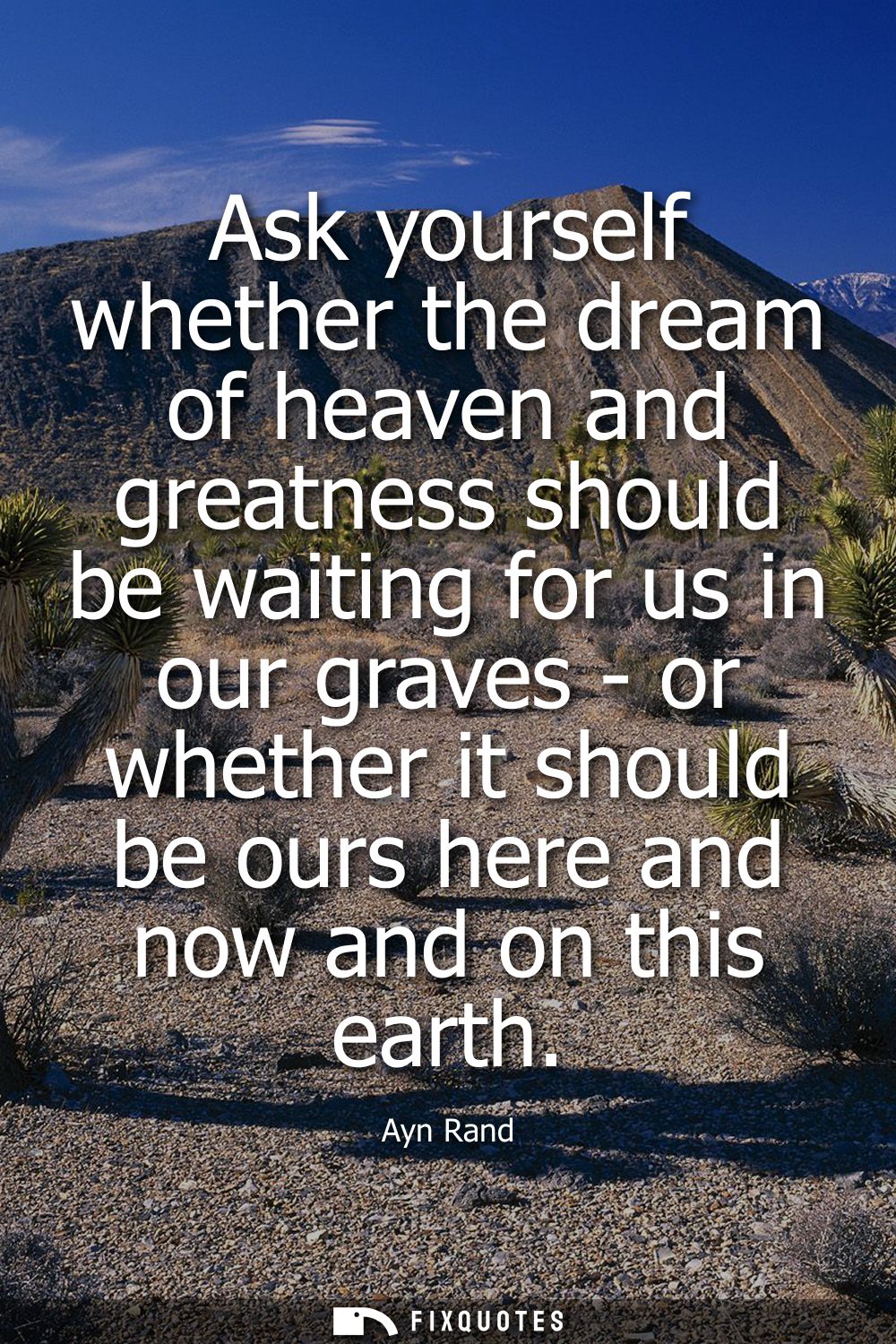
"Ask yourself whether the dream of heaven and greatness should be waiting for us in our graves - or whether it should be ours here and now and on this earth?"
About this Quote
The sentence turns on a blunt contrast: “in our graves” versus “here and now and on this earth.” The repetition is not poetic softness; it’s a hammering insistence on the present tense. Rand’s intent is to relocate moral aspiration from the afterlife to the marketplace of time, talent, and action. Underneath is her signature hostility to any ethic that sanctifies sacrifice, especially sacrifice sold as nobility. If greatness is always “waiting,” then renunciation looks like character. If greatness is possible now, renunciation starts to look like theft - by institutions, by leaders, by traditions that profit from your self-denial.
Context matters: Rand is writing in the shadow of 20th-century mass politics and collectivist promises, but she’s also taking aim at older Christian narratives that elevate suffering and reward obedience with eternity. The quote works because it weaponizes a simple moral question into a political one: are you living for your life, or renting it out to an idea that can’t cash its checks until you’re dead?
Quote Details
| Topic | Live in the Moment |
|---|---|
| Source | Help us find the source |
| Cite |
Citation Formats
APA Style (7th ed.)
Rand, Ayn. (2026, February 19). Ask yourself whether the dream of heaven and greatness should be waiting for us in our graves - or whether it should be ours here and now and on this earth? FixQuotes. https://fixquotes.com/quotes/ask-yourself-whether-the-dream-of-heaven-and-29966/
Chicago Style
Rand, Ayn. "Ask yourself whether the dream of heaven and greatness should be waiting for us in our graves - or whether it should be ours here and now and on this earth?" FixQuotes. February 19, 2026. https://fixquotes.com/quotes/ask-yourself-whether-the-dream-of-heaven-and-29966/.
MLA Style (9th ed.)
"Ask yourself whether the dream of heaven and greatness should be waiting for us in our graves - or whether it should be ours here and now and on this earth?" FixQuotes, 19 Feb. 2026, https://fixquotes.com/quotes/ask-yourself-whether-the-dream-of-heaven-and-29966/. Accessed 12 Mar. 2026.