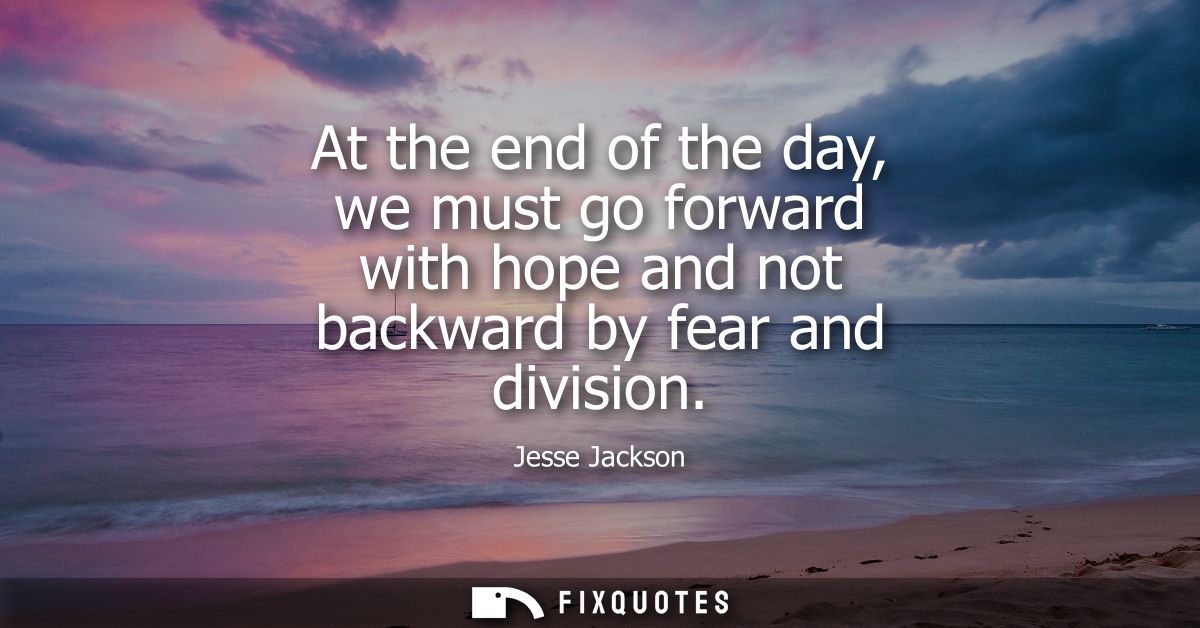
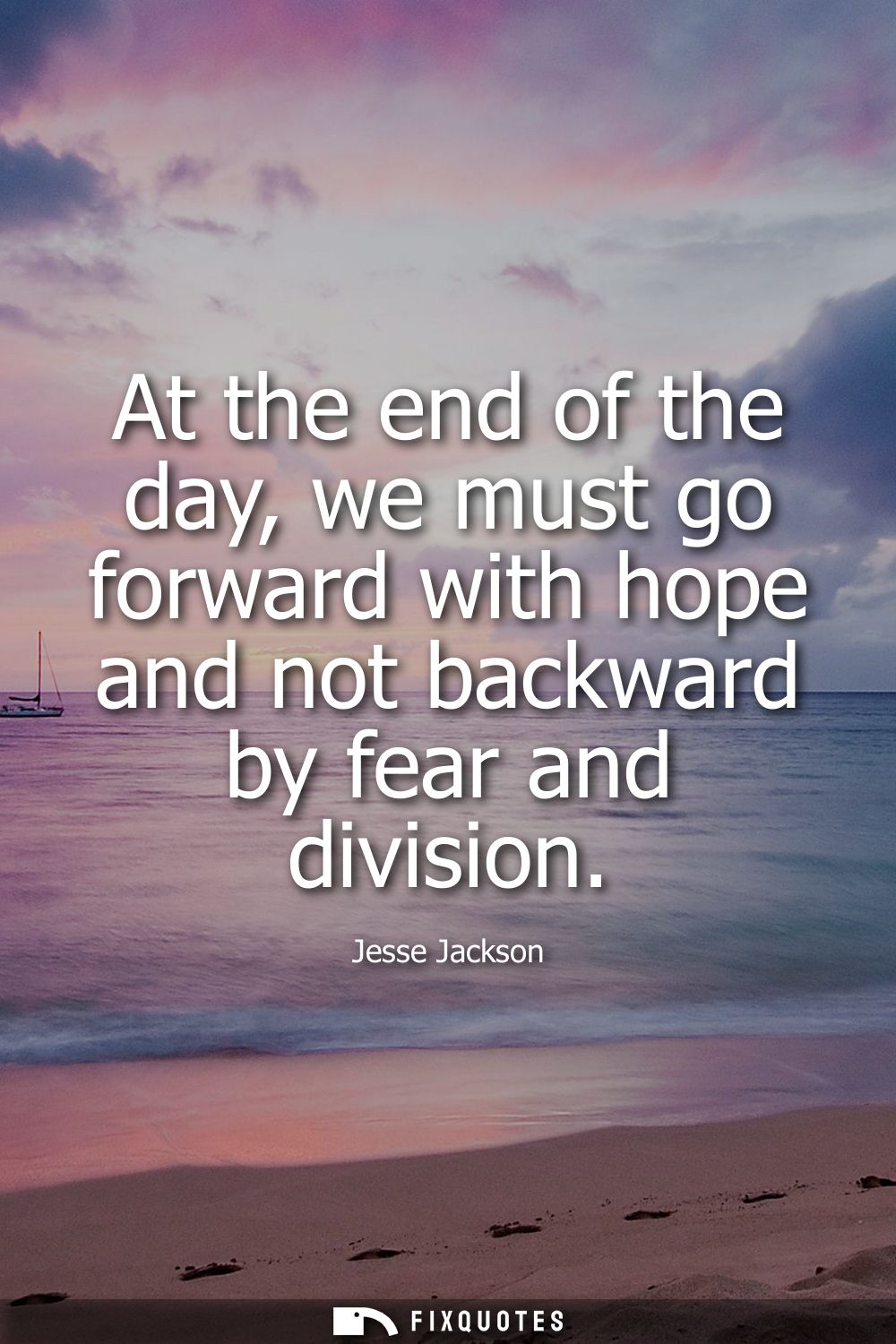
"At the end of the day, we must go forward with hope and not backward by fear and division"
About this Quote
The intent is disciplinary as much as inspirational. Jackson isn’t just soothing anxieties; he’s telling his audience what emotions are acceptable fuel for the next step. Hope is framed as movement, fear as regression. That’s a quiet but sharp piece of messaging: if you cling to fear, you’re not merely cautious, you’re actively undoing progress. “Division” gets paired with fear as its natural byproduct, suggesting that fragmentation isn’t an ideological difference so much as a panic response.
Contextually, this sits squarely in Jackson’s career-long project of stitching together diverse constituencies - civil rights, labor, faith communities, marginalized groups - into a usable political “we.” The subtext: unity is not sentimental; it’s strategic. Fear is how power keeps people isolated, suspicious, and easier to manage. By casting hope as forward motion, Jackson offers a shared identity that can outpace grievance without pretending grievance isn’t real.
Quote Details
| Topic | Hope |
|---|---|
| Source | Help us find the source |
| Cite |
Citation Formats
APA Style (7th ed.)
Jackson, Jesse. (2026, January 15). At the end of the day, we must go forward with hope and not backward by fear and division. FixQuotes. https://fixquotes.com/quotes/at-the-end-of-the-day-we-must-go-forward-with-122322/
Chicago Style
Jackson, Jesse. "At the end of the day, we must go forward with hope and not backward by fear and division." FixQuotes. January 15, 2026. https://fixquotes.com/quotes/at-the-end-of-the-day-we-must-go-forward-with-122322/.
MLA Style (9th ed.)
"At the end of the day, we must go forward with hope and not backward by fear and division." FixQuotes, 15 Jan. 2026, https://fixquotes.com/quotes/at-the-end-of-the-day-we-must-go-forward-with-122322/. Accessed 12 Feb. 2026.