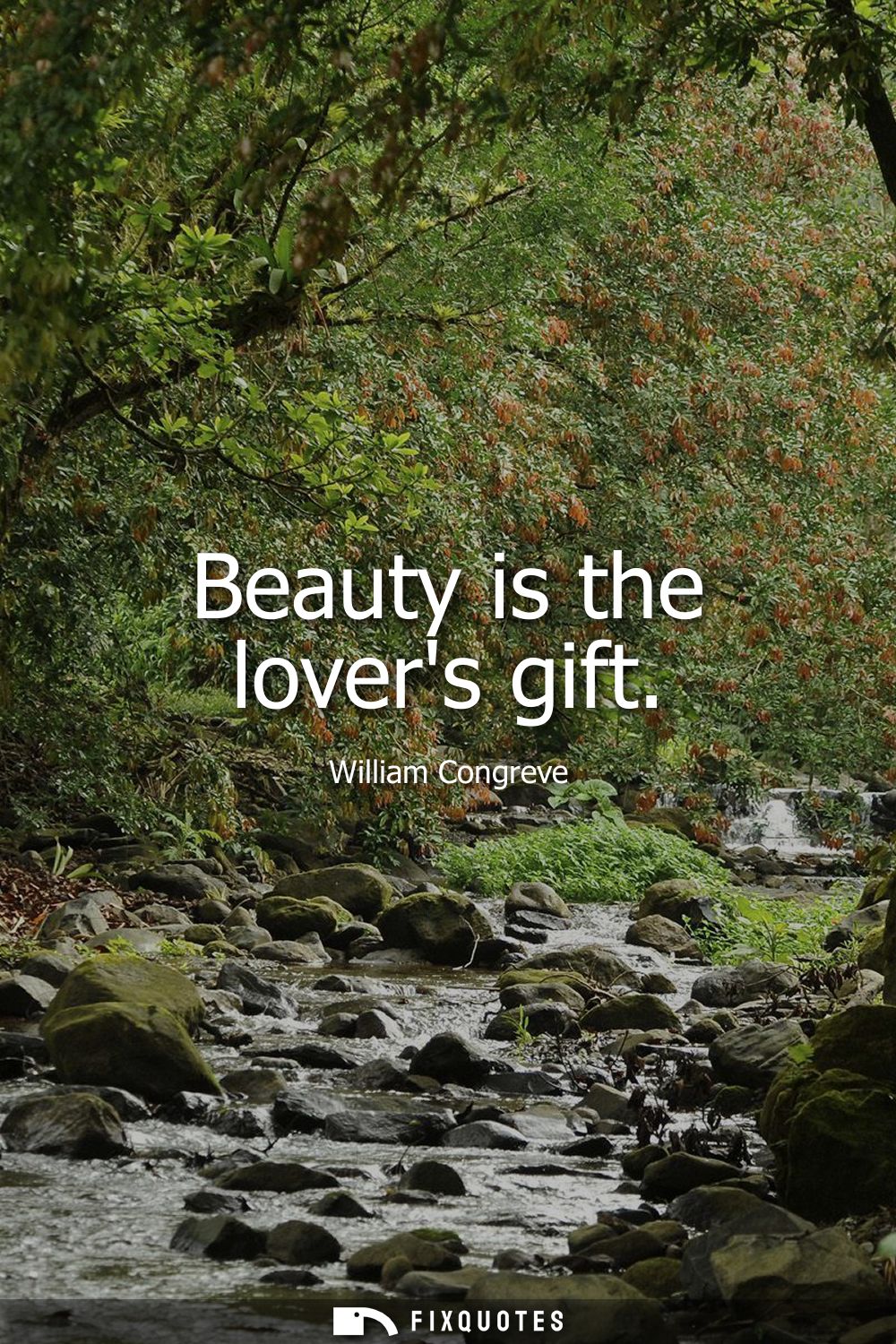
"Beauty is the lover's gift"
About this Quote
A neat little knife of a line: Congreve turns beauty from a natural fact into a social transaction. "Beauty is the lover's gift" doesn't flatter the beloved so much as it exposes the lover. What we call beauty, he implies, is often a kind of donation - attention, desire, narrative, projection. The beloved may have features, charm, presence; the "beauty" that matters is the glow the lover casts over them, the aura created by longing.
Congreve, writing in the late Restoration world of manners, seduction, and performance, understood romance as theater. His comedies are full of people negotiating status with wit, and love is rarely innocent. This line fits that ecosystem: it reframes admiration as power. If beauty is given, it can also be withheld. The lover becomes a maker and a judge, and the beloved becomes, uncomfortably, a canvas. There's tenderness here, but also control: the one who "gifts" beauty holds the privilege of defining what's desirable.
The subtext is both cynical and oddly democratic. Cynical because it suggests beauty is contingent, a story we tell ourselves when we want something. Democratic because it dethrones objective standards; beauty isn't a fixed property owned by the few, it's an experience produced between people. Congreve's intent feels less like romance and more like correction: beware the metaphysics of attraction. What you praise in another person may be your own desire, dressed up as their essence.
Congreve, writing in the late Restoration world of manners, seduction, and performance, understood romance as theater. His comedies are full of people negotiating status with wit, and love is rarely innocent. This line fits that ecosystem: it reframes admiration as power. If beauty is given, it can also be withheld. The lover becomes a maker and a judge, and the beloved becomes, uncomfortably, a canvas. There's tenderness here, but also control: the one who "gifts" beauty holds the privilege of defining what's desirable.
The subtext is both cynical and oddly democratic. Cynical because it suggests beauty is contingent, a story we tell ourselves when we want something. Democratic because it dethrones objective standards; beauty isn't a fixed property owned by the few, it's an experience produced between people. Congreve's intent feels less like romance and more like correction: beware the metaphysics of attraction. What you praise in another person may be your own desire, dressed up as their essence.
Quote Details
| Topic | Romantic |
|---|
More Quotes by William
Add to List