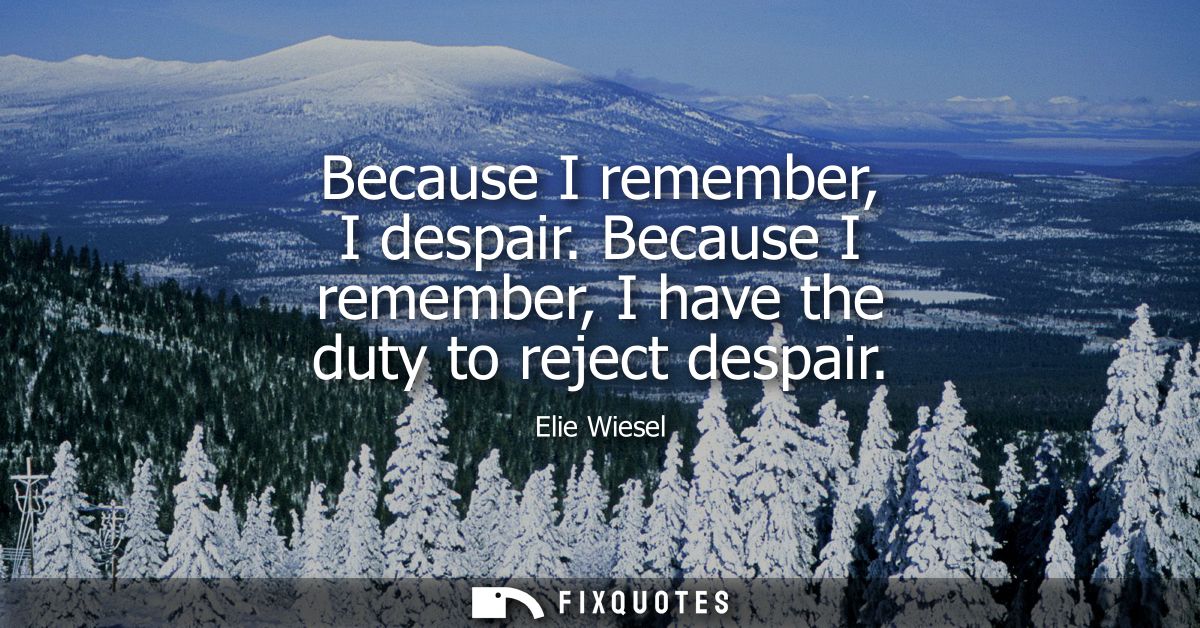
"Because I remember, I despair. Because I remember, I have the duty to reject despair"
About this Quote
Then Wiesel snaps the trap shut on that honesty: "Because I remember, I have the duty to reject despair". The second sentence doesn't negate the first; it disciplines it. The subtext is an argument with two easy escapes: forgetting (comfort) and nihilism (collapse). Wiesel indicts both. If memory leads only to despair, it becomes sterile - a private torment that changes nothing. If memory is avoided to preserve optimism, it becomes complicity by omission. So he frames hope not as a temperament but as an obligation, almost an ethical posture chosen against evidence.
The rhetoric matters: the repetition of "Because I remember" makes causality feel inescapable, like a verdict. The word "duty" shifts the quote from memoir to moral instruction, from feeling to responsibility. In the context of postwar testimony and Wiesel's lifelong insistence on bearing witness, the line is less inspirational than confrontational. It demands that remembrance carry consequences: vigilance against indifference, solidarity with the threatened, and a refusal to let catastrophe be the final meaning of catastrophe.
Quote Details
| Topic | Hope |
|---|---|
| Source | Help us find the source |
| Cite |
Citation Formats
APA Style (7th ed.)
Wiesel, Elie. (2026, January 18). Because I remember, I despair. Because I remember, I have the duty to reject despair. FixQuotes. https://fixquotes.com/quotes/because-i-remember-i-despair-because-i-remember-i-16897/
Chicago Style
Wiesel, Elie. "Because I remember, I despair. Because I remember, I have the duty to reject despair." FixQuotes. January 18, 2026. https://fixquotes.com/quotes/because-i-remember-i-despair-because-i-remember-i-16897/.
MLA Style (9th ed.)
"Because I remember, I despair. Because I remember, I have the duty to reject despair." FixQuotes, 18 Jan. 2026, https://fixquotes.com/quotes/because-i-remember-i-despair-because-i-remember-i-16897/. Accessed 27 Mar. 2026.