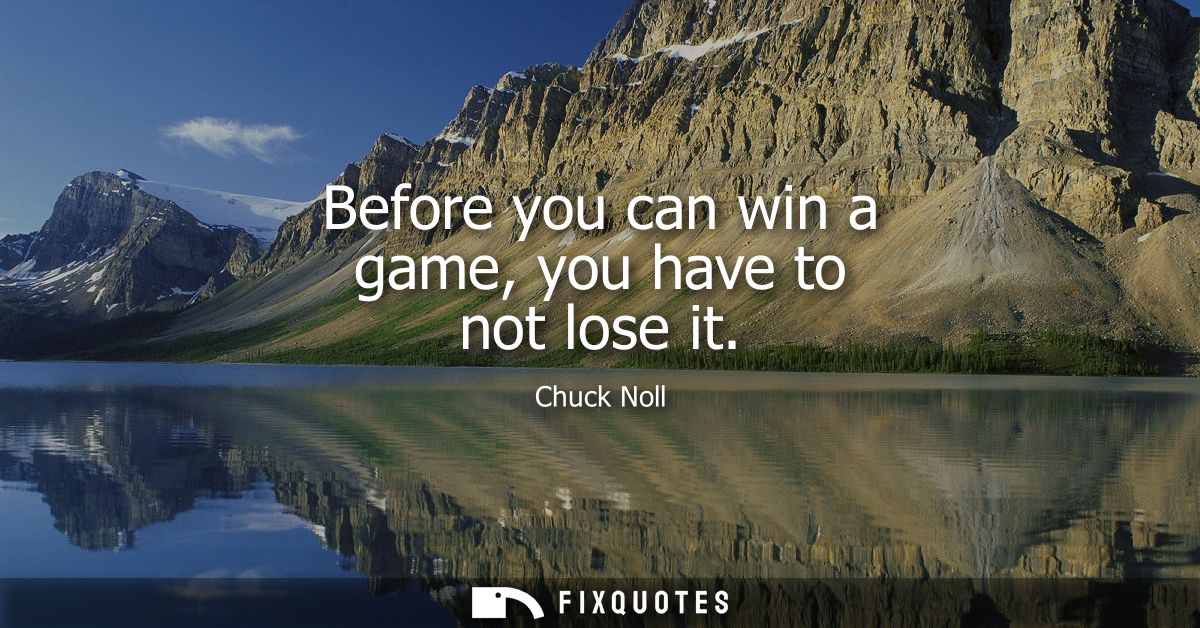
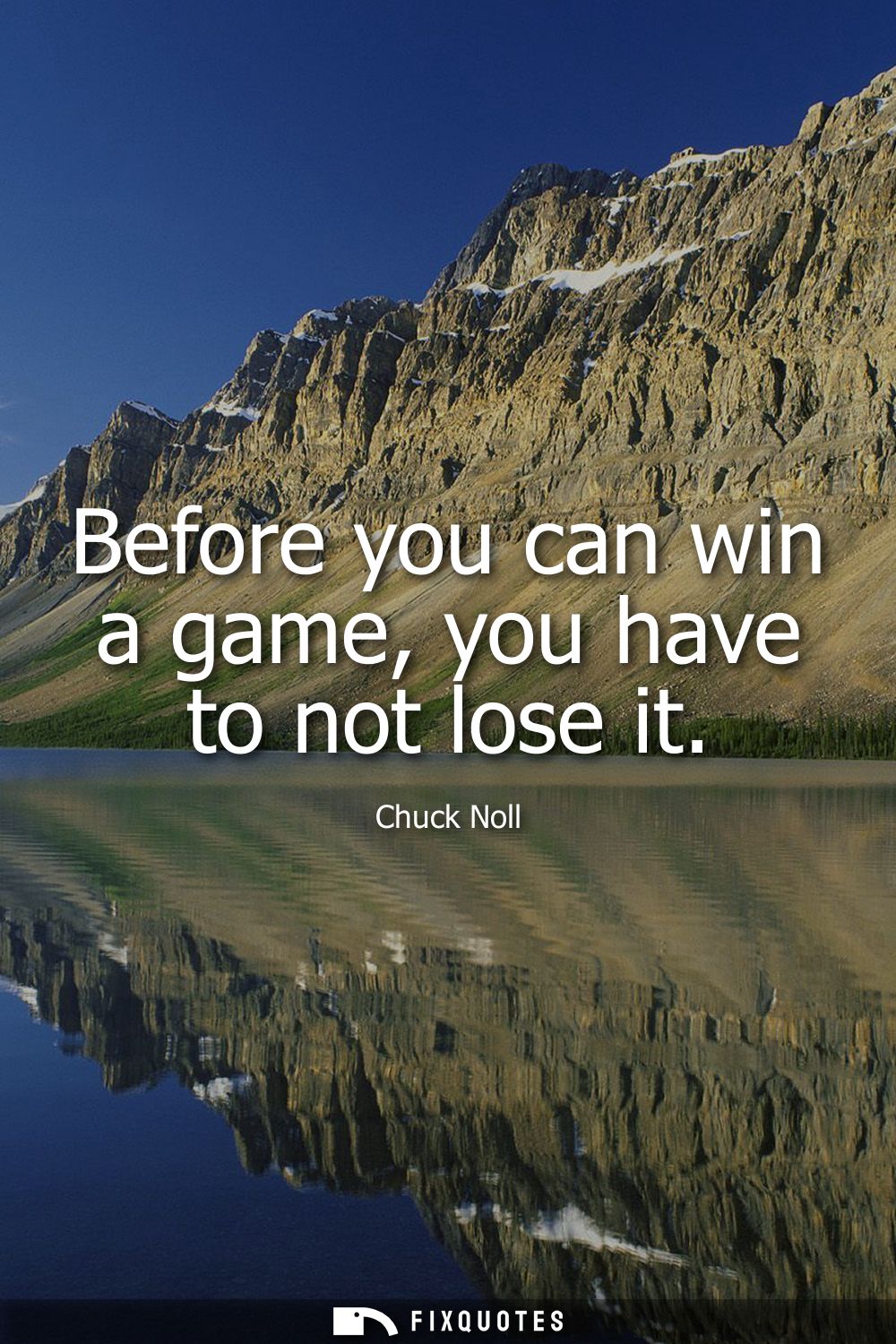
"Before you can win a game, you have to not lose it"
About this Quote
The line sounds like a tautology until you hear it in a coach’s voice: it’s an anti-highlight-reel philosophy aimed straight at ego. Chuck Noll isn’t selling genius; he’s selling discipline. “Before you can win…you have to not lose” shifts the emotional center of competition from flashy conquest to quiet risk management. The subtext is almost parental: stop giving games away. Stop chasing the heroic play that turns into the backbreaking mistake.
That’s also why it lands as a cultural corrective. Sports media celebrates “winners” as if victory is a personality trait, but Noll frames it as a process of eliminating self-sabotage. The intent is practical: protect the ball, avoid penalties, don’t blow assignments, don’t compound errors. It’s a credo for teams that want to be reliably good, not occasionally brilliant. In that sense, it’s less about playing scared than about playing clean.
Context matters. Noll built the 1970s Steelers into a dynasty on defense, toughness, and execution, not constant improvisation. His teams weaponized patience: they could absorb setbacks because they weren’t gifting opponents short fields and free points. The quote doubles as a leadership note, too. In organizations, most failures aren’t dramatic; they’re unforced errors, tolerated bad habits, small corners cut until the structure collapses. Noll’s genius is making restraint sound like ambition: winning starts with refusing to hand the other side a reason to believe.
That’s also why it lands as a cultural corrective. Sports media celebrates “winners” as if victory is a personality trait, but Noll frames it as a process of eliminating self-sabotage. The intent is practical: protect the ball, avoid penalties, don’t blow assignments, don’t compound errors. It’s a credo for teams that want to be reliably good, not occasionally brilliant. In that sense, it’s less about playing scared than about playing clean.
Context matters. Noll built the 1970s Steelers into a dynasty on defense, toughness, and execution, not constant improvisation. His teams weaponized patience: they could absorb setbacks because they weren’t gifting opponents short fields and free points. The quote doubles as a leadership note, too. In organizations, most failures aren’t dramatic; they’re unforced errors, tolerated bad habits, small corners cut until the structure collapses. Noll’s genius is making restraint sound like ambition: winning starts with refusing to hand the other side a reason to believe.
Quote Details
| Topic | Victory |
|---|---|
| Source | Help us find the source |
| Cite |
Citation Formats
APA Style (7th ed.)
Noll, Chuck. (2026, January 16). Before you can win a game, you have to not lose it. FixQuotes. https://fixquotes.com/quotes/before-you-can-win-a-game-you-have-to-not-lose-it-99376/
Chicago Style
Noll, Chuck. "Before you can win a game, you have to not lose it." FixQuotes. January 16, 2026. https://fixquotes.com/quotes/before-you-can-win-a-game-you-have-to-not-lose-it-99376/.
MLA Style (9th ed.)
"Before you can win a game, you have to not lose it." FixQuotes, 16 Jan. 2026, https://fixquotes.com/quotes/before-you-can-win-a-game-you-have-to-not-lose-it-99376/. Accessed 7 Mar. 2026.
More Quotes by Chuck
Add to List