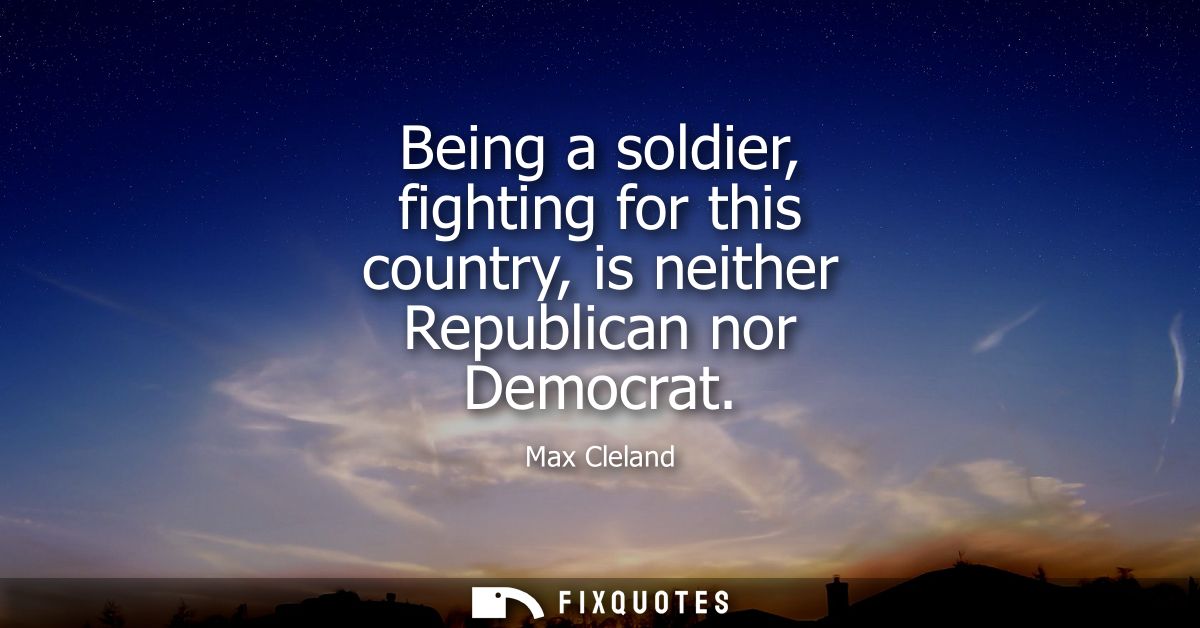
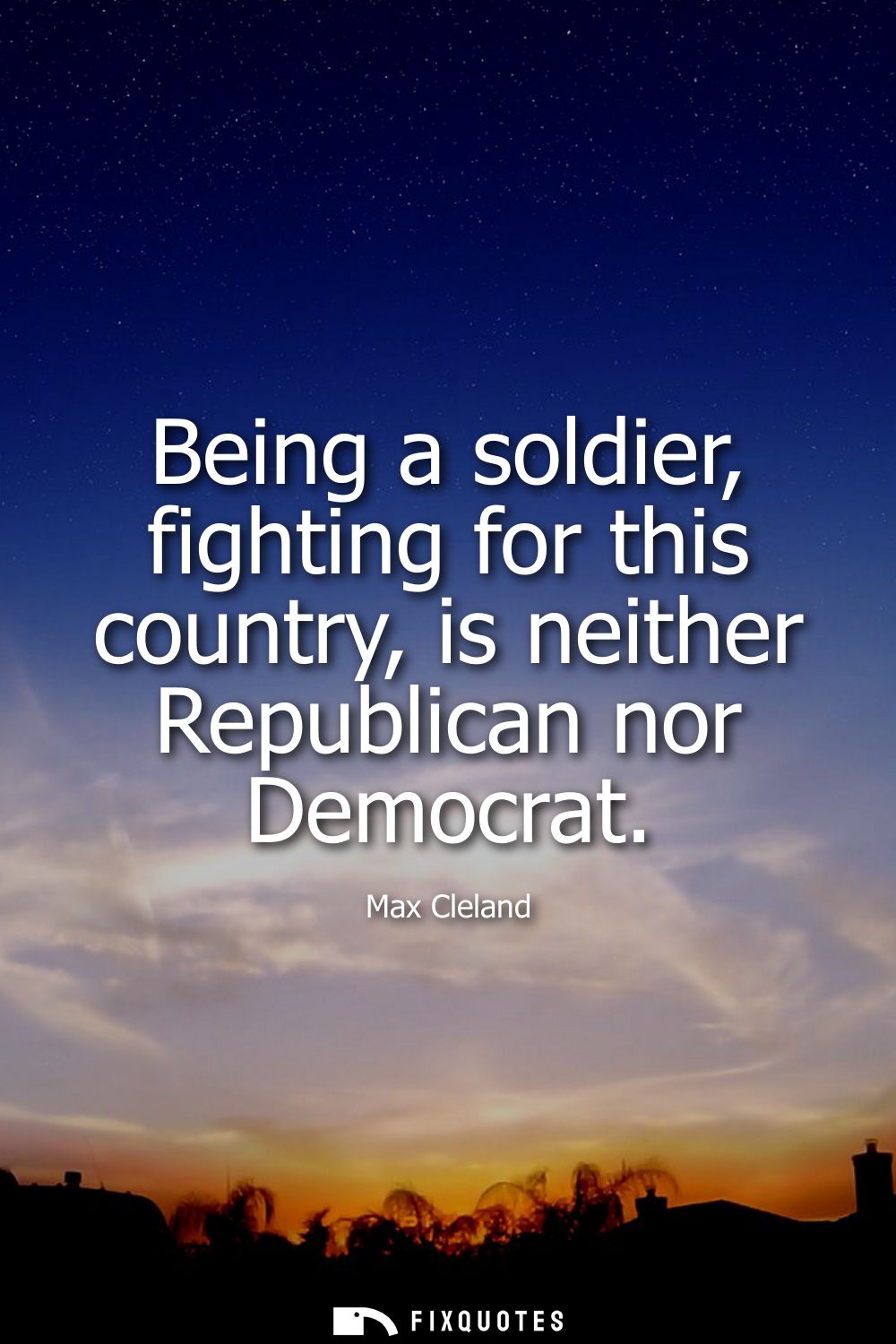
"Being a soldier, fighting for this country, is neither Republican nor Democrat"
About this Quote
The phrasing is doing careful rhetorical work. “Being a soldier” isn’t the same as “supporting the troops.” It’s identity and obligation, not a slogan. “Fighting for this country” invokes sacrifice without specifying a particular war, letting the moral authority of service stand apart from any single conflict’s popularity. Then he lands the punch: “neither Republican nor Democrat.” The parallelism is blunt on purpose, flattening partisan hierarchy and denying anyone ownership.
The subtext is also about suspicion. In modern U.S. politics, patriotism gets litigated like a credential. Cleland is pushing back against the reflex to treat military service as proof of ideological purity, and against the equally cynical move of attacking opponents as unpatriotic. He’s arguing for a civic commons where sacrifice isn’t a talking point.
Context matters: Cleland lived through the Vietnam era’s rupture and, decades later, the post-9/11 temptation to wrap policy debates in flag-draped immunity. The quote works because it’s both ethical claim and warning: once service becomes partisan, the country stops being the thing everyone is allegedly fighting for.
Quote Details
| Topic | Military & Soldier |
|---|---|
| Source | Help us find the source |
| Cite |
Citation Formats
APA Style (7th ed.)
Cleland, Max. (2026, January 16). Being a soldier, fighting for this country, is neither Republican nor Democrat. FixQuotes. https://fixquotes.com/quotes/being-a-soldier-fighting-for-this-country-is-113068/
Chicago Style
Cleland, Max. "Being a soldier, fighting for this country, is neither Republican nor Democrat." FixQuotes. January 16, 2026. https://fixquotes.com/quotes/being-a-soldier-fighting-for-this-country-is-113068/.
MLA Style (9th ed.)
"Being a soldier, fighting for this country, is neither Republican nor Democrat." FixQuotes, 16 Jan. 2026, https://fixquotes.com/quotes/being-a-soldier-fighting-for-this-country-is-113068/. Accessed 5 Apr. 2026.