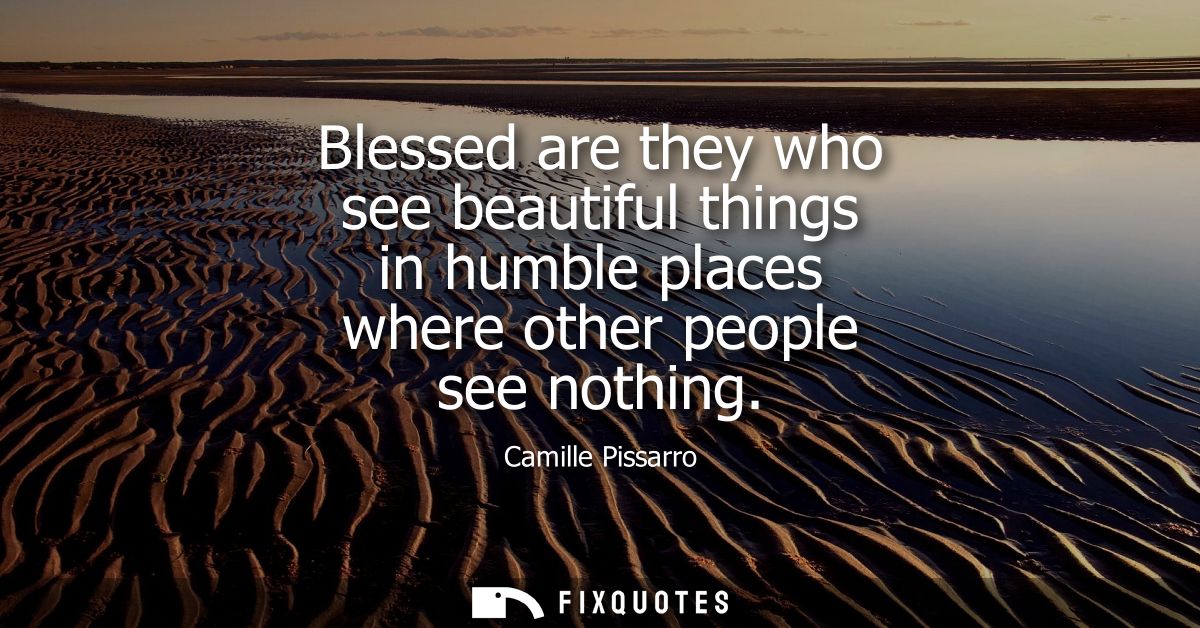
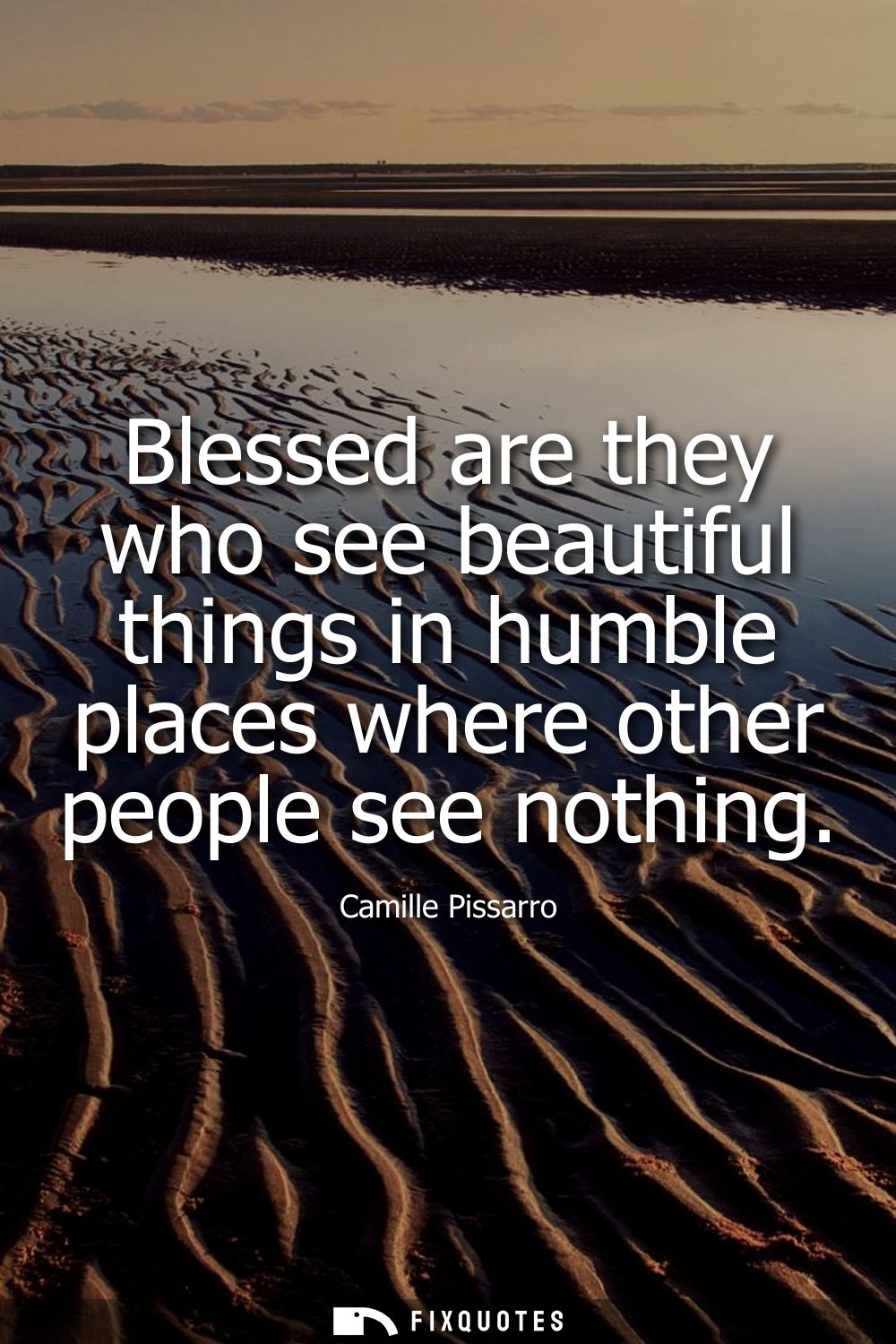
"Blessed are they who see beautiful things in humble places where other people see nothing"
About this Quote
The subtext is both ethical and political. To see "where other people see nothing" isn't just a private sensitivity; it's a refusal of the dominant hierarchy of what deserves looking at. In the 19th-century art world, prestige clung to history painting, myth, and polished spectacle. Pissarro, an Impressionist and a patient chronicler of peasants, roads, and urban edges, built a career insisting that modern life and ordinary labor were worthy subjects. The quote reads like an internal defense against the snobbery of the Salon and the market, but also a gentle jab at bourgeois tunnel vision: if you can't find beauty without money, monuments, or status, your eyes have been trained to miss most of the world.
"Blessed" also hints at discipline. This isn't effortless optimism; it's cultivated perception. Pissarro is praising a kind of democratic seeing: beauty as something you practice, not something reserved for people standing in the "right" places.
Quote Details
| Topic | Gratitude |
|---|---|
| Source | Help us find the source |
| Cite |
Citation Formats
APA Style (7th ed.)
Pissarro, Camille. (2026, January 17). Blessed are they who see beautiful things in humble places where other people see nothing. FixQuotes. https://fixquotes.com/quotes/blessed-are-they-who-see-beautiful-things-in-49356/
Chicago Style
Pissarro, Camille. "Blessed are they who see beautiful things in humble places where other people see nothing." FixQuotes. January 17, 2026. https://fixquotes.com/quotes/blessed-are-they-who-see-beautiful-things-in-49356/.
MLA Style (9th ed.)
"Blessed are they who see beautiful things in humble places where other people see nothing." FixQuotes, 17 Jan. 2026, https://fixquotes.com/quotes/blessed-are-they-who-see-beautiful-things-in-49356/. Accessed 12 Feb. 2026.