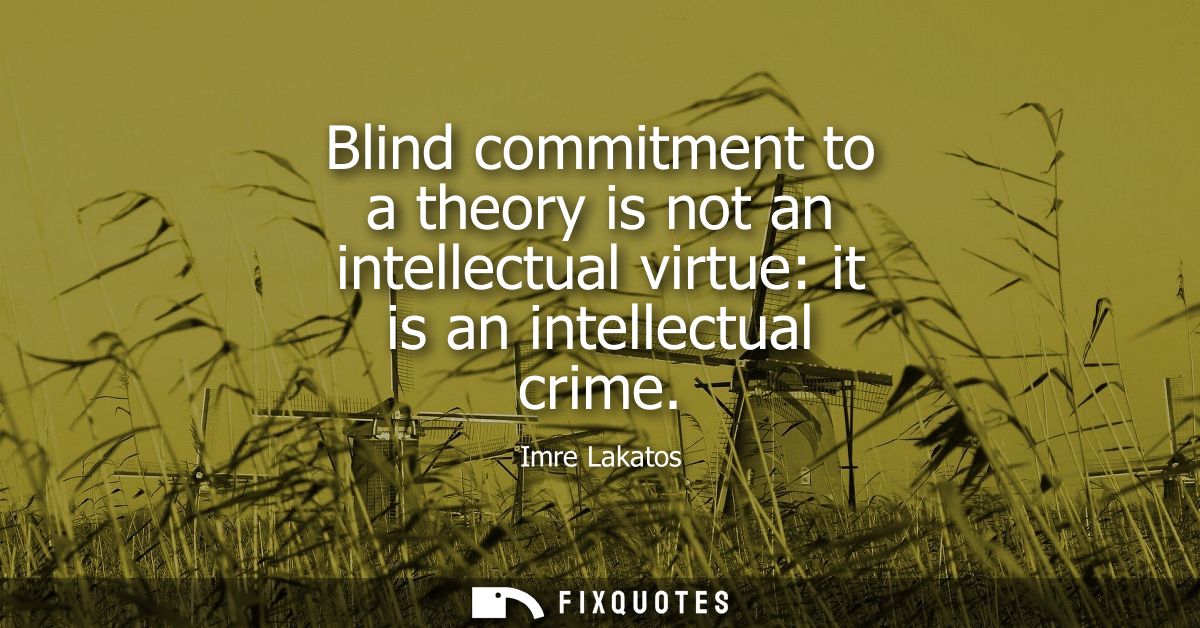
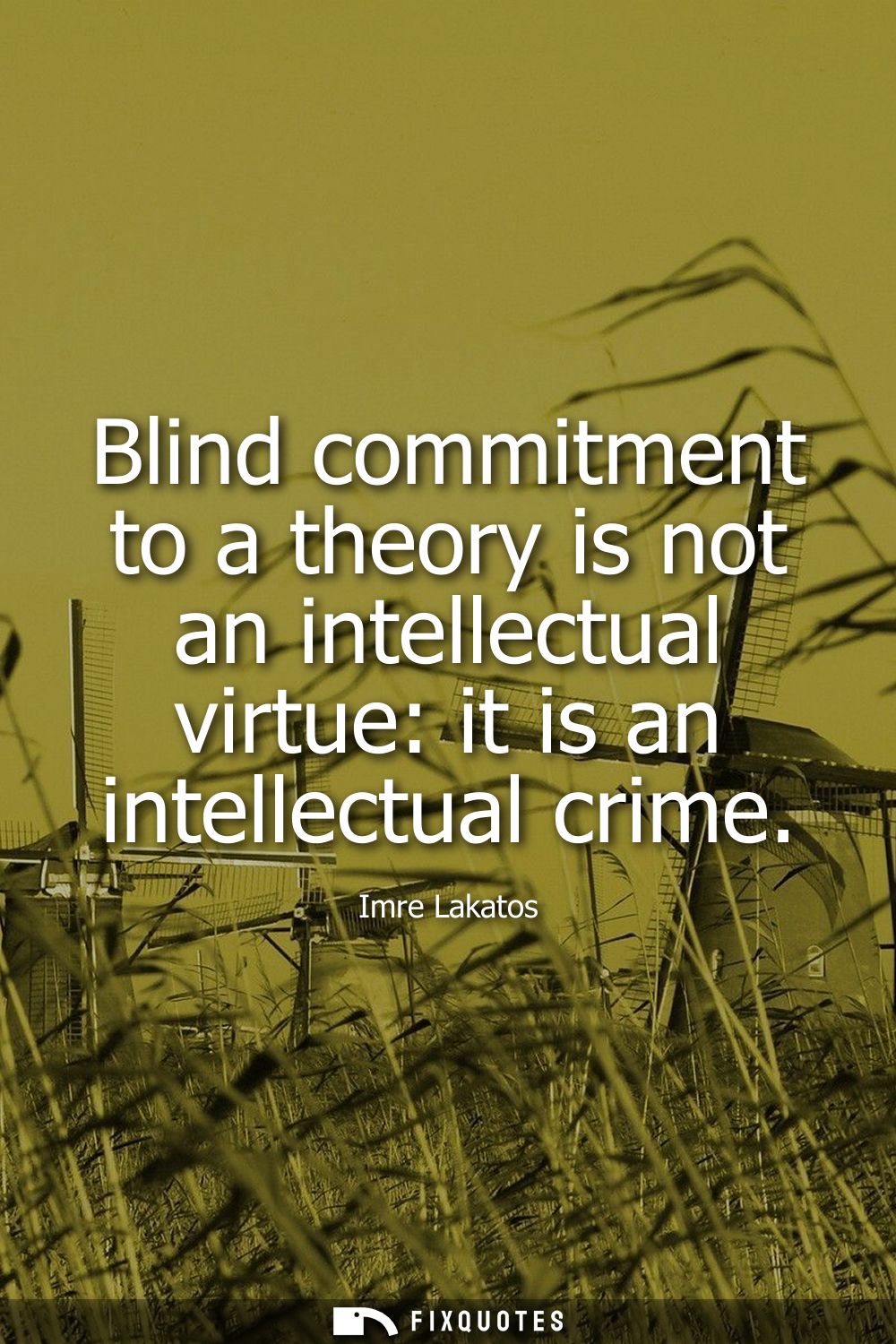
"Blind commitment to a theory is not an intellectual virtue: it is an intellectual crime"
About this Quote
The phrase “intellectual virtue” is doing quiet work here. Virtue implies discipline, restraint, and a readiness to be corrected. “Blind commitment” is the counterfeit version: a theatrical steadfastness that refuses the humiliation of revision. Lakatos, writing in the shadow of mid-century ideological wreckage and scientific upheaval, knew how readily systems of thought become systems of self-justification. His own arc - from Communist Hungary through exile into the Anglo philosophy of science scene - makes the line feel less like a slogan than a scar.
Contextually, this lands inside his fight with both naive falsificationism and dogmatic “research programs” treated as faiths. Lakatos wanted theories judged by how they develop: do they predict, adapt, generate new problems, or just patch over failures? The subtext is a rebuke to the careerist incentives of intellectual life: once your identity, status, and tribe are fused to a theory, evidence becomes an enemy. “Crime” names the damage that follows when thinking becomes a loyalty test, and inquiry becomes mere enforcement.
Quote Details
| Topic | Reason & Logic |
|---|---|
| Source | Help us find the source |
| Cite |
Citation Formats
APA Style (7th ed.)
Lakatos, Imre. (2026, January 16). Blind commitment to a theory is not an intellectual virtue: it is an intellectual crime. FixQuotes. https://fixquotes.com/quotes/blind-commitment-to-a-theory-is-not-an-117640/
Chicago Style
Lakatos, Imre. "Blind commitment to a theory is not an intellectual virtue: it is an intellectual crime." FixQuotes. January 16, 2026. https://fixquotes.com/quotes/blind-commitment-to-a-theory-is-not-an-117640/.
MLA Style (9th ed.)
"Blind commitment to a theory is not an intellectual virtue: it is an intellectual crime." FixQuotes, 16 Jan. 2026, https://fixquotes.com/quotes/blind-commitment-to-a-theory-is-not-an-117640/. Accessed 5 Mar. 2026.