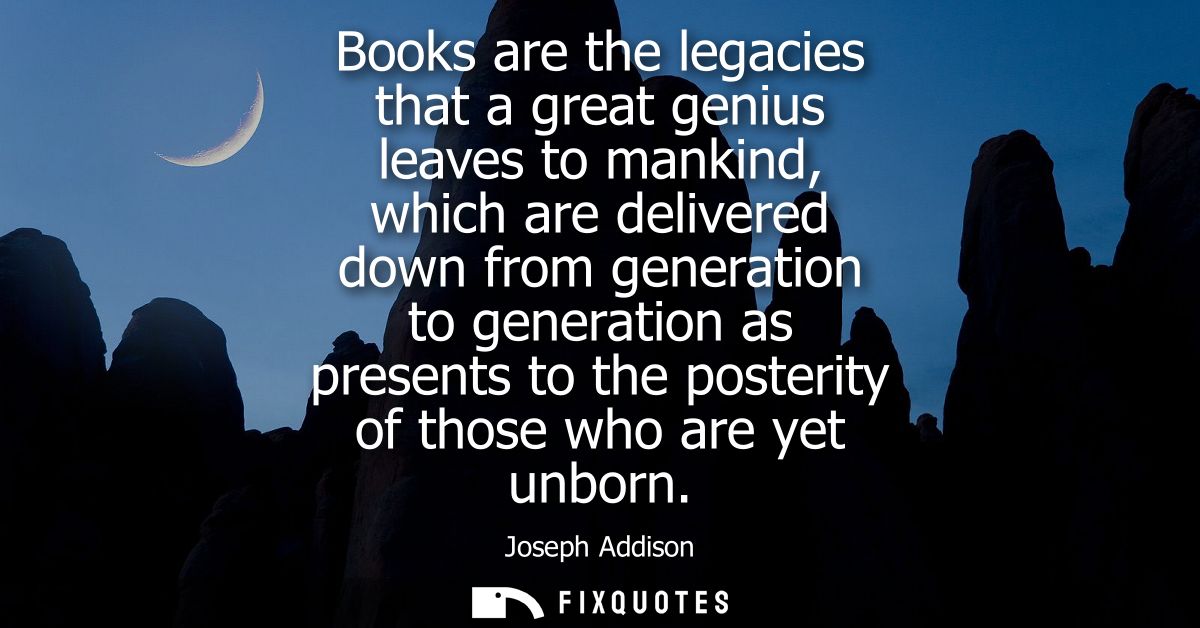
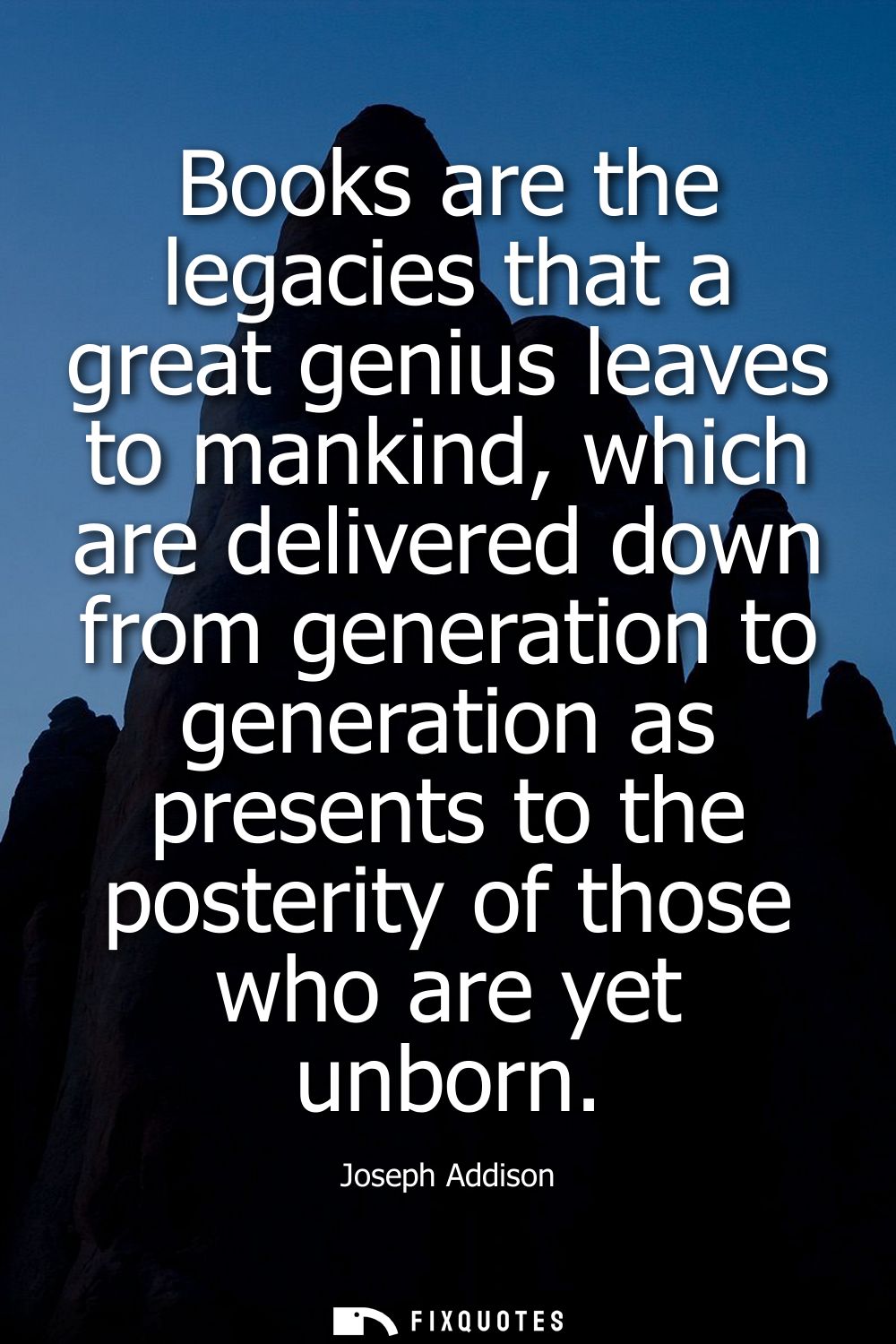
"Books are the legacies that a great genius leaves to mankind, which are delivered down from generation to generation as presents to the posterity of those who are yet unborn"
About this Quote
The subtext is equally tactical. Addison was a central architect of early 18th-century print culture, writing in and around the coffeehouse ecosystem where periodicals like The Spectator tried to cultivate “polite” taste, civic reasonableness, and a national public. Calling books “presents” does two things at once: it flatters the act of reading as participation in a grand tradition, and it soft-sells the market reality that books are commodities. If books are gifts to the unborn, buying, collecting, and revering them becomes a form of cultural duty rather than conspicuous consumption.
There’s also a quiet hierarchy embedded in “great genius.” Not everyone’s writing makes it across time; Addison is defending a canon before the word “canon” hardens. In an era anxious about ephemera and pamphlet noise, he argues for durability: the best writing outlives politics, fashion, even the author’s body. It’s a shrewd Enlightenment bet that ideas can be stored, transmitted, and improved - and that print is the technology that makes human progress plausible.
Quote Details
| Topic | Book |
|---|---|
| Source | Help us find the source |
| Cite |
Citation Formats
APA Style (7th ed.)
Addison, Joseph. (2026, January 16). Books are the legacies that a great genius leaves to mankind, which are delivered down from generation to generation as presents to the posterity of those who are yet unborn. FixQuotes. https://fixquotes.com/quotes/books-are-the-legacies-that-a-great-genius-leaves-90937/
Chicago Style
Addison, Joseph. "Books are the legacies that a great genius leaves to mankind, which are delivered down from generation to generation as presents to the posterity of those who are yet unborn." FixQuotes. January 16, 2026. https://fixquotes.com/quotes/books-are-the-legacies-that-a-great-genius-leaves-90937/.
MLA Style (9th ed.)
"Books are the legacies that a great genius leaves to mankind, which are delivered down from generation to generation as presents to the posterity of those who are yet unborn." FixQuotes, 16 Jan. 2026, https://fixquotes.com/quotes/books-are-the-legacies-that-a-great-genius-leaves-90937/. Accessed 30 Mar. 2026.