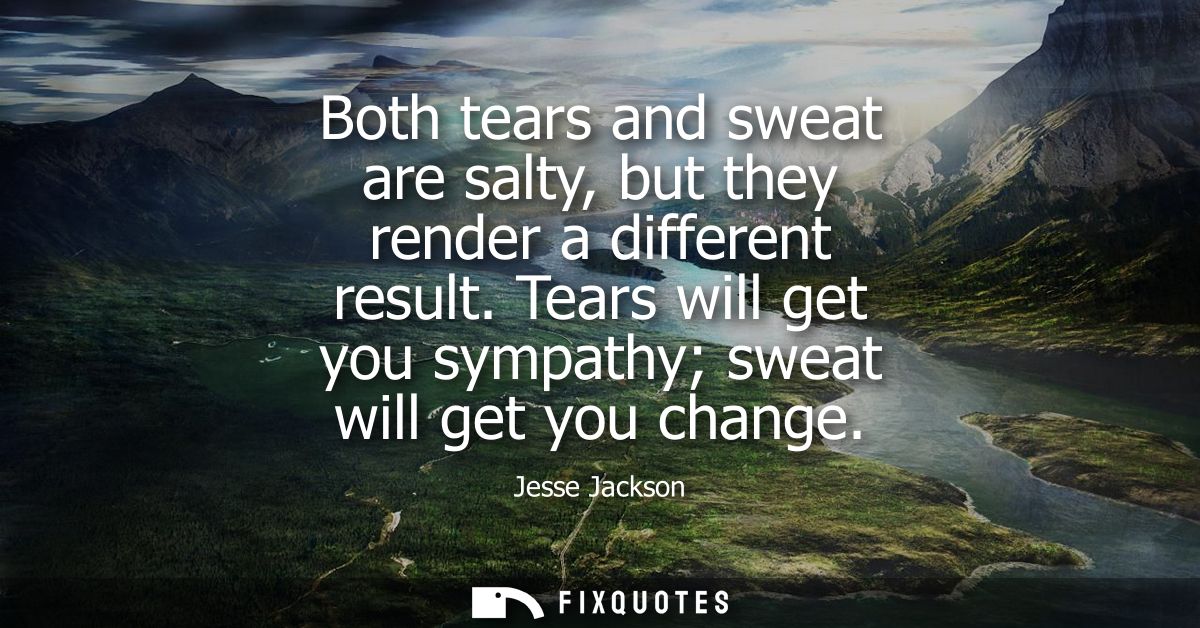
"Both tears and sweat are salty, but they render a different result. Tears will get you sympathy; sweat will get you change"
About this Quote
Sweat, by contrast, is unromantic. It implies repetition, organizing, marching, negotiating, building coalitions, getting out the vote, taking meetings that go nowhere, coming back anyway. Sweat is collective and inconvenient; it interrupts schedules and threatens stability. That is why it produces "change" rather than consolation. Jackson’s activist context matters: he came up in the post-civil-rights era where the language of empathy had already been absorbed by mainstream politics, while structural inequities stayed put. The quote reads like a corrective to a culture that loves emotional spectacle - the televised tragedy, the viral testimony - but resists sustained redistribution of power.
The subtext is also a quiet rebuke to the audience that wants to be moved more than it wants to be mobilized. Jackson isn’t dismissing tears; he’s demoting them. Grief can start a movement, but it can’t substitute for one. The sentence turns a moral economy into a tactical one: if you want people to feel for you, cry. If you want them to move, work - and make them deal with the work.
Quote Details
| Topic | Work Ethic |
|---|---|
| Source | Help us find the source |
| Cite |
Citation Formats
APA Style (7th ed.)
Jackson, Jesse. (2026, January 14). Both tears and sweat are salty, but they render a different result. Tears will get you sympathy; sweat will get you change. FixQuotes. https://fixquotes.com/quotes/both-tears-and-sweat-are-salty-but-they-render-a-154655/
Chicago Style
Jackson, Jesse. "Both tears and sweat are salty, but they render a different result. Tears will get you sympathy; sweat will get you change." FixQuotes. January 14, 2026. https://fixquotes.com/quotes/both-tears-and-sweat-are-salty-but-they-render-a-154655/.
MLA Style (9th ed.)
"Both tears and sweat are salty, but they render a different result. Tears will get you sympathy; sweat will get you change." FixQuotes, 14 Jan. 2026, https://fixquotes.com/quotes/both-tears-and-sweat-are-salty-but-they-render-a-154655/. Accessed 7 Feb. 2026.