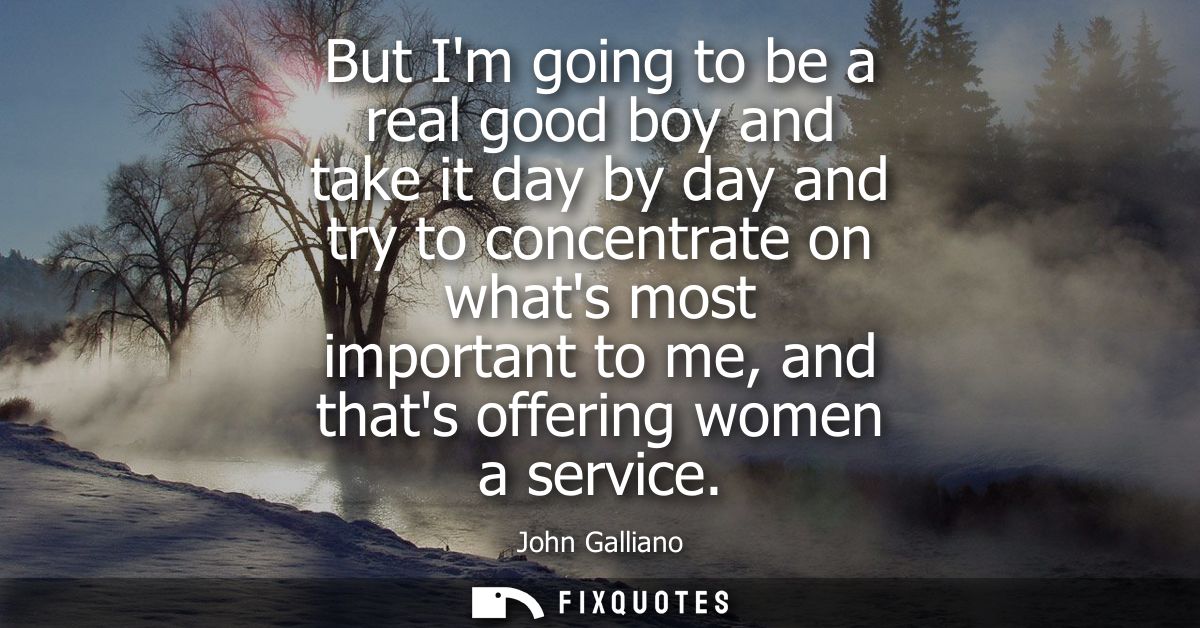
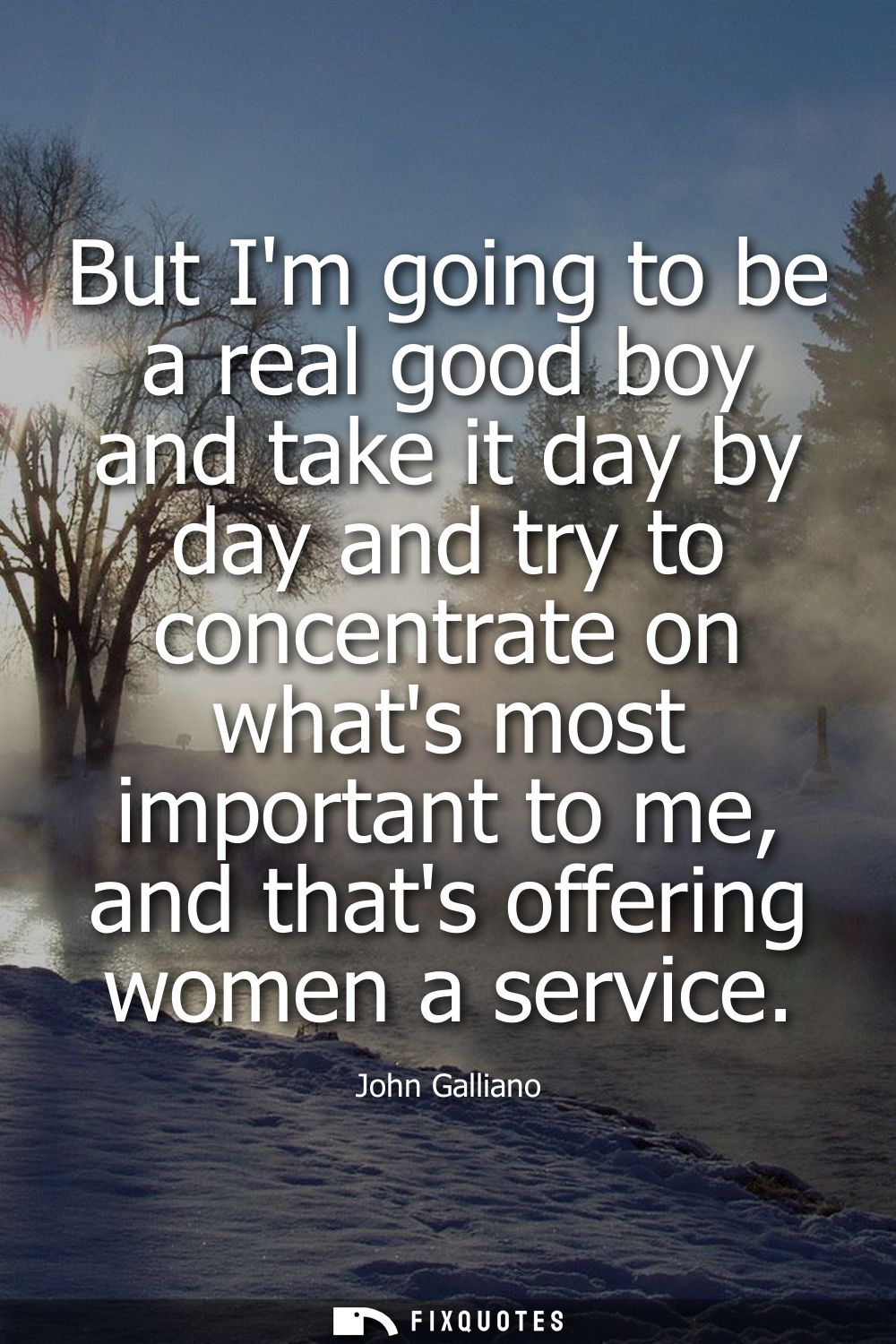
"But I'm going to be a real good boy and take it day by day and try to concentrate on what's most important to me, and that's offering women a service"
About this Quote
Then comes the pivot that reveals the real agenda: “offering women a service.” In fashion, “service” is both true and strategically flattering. It recasts luxury consumption as care, even empowerment, placing the designer in the role of provider rather than provocateur. The subtext is transactional and calming: whatever storm exists around the artist, the work is still for you, still about you, still benevolent. That’s a clever reframing for a figure whose brand has historically thrived on spectacle, transgression, and authored fantasy.
Context matters because Galliano’s public image has been repeatedly negotiated through scandal and comeback. This quote reads like reputational triage: minimize ego, emphasize routine, center women as justification. It’s a way of laundering ambition through devotion. The sentence wants to sound modest, but it’s also a quiet claim to indispensability: even chastened, he’s still the one who can “offer” something women need.
Quote Details
| Topic | Career |
|---|---|
| Source | Help us find the source |
| Cite |
Citation Formats
APA Style (7th ed.)
Galliano, John. (2026, January 16). But I'm going to be a real good boy and take it day by day and try to concentrate on what's most important to me, and that's offering women a service. FixQuotes. https://fixquotes.com/quotes/but-im-going-to-be-a-real-good-boy-and-take-it-130312/
Chicago Style
Galliano, John. "But I'm going to be a real good boy and take it day by day and try to concentrate on what's most important to me, and that's offering women a service." FixQuotes. January 16, 2026. https://fixquotes.com/quotes/but-im-going-to-be-a-real-good-boy-and-take-it-130312/.
MLA Style (9th ed.)
"But I'm going to be a real good boy and take it day by day and try to concentrate on what's most important to me, and that's offering women a service." FixQuotes, 16 Jan. 2026, https://fixquotes.com/quotes/but-im-going-to-be-a-real-good-boy-and-take-it-130312/. Accessed 6 Apr. 2026.