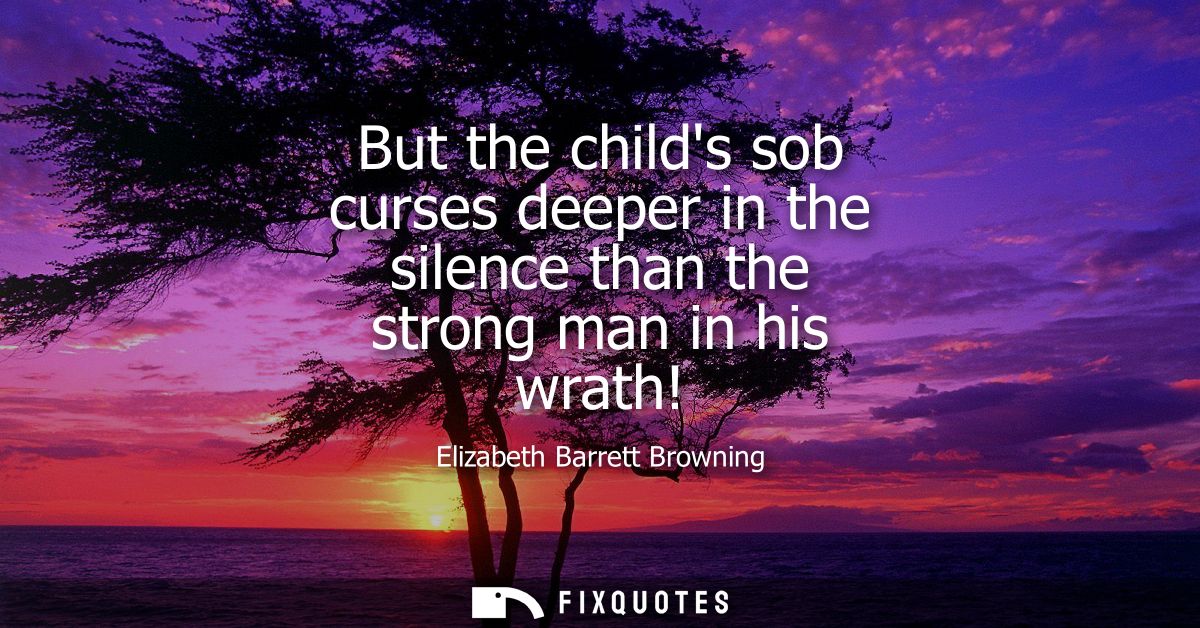
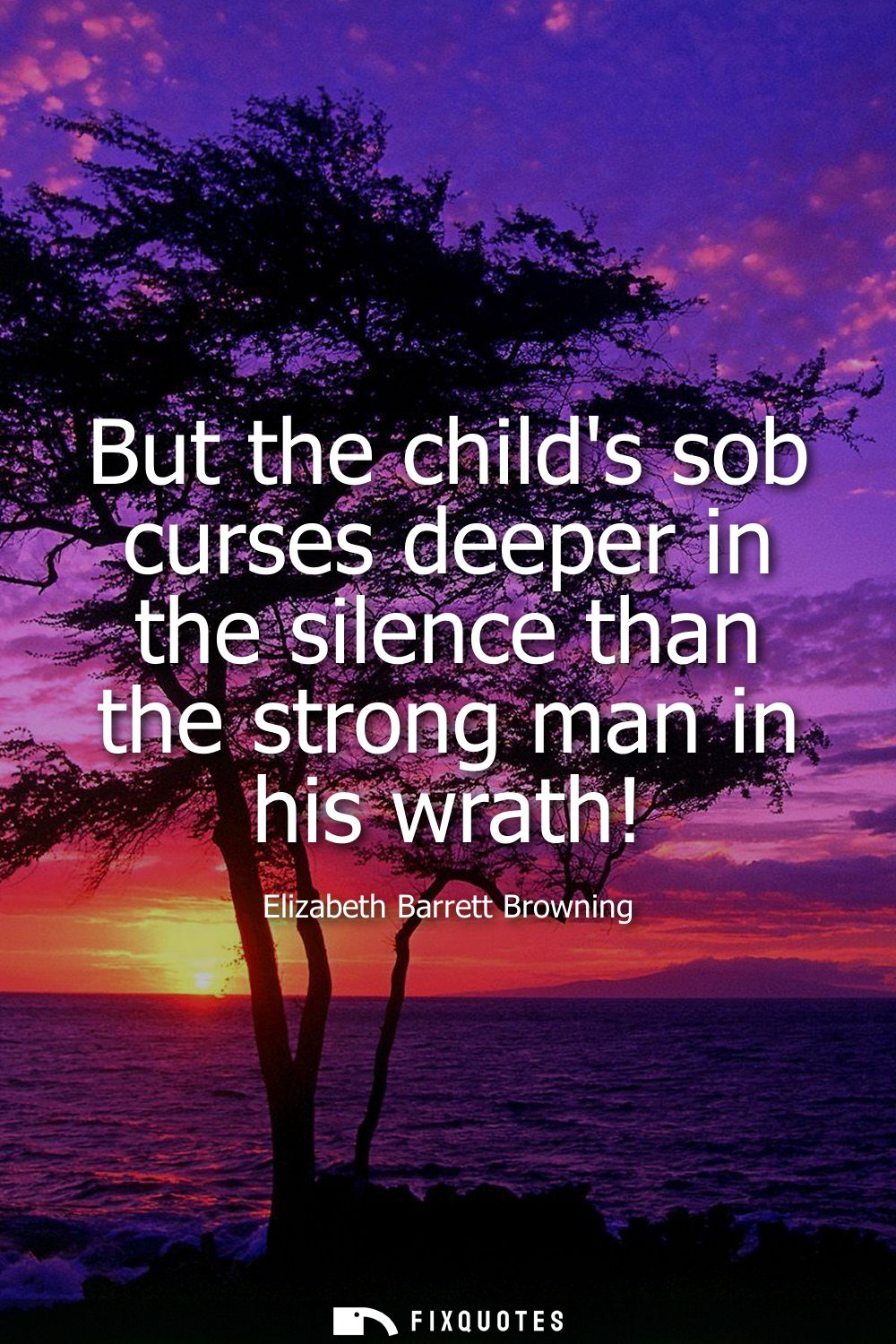
"But the child's sob curses deeper in the silence than the strong man in his wrath!"
About this Quote
The line works because it makes sound do ethical work. “Deeper” is physical and psychological: the sob drops beneath the surface defenses that anger often fortifies. Browning’s diction turns vulnerability into a kind of judgment. The child doesn’t need authority to condemn; the suffering itself is the condemnation. That’s the subtext: societies that admire masculine fury as righteous may be more disturbed by a small, unanswerable pain.
Context matters. Barrett Browning wrote in a Victorian culture steeped in sentiment but also in brutal social realities: industrial poverty, child labor, domestic power imbalances. Her poetry often insists that private feeling is public evidence. This line belongs to a moral imagination that treats the home, the nursery, and the street as political theaters. The “silence” isn’t just quiet; it’s the enforced quiet of the powerless. The sob breaks it - and makes it impossible, for anyone listening, to pretend that strength is the same thing as right.
Quote Details
| Topic | Sadness |
|---|---|
| Source | Help us find the source |
| Cite |
Citation Formats
APA Style (7th ed.)
Browning, Elizabeth Barrett. (2026, January 15). But the child's sob curses deeper in the silence than the strong man in his wrath! FixQuotes. https://fixquotes.com/quotes/but-the-childs-sob-curses-deeper-in-the-silence-3411/
Chicago Style
Browning, Elizabeth Barrett. "But the child's sob curses deeper in the silence than the strong man in his wrath!" FixQuotes. January 15, 2026. https://fixquotes.com/quotes/but-the-childs-sob-curses-deeper-in-the-silence-3411/.
MLA Style (9th ed.)
"But the child's sob curses deeper in the silence than the strong man in his wrath!" FixQuotes, 15 Jan. 2026, https://fixquotes.com/quotes/but-the-childs-sob-curses-deeper-in-the-silence-3411/. Accessed 12 Feb. 2026.