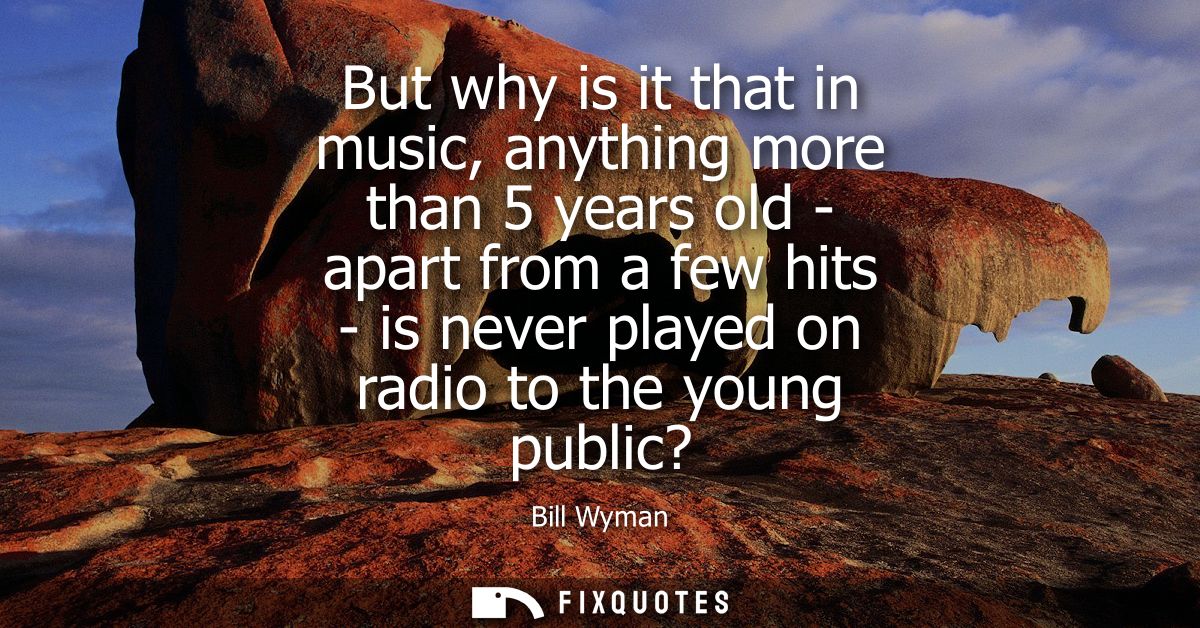
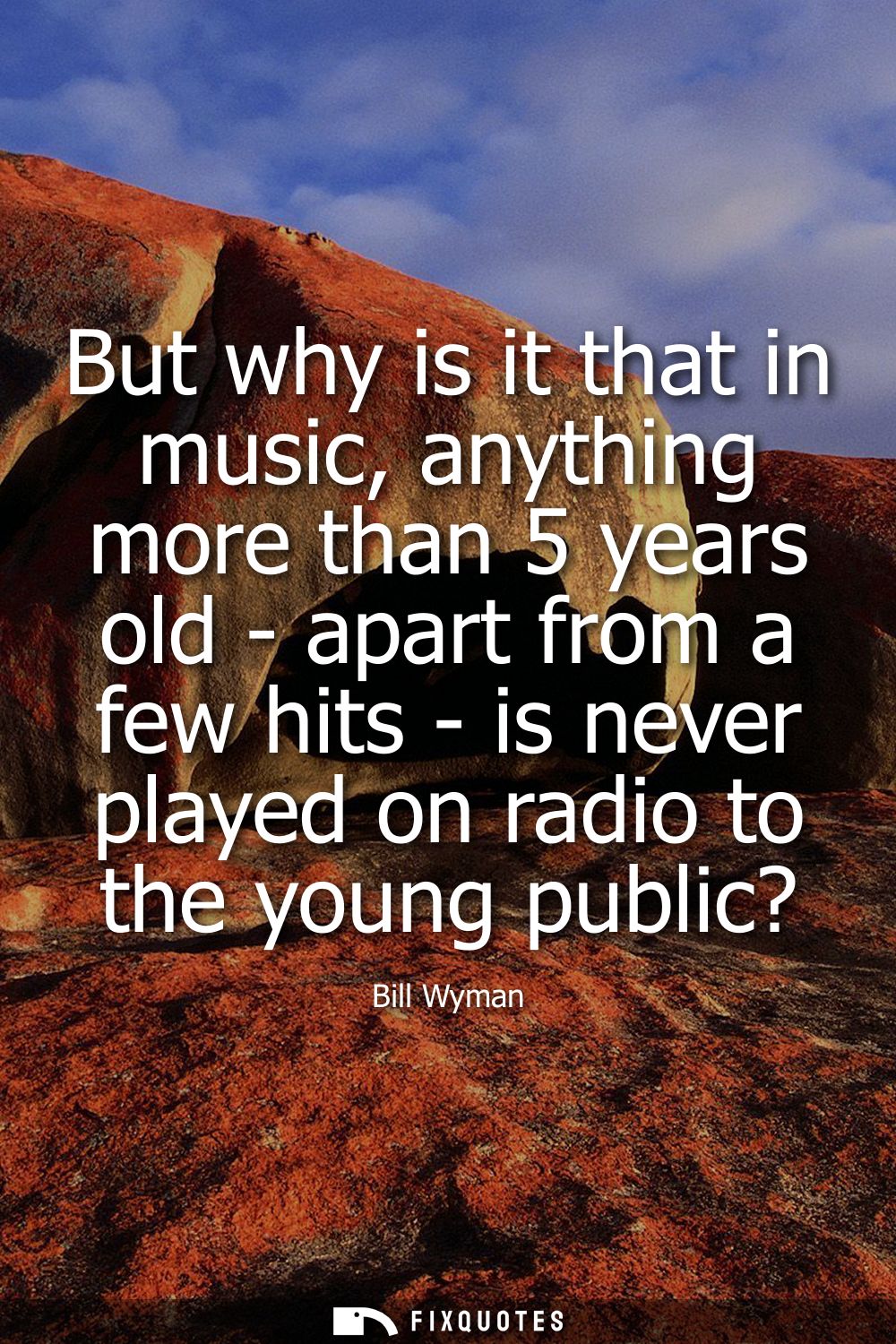
"But why is it that in music, anything more than 5 years old - apart from a few hits - is never played on radio to the young public?"
About this Quote
The “apart from a few hits” aside does double work. It admits the obvious exceptions while exposing how narrow the exception list is: a tiny museum of “classics” permitted to circulate, often as punchlines, karaoke staples, or commercials. Everything else - deep cuts, entire eras, the messy middle where scenes form and artists evolve - gets erased. That erasure isn’t accidental. Old music competes too well: it’s already paid for culturally, often sonically distinctive, and doesn’t need marketing oxygen. Keeping it off youth-facing radio protects the business model of constant release cycles, chart churn, and the illusion that the present is always more urgent than the past.
Coming from Wyman, a Rolling Stones veteran who watched rock become canon and then become “legacy,” the line also carries a quiet warning. If music history is only allowed to survive as a handful of hits, young listeners aren’t being introduced to a tradition; they’re being trained to consume a feed.
Quote Details
| Topic | Music |
|---|---|
| Source | Help us find the source |
| Cite |
Citation Formats
APA Style (7th ed.)
Wyman, Bill. (2026, January 18). But why is it that in music, anything more than 5 years old - apart from a few hits - is never played on radio to the young public? FixQuotes. https://fixquotes.com/quotes/but-why-is-it-that-in-music-anything-more-than-5-19506/
Chicago Style
Wyman, Bill. "But why is it that in music, anything more than 5 years old - apart from a few hits - is never played on radio to the young public?" FixQuotes. January 18, 2026. https://fixquotes.com/quotes/but-why-is-it-that-in-music-anything-more-than-5-19506/.
MLA Style (9th ed.)
"But why is it that in music, anything more than 5 years old - apart from a few hits - is never played on radio to the young public?" FixQuotes, 18 Jan. 2026, https://fixquotes.com/quotes/but-why-is-it-that-in-music-anything-more-than-5-19506/. Accessed 3 Apr. 2026.