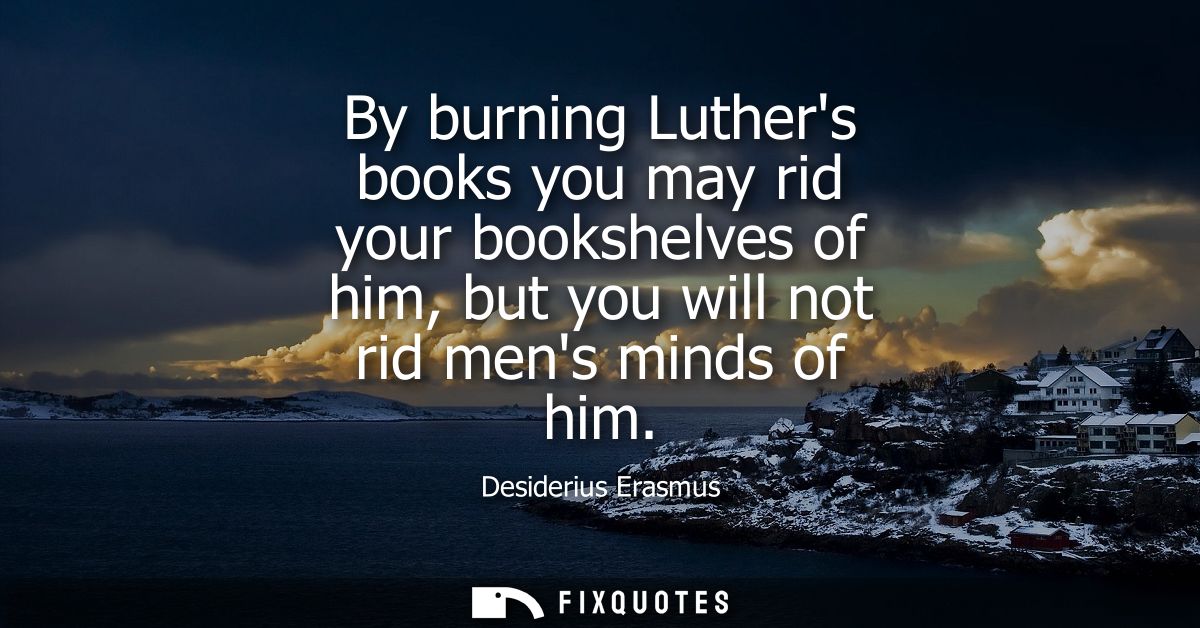
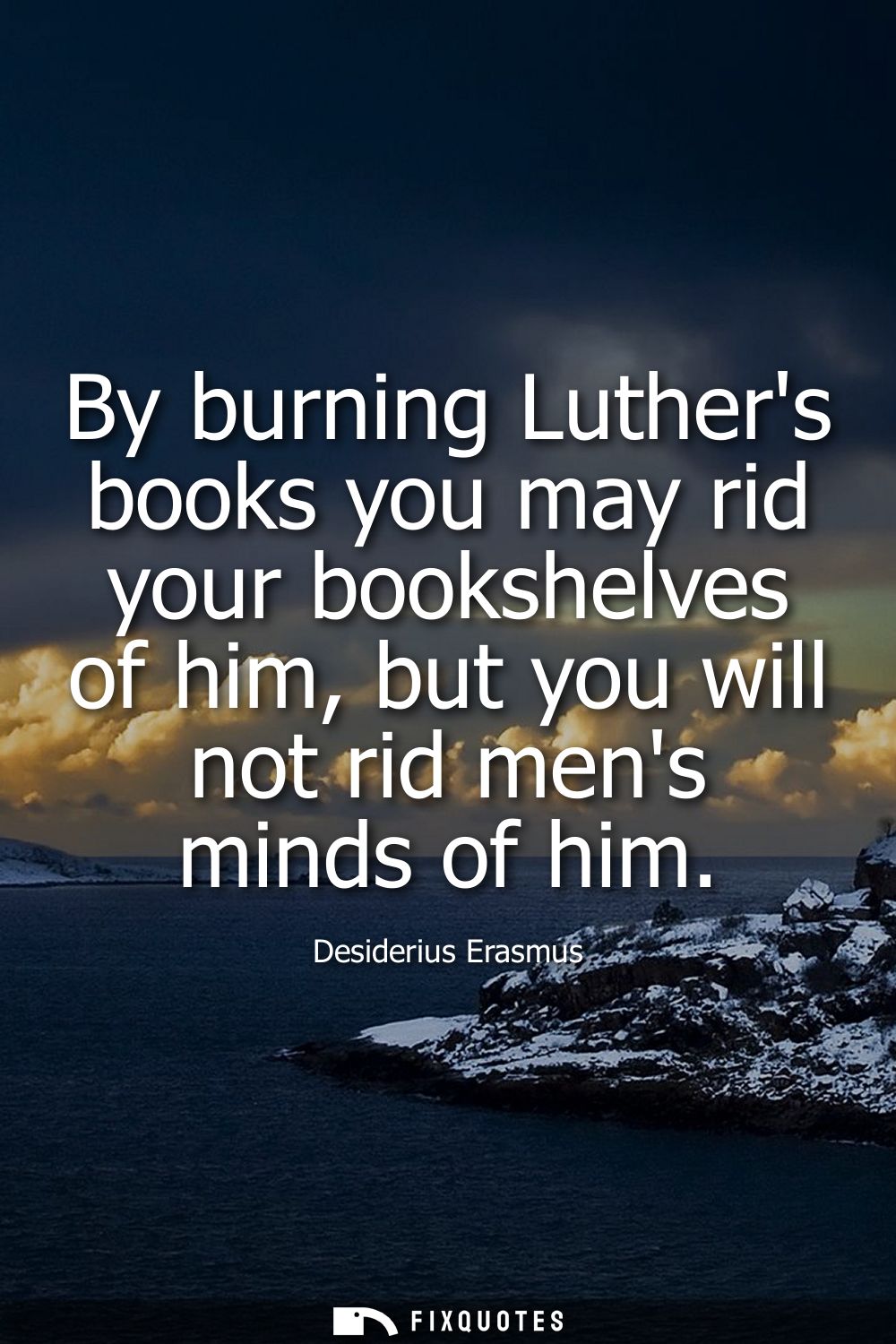
"By burning Luther's books, you may rid your bookshelves of him, but you will not rid men's minds of him"
About this Quote
Erasmus is also protecting his own tightrope position. He was no Lutheran firebrand; he wanted reform without rupture, correction without schism. That makes the sentence strategically double-edged. It rebukes Catholic enforcers for turning Luther into a martyr of print culture, but it also sidesteps endorsing Luther’s doctrine. The target is the tactic, not necessarily the man. In that sense, Erasmus performs humanist diplomacy: defend the life of the mind while keeping his hands clean of faction.
The line works because it shifts the battlefield from objects to consciousness. “Bookshelves” is domestic, manageable, almost petty; “men’s minds” is vast, unruly, and implicitly free. In an era when the printing press had made ideas replicable and portable, Erasmus is spelling out a new reality: authority can police paper, but it cannot unthink a thought once it’s been distributed through conversation, sermon, rumor, and outrage. The warning is blunt: suppression doesn’t end heresy; it industrializes it.
Quote Details
| Topic | Knowledge |
|---|---|
| Source | Help us find the source |
| Cite |
Citation Formats
APA Style (7th ed.)
Erasmus, Desiderius. (2026, February 19). By burning Luther's books, you may rid your bookshelves of him, but you will not rid men's minds of him. FixQuotes. https://fixquotes.com/quotes/by-burning-luthers-books-you-may-rid-your-54995/
Chicago Style
Erasmus, Desiderius. "By burning Luther's books, you may rid your bookshelves of him, but you will not rid men's minds of him." FixQuotes. February 19, 2026. https://fixquotes.com/quotes/by-burning-luthers-books-you-may-rid-your-54995/.
MLA Style (9th ed.)
"By burning Luther's books, you may rid your bookshelves of him, but you will not rid men's minds of him." FixQuotes, 19 Feb. 2026, https://fixquotes.com/quotes/by-burning-luthers-books-you-may-rid-your-54995/. Accessed 21 Mar. 2026.