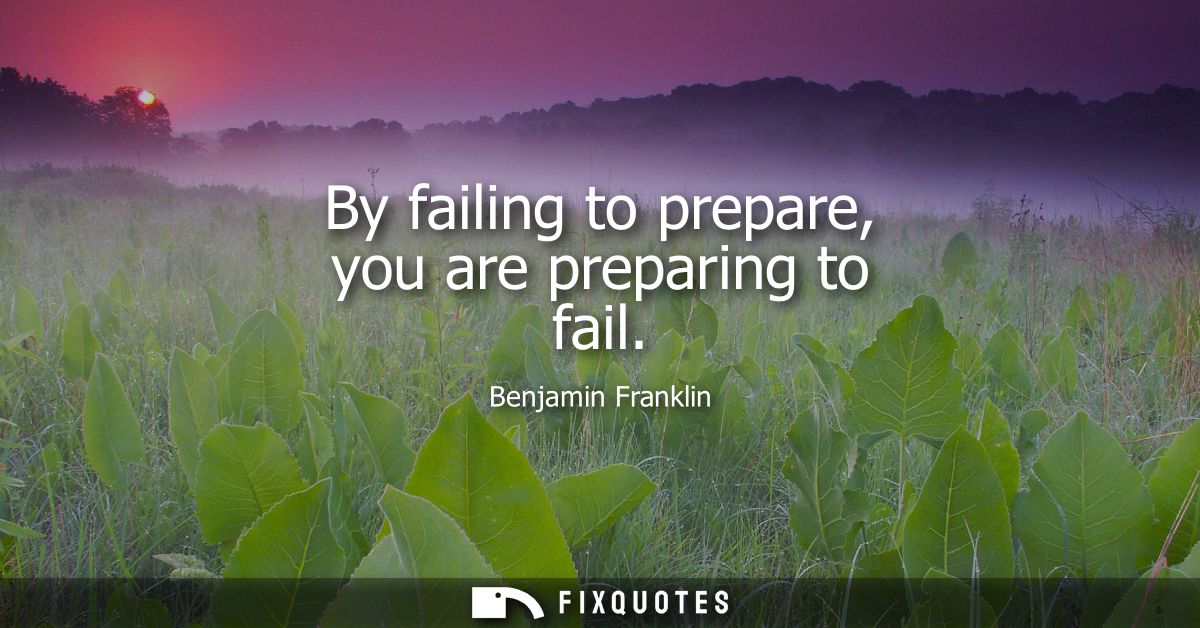
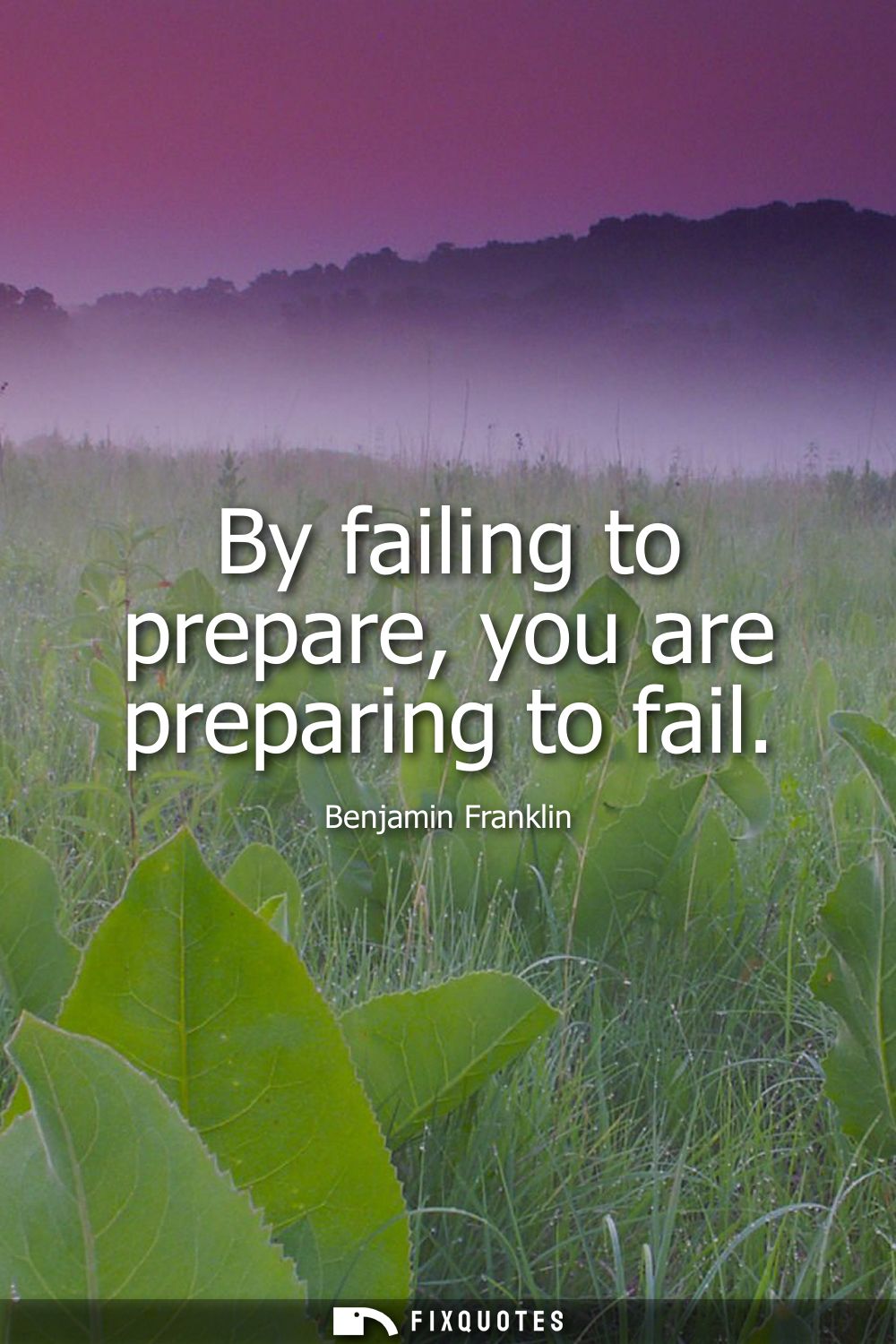
"By failing to prepare, you are preparing to fail"
About this Quote
Franklin’s line lands like a proverb, but it’s really a warning shot from a man who understood that “chance” is usually just other people’s planning. The neat symmetry of “prepare” and “fail” works as rhetorical trapdoor: it denies you the comfort of neutrality. You can’t opt out. Even inaction becomes an action with consequences, a decision to let events script you.
The intent isn’t motivational fluff; it’s civic technology. Franklin lived in a world where logistics and foresight weren’t lifestyle hacks but survival skills: fires that could take a city, smallpox that could redraw a family tree, debts that could end a career, wars that demanded supplies before heroics. In that context, preparation is moral responsibility. It’s what separates a functioning republic from a collection of improvisers.
The subtext is classic Franklin: pragmatic, faintly accusatory, and allergic to excuses. He doesn’t say “you might fail.” He says you are preparing to fail, turning negligence into a deliberate project. That phrasing reframes failure from bad luck to avoidable outcome, which is why it stings. It also flatters the listener with agency: the future isn’t a fog, it’s a workshop.
Politically, the message scales upward. Nations, like individuals, don’t collapse only from enemies; they collapse from wishful thinking, deferred maintenance, and the belief that tomorrow will arrive pre-solved. Franklin makes preparation feel less like anxiety and more like competence with a conscience.
The intent isn’t motivational fluff; it’s civic technology. Franklin lived in a world where logistics and foresight weren’t lifestyle hacks but survival skills: fires that could take a city, smallpox that could redraw a family tree, debts that could end a career, wars that demanded supplies before heroics. In that context, preparation is moral responsibility. It’s what separates a functioning republic from a collection of improvisers.
The subtext is classic Franklin: pragmatic, faintly accusatory, and allergic to excuses. He doesn’t say “you might fail.” He says you are preparing to fail, turning negligence into a deliberate project. That phrasing reframes failure from bad luck to avoidable outcome, which is why it stings. It also flatters the listener with agency: the future isn’t a fog, it’s a workshop.
Politically, the message scales upward. Nations, like individuals, don’t collapse only from enemies; they collapse from wishful thinking, deferred maintenance, and the belief that tomorrow will arrive pre-solved. Franklin makes preparation feel less like anxiety and more like competence with a conscience.
Quote Details
| Topic | Work Ethic |
|---|---|
| Source | Later attribution: Failing Forward (John C. Maxwell, 2007) modern compilationISBN: 9781418578657 · ID: jsYnPLniBtkC
Evidence: ... By failing to prepare you are preparing to fail. —BENJAMIN FRANKLIN Novelist Victor Hugo believed, "He who every morning plans the transactions of the day and follows out that plan carries a thread that will guide him through the ... Other candidates (1) The Biblical World (Vol. 53, No. 1): The Group Plan (Benjamin Franklin, 1919)50.0% Remember, if you fail to prepare, you are preparing to fail. (Page 81). This wording appears in the January 1919 issu... |
| Cite |
Citation Formats
APA Style (7th ed.)
Franklin, Benjamin. (2026, February 27). By failing to prepare, you are preparing to fail. FixQuotes. https://fixquotes.com/quotes/by-failing-to-prepare-you-are-preparing-to-fail-25475/
Chicago Style
Franklin, Benjamin. "By failing to prepare, you are preparing to fail." FixQuotes. February 27, 2026. https://fixquotes.com/quotes/by-failing-to-prepare-you-are-preparing-to-fail-25475/.
MLA Style (9th ed.)
"By failing to prepare, you are preparing to fail." FixQuotes, 27 Feb. 2026, https://fixquotes.com/quotes/by-failing-to-prepare-you-are-preparing-to-fail-25475/. Accessed 3 Apr. 2026.
More Quotes by Benjamin
Add to List