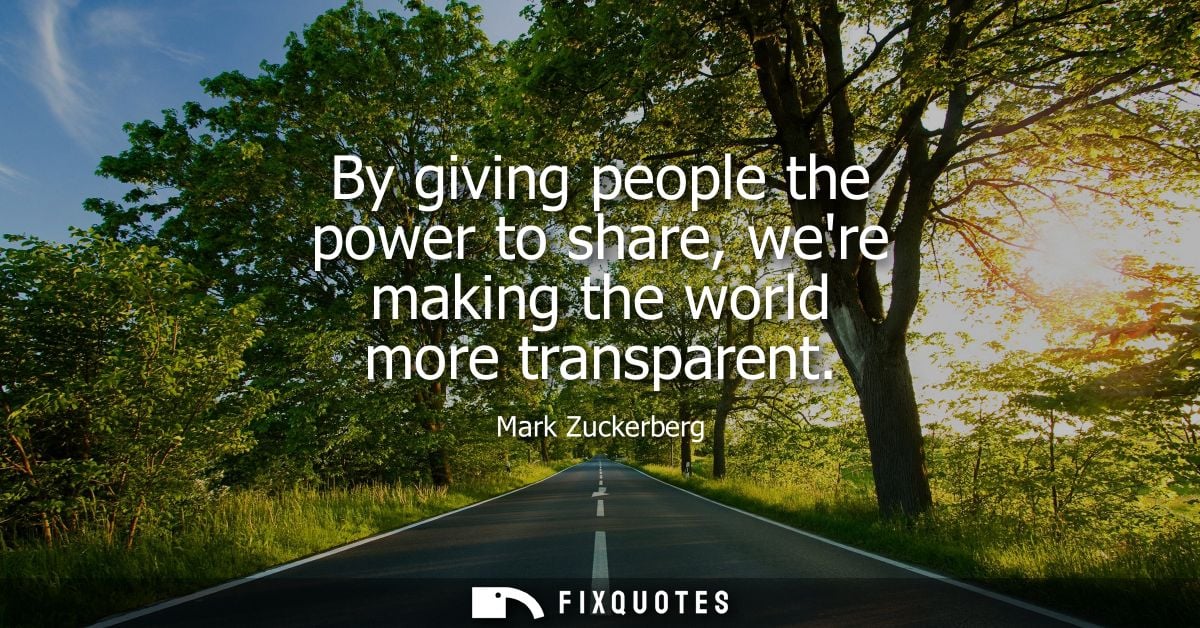
"By giving people the power to share, we're making the world more transparent"
About this Quote
The subtext is that visibility equals virtue. If everyone can publish, the argument goes, bad actors get exposed and institutions can’t hide. But transparency here is less a civic principle than a platform strategy: more sharing creates more data, more engagement, more leverage. The quote gently merges a company’s growth imperative with the language of democratic reform, making the business model feel like social progress.
Context matters: Zuckerberg built Facebook in an era that fetishized “openness” and treated friction as tyranny. That optimism aged into something darker as the costs of radical sharing came due: harassment, doxxing, surveillance capitalism, and algorithmic amplification. The line still “works” rhetorically because it’s aspirational and non-specific; it promises clarity without naming who gets to look, what gets exposed, and who pays for being seen. Transparency, in this formulation, isn’t a right so much as a default setting.
Quote Details
| Topic | Internet |
|---|---|
| Source | Later attribution: Greatness - The Dark Side - (Amr Okasha, 2020) modern compilationISBN: 9781070975887 · ID: PinMDwAAQBAJ
Evidence:
... the social media giant. Mark Zuckerberg “By giving people the power to share, we're making the world more transparent.” - Mark Zuckerberg. Displaying an interest in computers at a young age, Zuckerberg 150 Greatness -The Dark Side- |
| Cite |
Citation Formats
APA Style (7th ed.)
Zuckerberg, Mark. (2026, March 12). By giving people the power to share, we're making the world more transparent. FixQuotes. https://fixquotes.com/quotes/by-giving-people-the-power-to-share-were-making-136350/
Chicago Style
Zuckerberg, Mark. "By giving people the power to share, we're making the world more transparent." FixQuotes. March 12, 2026. https://fixquotes.com/quotes/by-giving-people-the-power-to-share-were-making-136350/.
MLA Style (9th ed.)
"By giving people the power to share, we're making the world more transparent." FixQuotes, 12 Mar. 2026, https://fixquotes.com/quotes/by-giving-people-the-power-to-share-were-making-136350/. Accessed 24 Mar. 2026.