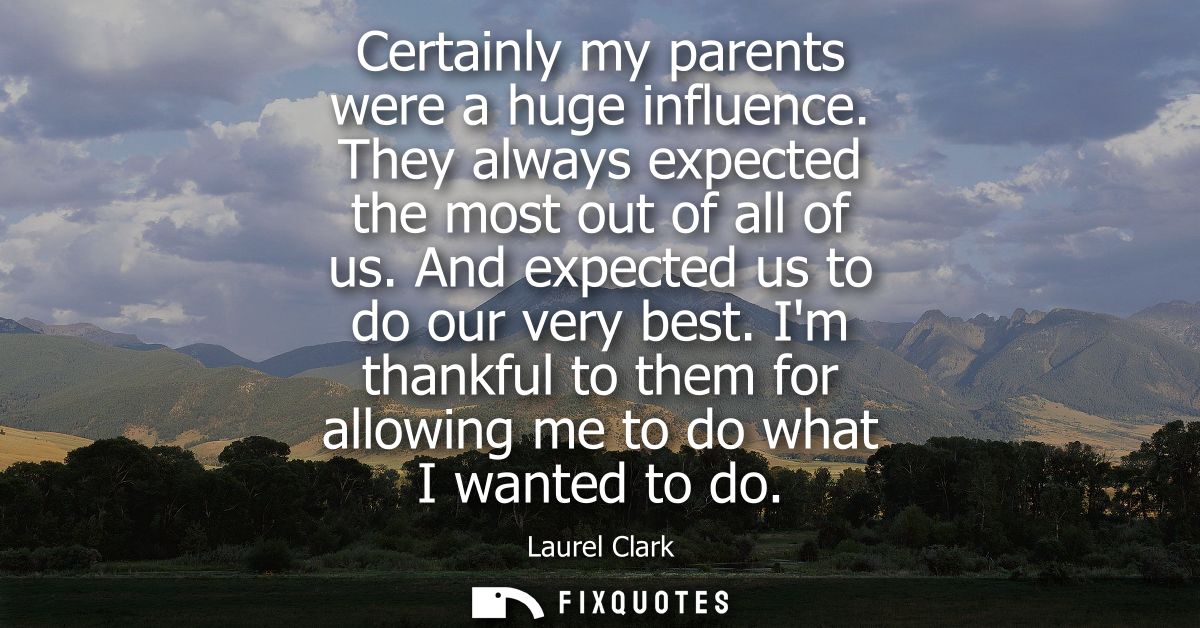
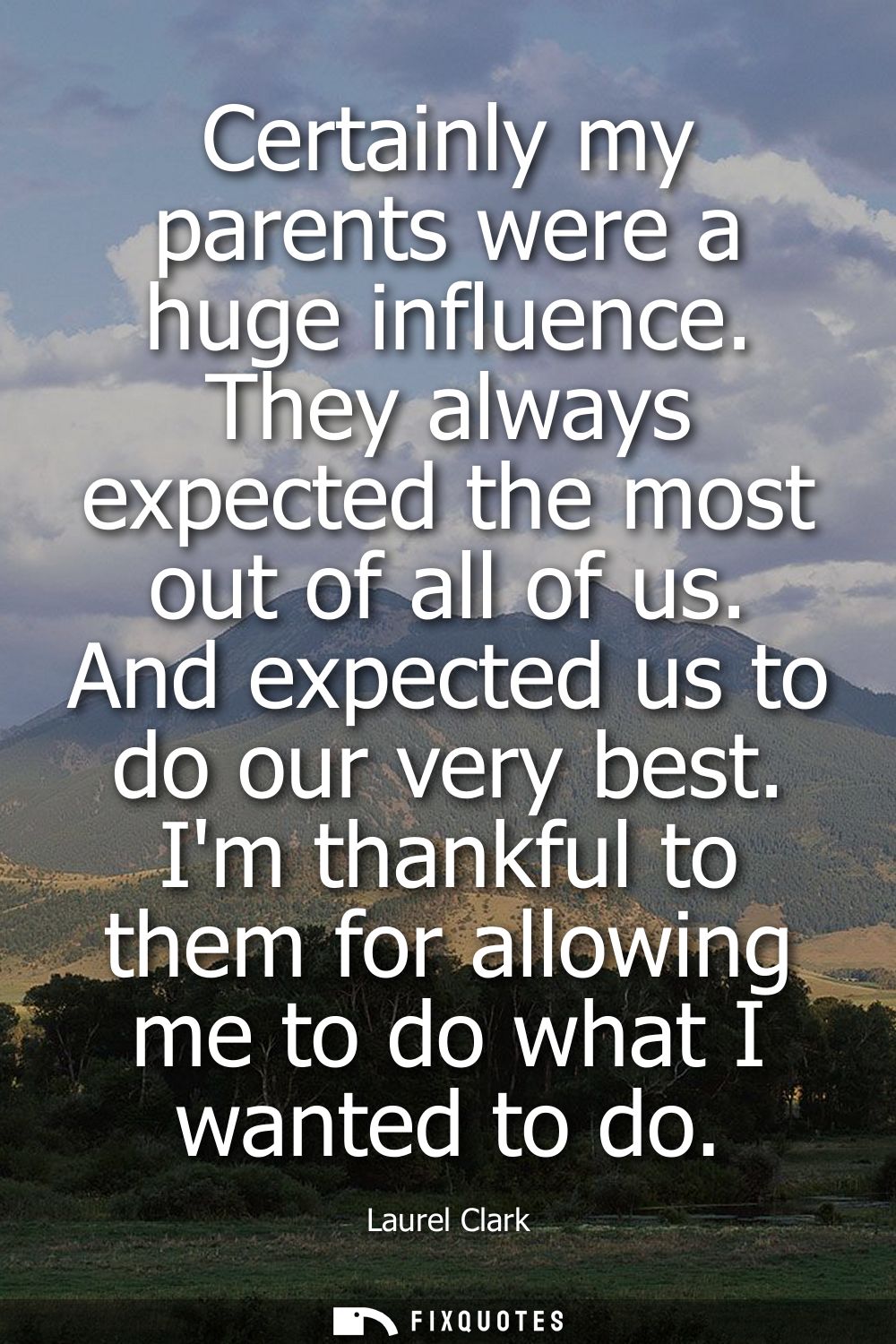
"Certainly, my parents were a huge influence. They always expected the most out of all of us. And expected us to do our very best. I'm thankful to them for allowing me to do what I wanted to do"
About this Quote
Coming from an astronaut, the sentiment lands differently than it would from a CEO or celebrity. Spaceflight is an institution-heavy path: military, medicine, NASA bureaucracy, endless evaluation. Saying she was “allowed” hints at how many gates exist before you even reach the obvious ones. It also quietly acknowledges a truth we often sand down in merit narratives: family culture can be a launchpad or a gravity well.
Clark’s wording is modest, almost domestic, which is part of its power. It suggests that extraordinary trajectories are built on ordinary reinforcement: not just “be great,” but “be you, and do the work.” In the shadow of her life and loss, the gratitude reads less like a throwaway and more like a record of what made risk feel worth it.
Quote Details
| Topic | Family |
|---|---|
| Source | Laurel B. Clark — NASA Johnson Space Center astronaut biography (biographical summary). Entry includes her statement about parental influence and encouragement. |
| Cite |
Citation Formats
APA Style (7th ed.)
Clark, Laurel. (2026, February 20). Certainly, my parents were a huge influence. They always expected the most out of all of us. And expected us to do our very best. I'm thankful to them for allowing me to do what I wanted to do. FixQuotes. https://fixquotes.com/quotes/certainly-my-parents-were-a-huge-influence-they-20342/
Chicago Style
Clark, Laurel. "Certainly, my parents were a huge influence. They always expected the most out of all of us. And expected us to do our very best. I'm thankful to them for allowing me to do what I wanted to do." FixQuotes. February 20, 2026. https://fixquotes.com/quotes/certainly-my-parents-were-a-huge-influence-they-20342/.
MLA Style (9th ed.)
"Certainly, my parents were a huge influence. They always expected the most out of all of us. And expected us to do our very best. I'm thankful to them for allowing me to do what I wanted to do." FixQuotes, 20 Feb. 2026, https://fixquotes.com/quotes/certainly-my-parents-were-a-huge-influence-they-20342/. Accessed 10 Mar. 2026.