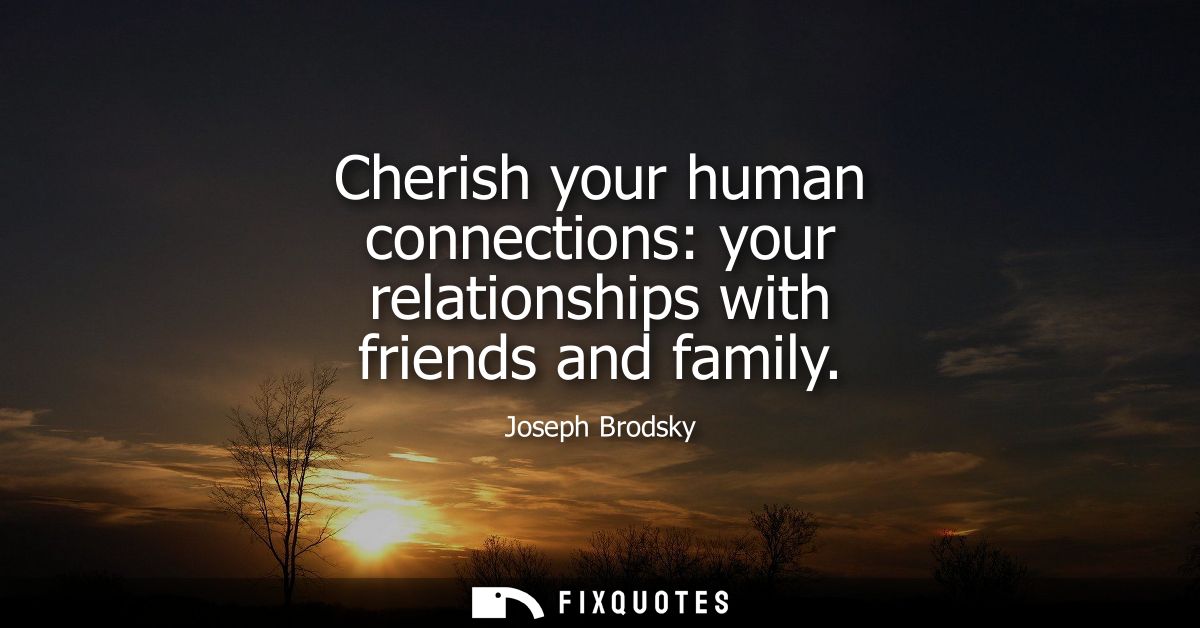
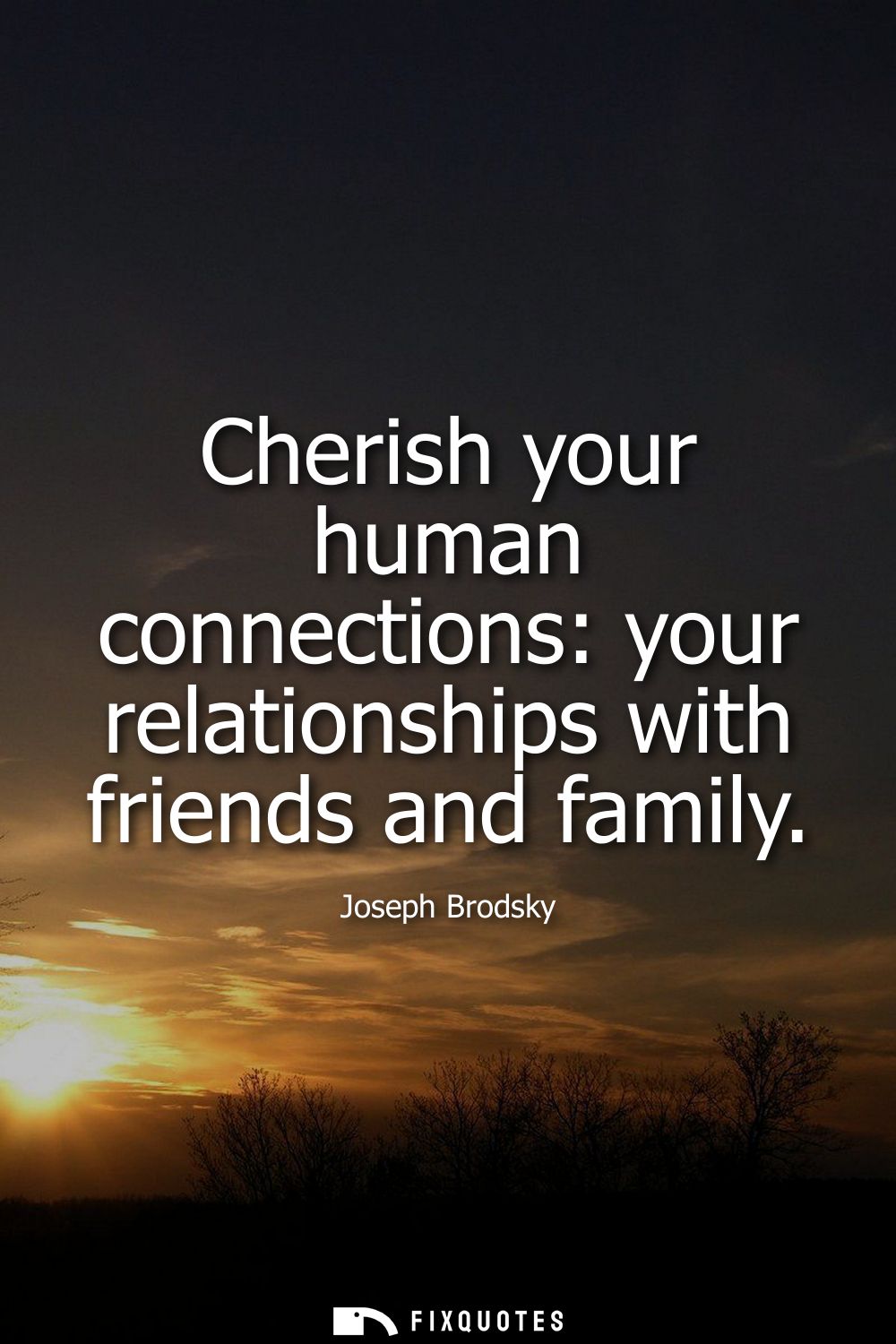
"Cherish your human connections: your relationships with friends and family"
About this Quote
The verb choice matters. “Cherish” isn’t “maintain” or “prioritize.” It implies active, almost deliberate tenderness, as if intimacy itself requires craft and attention. That’s Brodsky’s subtext: relationships don’t simply exist as a comfort; they are made, defended, and sometimes rebuilt. The line quietly rejects the modern romance of self-sufficiency, the idea that the serious life is the solitary one. Coming from a poet celebrated for intellect and formal control, it’s a striking endorsement of dependence as dignity.
Context sharpens the edge. Brodsky’s essays often sound like moral dispatches from someone who has seen how quickly public life turns coercive and how casually people outsource conscience to “the times.” In that world, the most radical act can be staying loyal to a small circle of actual humans. The quote works because it narrows the grand question of meaning down to a concrete practice: show up, keep faith, refuse the emotional laziness that lets people become replaceable.
Quote Details
| Topic | Family |
|---|---|
| Source | Help us find the source |
| Cite |
Citation Formats
APA Style (7th ed.)
Brodsky, Joseph. (2026, January 17). Cherish your human connections: your relationships with friends and family. FixQuotes. https://fixquotes.com/quotes/cherish-your-human-connections-your-relationships-71701/
Chicago Style
Brodsky, Joseph. "Cherish your human connections: your relationships with friends and family." FixQuotes. January 17, 2026. https://fixquotes.com/quotes/cherish-your-human-connections-your-relationships-71701/.
MLA Style (9th ed.)
"Cherish your human connections: your relationships with friends and family." FixQuotes, 17 Jan. 2026, https://fixquotes.com/quotes/cherish-your-human-connections-your-relationships-71701/. Accessed 1 Apr. 2026.