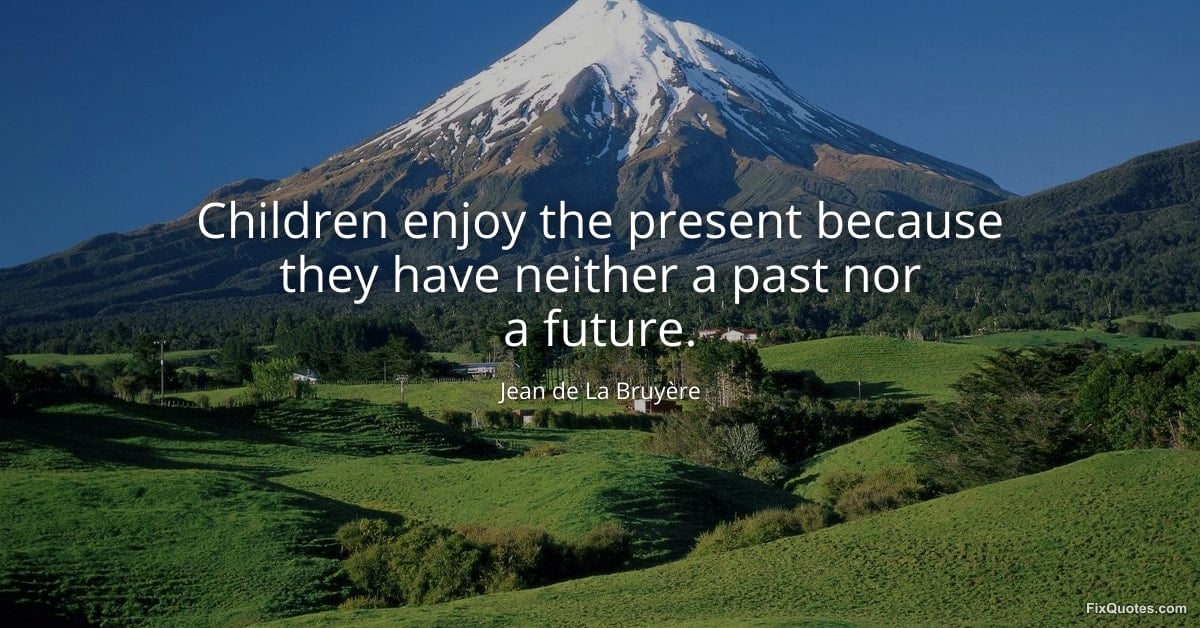
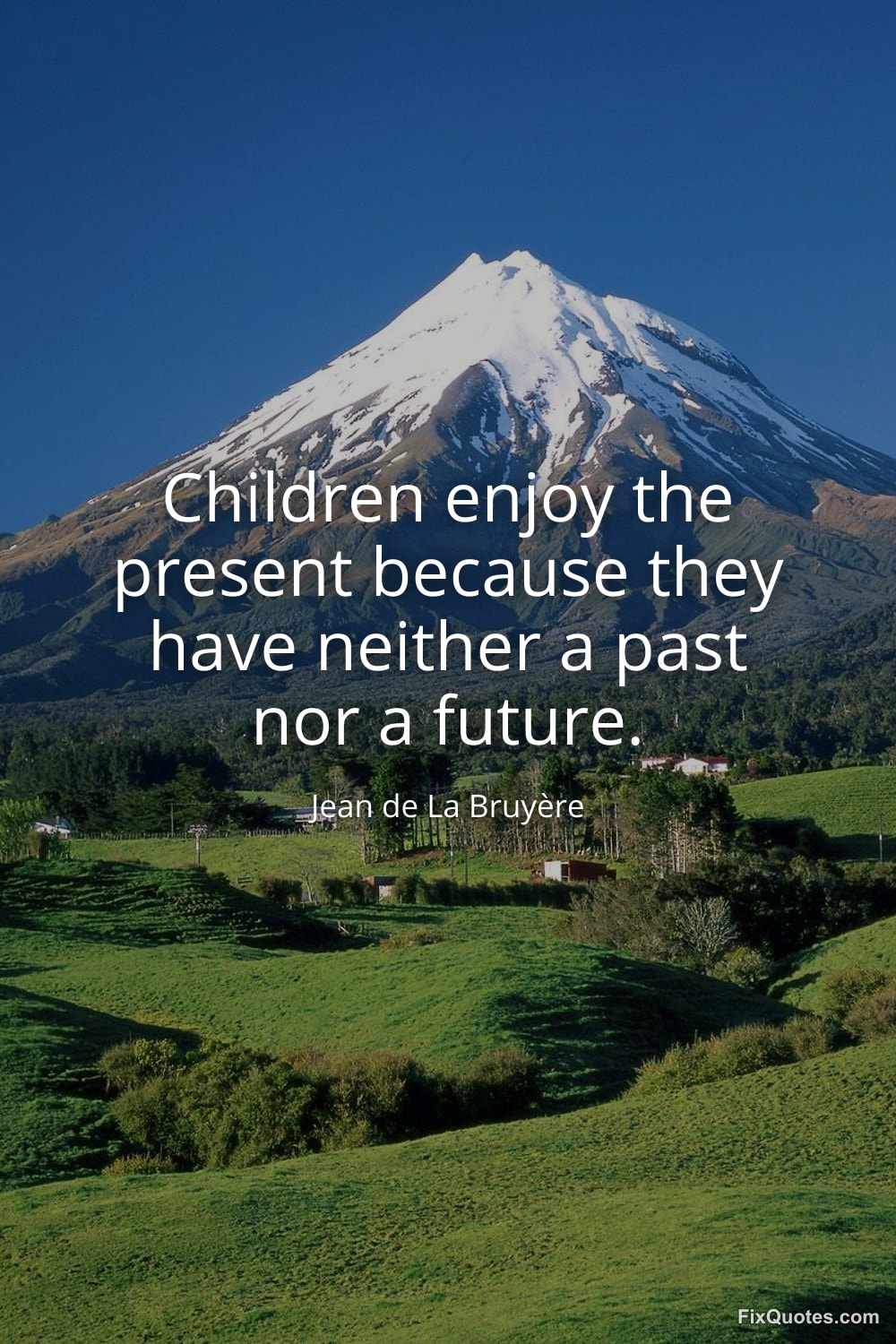
"Children enjoy the present because they have neither a past nor a future"
About this Quote
The subtext is sharpened by La Bruyere’s world. Writing in late-17th-century France, in the shadow of court culture and social climbing, he watches adults perform their identities under the pressure of reputation (a past constantly audited) and ambition (a future constantly gamed). His Characters is basically a catalog of people trapped by what they’ve done and what they’re trying to become. Against that, the child is a control case: no record to defend, no plan to sell. That “neither” is doing heavy work, implying that the very tools we treat as maturity - experience and foresight - are also the machinery of anxiety.
It works because it’s both psychological and social critique. “Present” here isn’t a spiritual ideal; it’s a temporary loophole before status, consequence, and narrative kick in. The sting is that adulthood’s supposedly richer time horizon doesn’t automatically deepen life; it can thin it out, turning days into accounting. La Bruyere’s point isn’t “be like children.” It’s “notice what your past and future are doing to you.”
Quote Details
| Topic | Live in the Moment |
|---|---|
| Source | Help us find the source |
| Cite |
Citation Formats
APA Style (7th ed.)
Bruyère, Jean de La. (2026, January 18). Children enjoy the present because they have neither a past nor a future. FixQuotes. https://fixquotes.com/quotes/children-enjoy-the-present-because-they-have-2666/
Chicago Style
Bruyère, Jean de La. "Children enjoy the present because they have neither a past nor a future." FixQuotes. January 18, 2026. https://fixquotes.com/quotes/children-enjoy-the-present-because-they-have-2666/.
MLA Style (9th ed.)
"Children enjoy the present because they have neither a past nor a future." FixQuotes, 18 Jan. 2026, https://fixquotes.com/quotes/children-enjoy-the-present-because-they-have-2666/. Accessed 12 Feb. 2026.