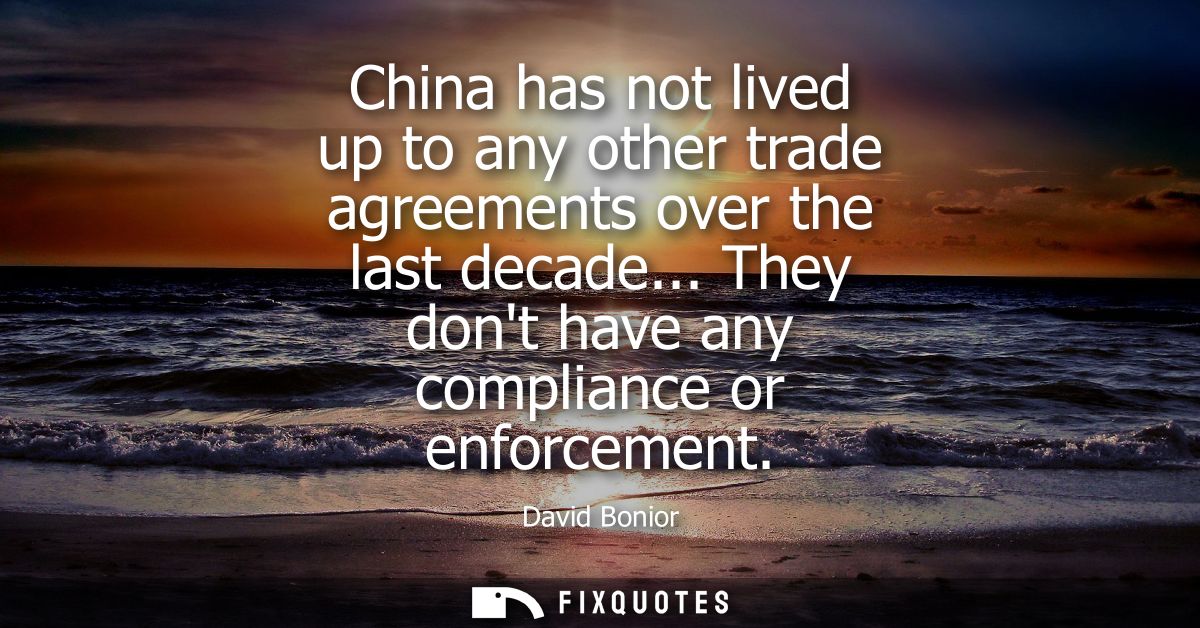
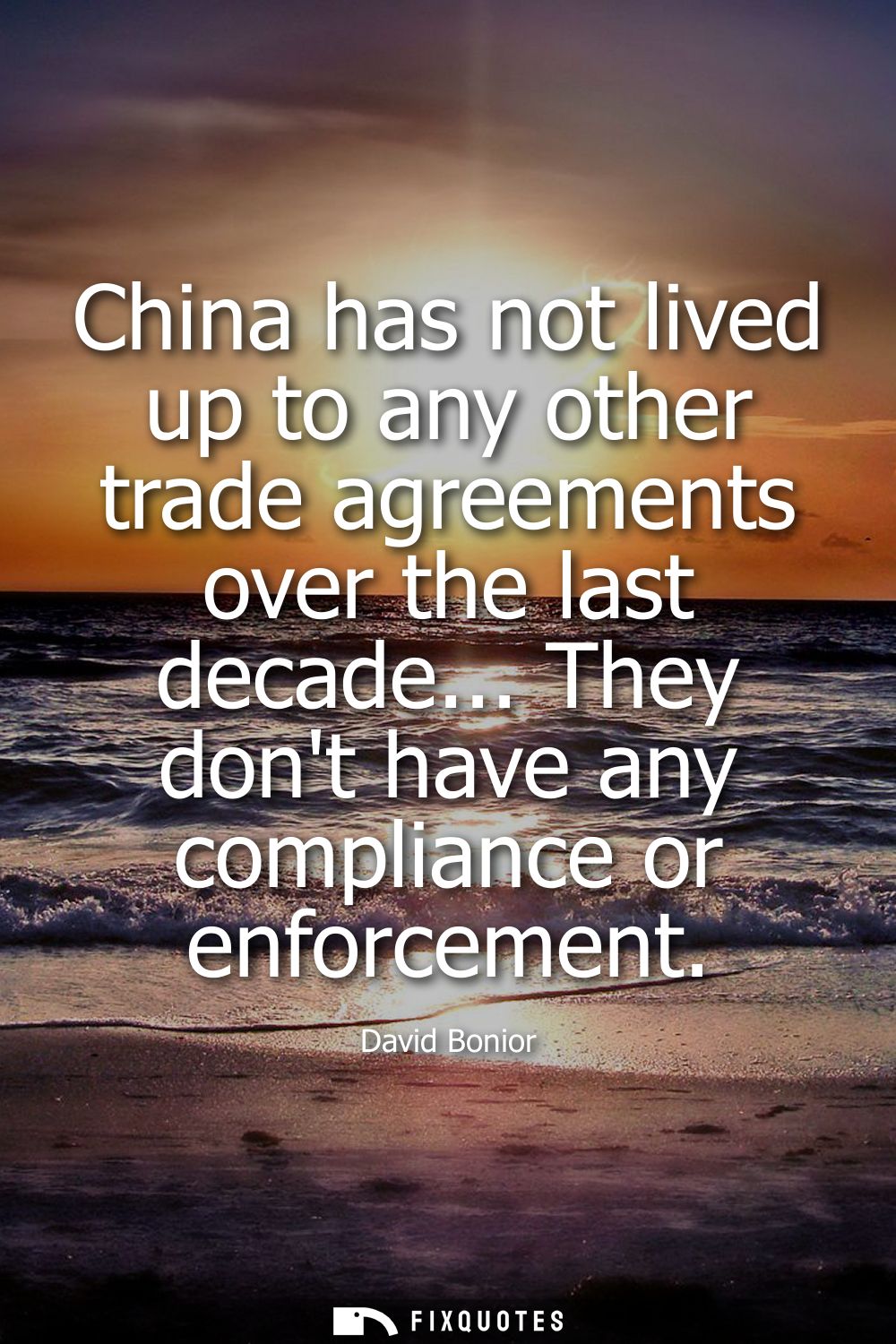
"China has not lived up to any other trade agreements over the last decade... They don't have any compliance or enforcement"
About this Quote
The line’s real target is closer to home. “They don’t have any compliance or enforcement” reads like an indictment of China, but it’s also a warning about American self-deception and policy design. Bonior is foregrounding a structural asymmetry: trade deals can look reciprocal on paper while functioning as one-sided commitments if enforcement is toothless, slow, or politically inconvenient. The subtext is that the U.S. signed agreements it couldn’t or wouldn’t police, then acted surprised when the incentives played out exactly as predicted.
Context matters: this is the language of a Democratic trade skeptic from an era when NAFTA-style liberalization split the party between labor-aligned populists and pro-trade centrists. Bonior’s intent is to delegitimize “trust-the-process” trade diplomacy by reframing it as a governance problem, not a moral one: absent credible enforcement, agreements aren’t agreements, they’re aspirations. The sharpness is strategic; it invites voters to reclassify “free trade” from inevitability to choice, and from abstract economics to accountability.
Quote Details
| Topic | Business |
|---|---|
| Source | Help us find the source |
| Cite |
Citation Formats
APA Style (7th ed.)
Bonior, David. (2026, January 17). China has not lived up to any other trade agreements over the last decade... They don't have any compliance or enforcement. FixQuotes. https://fixquotes.com/quotes/china-has-not-lived-up-to-any-other-trade-65002/
Chicago Style
Bonior, David. "China has not lived up to any other trade agreements over the last decade... They don't have any compliance or enforcement." FixQuotes. January 17, 2026. https://fixquotes.com/quotes/china-has-not-lived-up-to-any-other-trade-65002/.
MLA Style (9th ed.)
"China has not lived up to any other trade agreements over the last decade... They don't have any compliance or enforcement." FixQuotes, 17 Jan. 2026, https://fixquotes.com/quotes/china-has-not-lived-up-to-any-other-trade-65002/. Accessed 15 Mar. 2026.