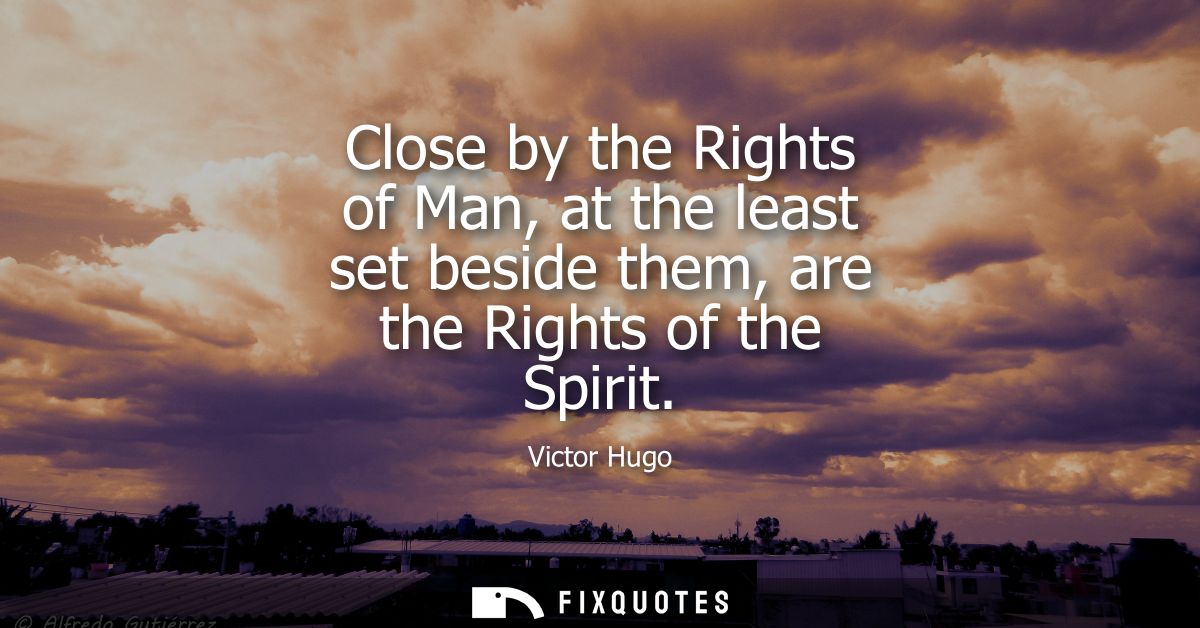
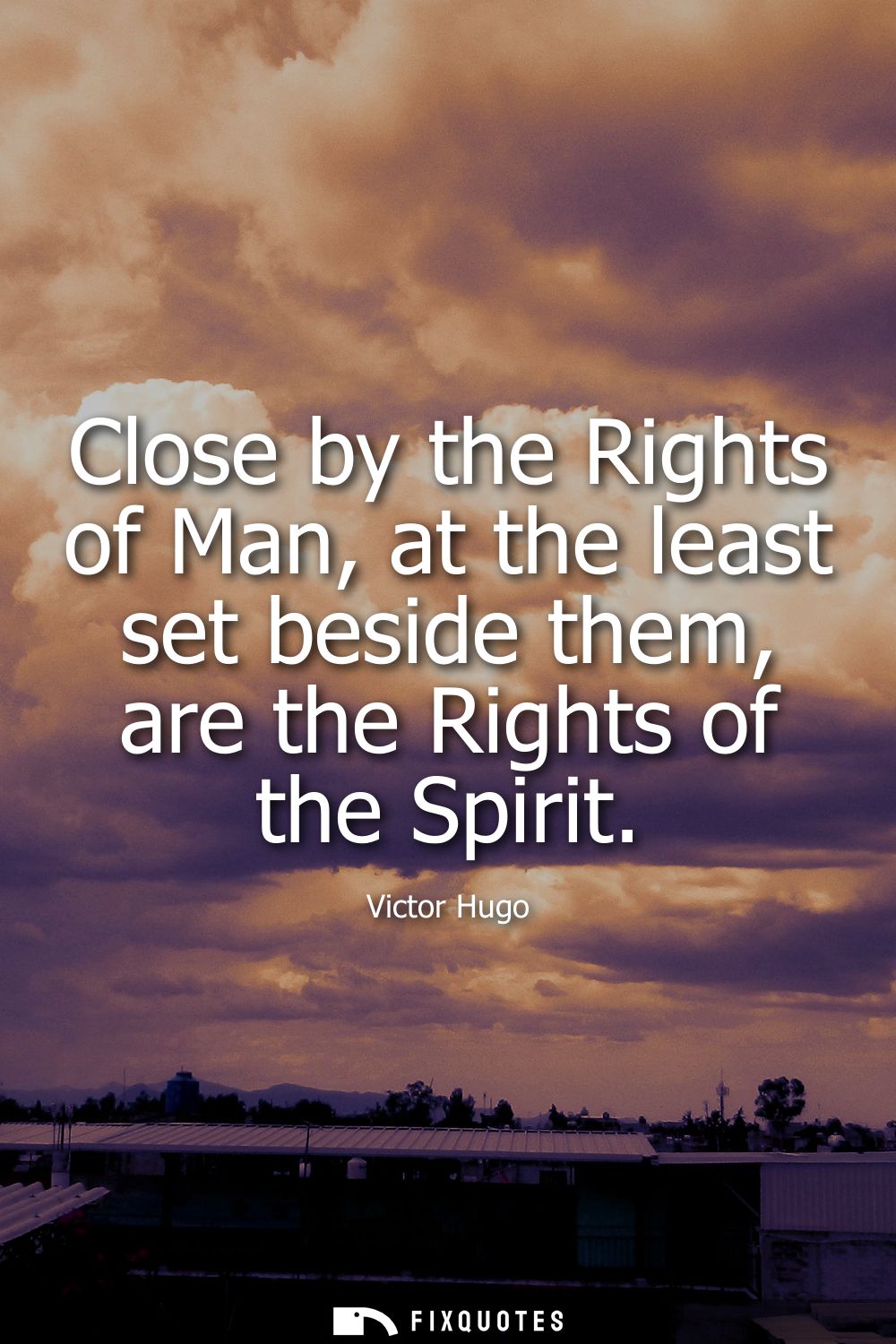
"Close by the Rights of Man, at the least set beside them, are the Rights of the Spirit"
About this Quote
The intent is corrective. Post-1789 rights talk often narrowed into administration: property, due process, representation. Necessary, yes, but also easy for a modern state to codify while still grinding people down through poverty, censorship, or enforced conformity. Hugo’s “Rights of the Spirit” is a challenge to any system that grants legal personhood yet polices thought and beauty. It’s also a writer’s claim for literature as public infrastructure. The “spirit” here isn’t merely piety; it’s the mind’s sovereignty, the right to feel, to question, to create, to be more than a case file.
Context matters: Hugo lived through monarchy, revolution, republic, empire, and exile. He watched governments use high principles as stage dressing while punishing dissent. So he pairs the universalist grandeur of human rights with a quieter, stubborn second register: the protections a society owes to inner life. In that pairing is Hugo’s real politics: freedom that stops at the courthouse door is a half-freedom, and a republic that can’t tolerate the spirit is already rehearsing its next tyranny.
Quote Details
| Topic | Human Rights |
|---|---|
| Source | Help us find the source |
| Cite | Cite this Quote |
Citation Formats
APA Style (7th ed.)
Hugo, Victor. (n.d.). Close by the Rights of Man, at the least set beside them, are the Rights of the Spirit. FixQuotes. https://fixquotes.com/quotes/close-by-the-rights-of-man-at-the-least-set-15960/
Chicago Style
Hugo, Victor. "Close by the Rights of Man, at the least set beside them, are the Rights of the Spirit." FixQuotes. Accessed February 3, 2026. https://fixquotes.com/quotes/close-by-the-rights-of-man-at-the-least-set-15960/.
MLA Style (9th ed.)
"Close by the Rights of Man, at the least set beside them, are the Rights of the Spirit." FixQuotes, https://fixquotes.com/quotes/close-by-the-rights-of-man-at-the-least-set-15960/. Accessed 3 Feb. 2026.