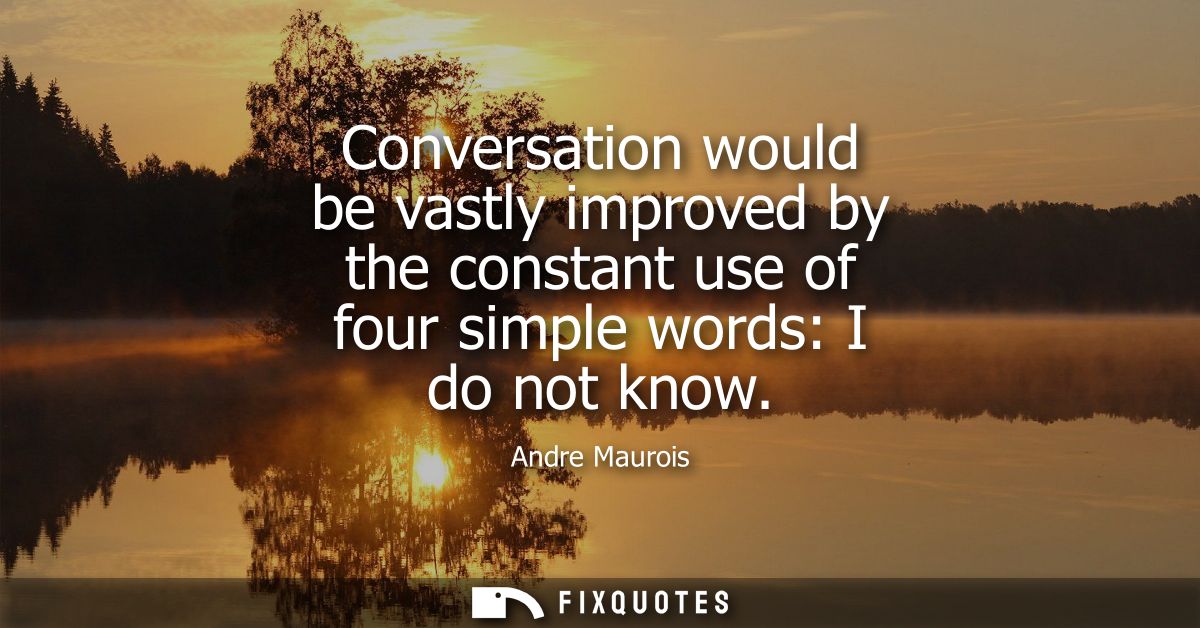
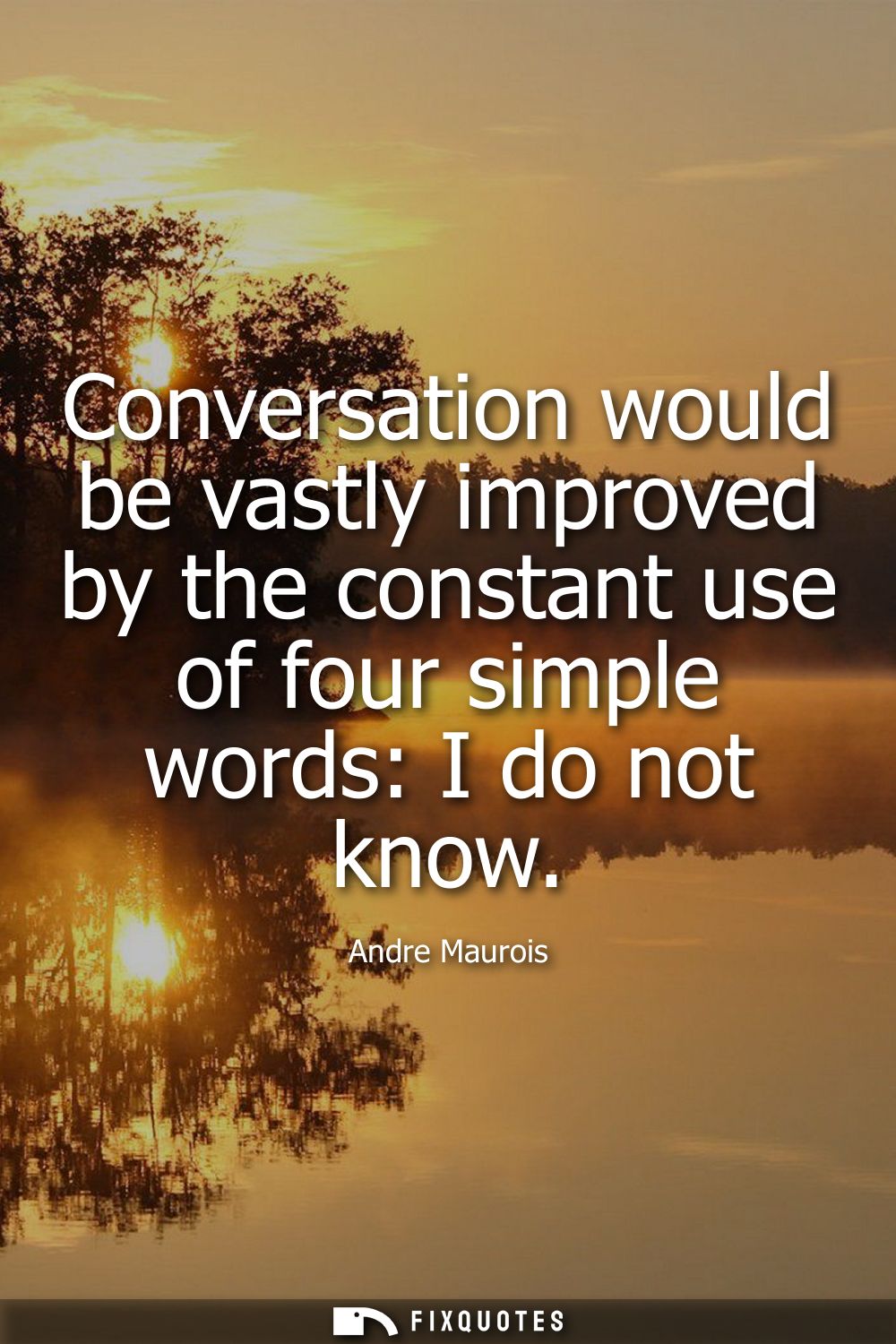
"Conversation would be vastly improved by the constant use of four simple words: I do not know"
About this Quote
The line works because it frames ignorance as a social technology. Those words slow the reflex to opine, making room for questions, listening, and actual exchange instead of competitive monologues. They also redistribute power: admitting uncertainty refuses the implicit rule that the most assertive speaker wins. In a room where everyone’s trying to sound informed, “I do not know” is oddly radical, almost insurgent.
Maurois wrote in a period when public discourse was being reshaped by mass media and ideological certainty - the first half of the 20th century’s loud, categorical thinking, from propaganda to manifestos. Against that backdrop, his prescription reads less like manners and more like a civic ethic: skepticism as a form of decency. The subtext is clear: the health of conversation mirrors the health of a culture. If we can’t tolerate not knowing in small talk, we’re dangerously primed to accept anyone who claims they do know - absolutely.
Quote Details
| Topic | Honesty & Integrity |
|---|---|
| Source | Help us find the source |
| Cite |
Citation Formats
APA Style (7th ed.)
Maurois, Andre. (2026, January 18). Conversation would be vastly improved by the constant use of four simple words: I do not know. FixQuotes. https://fixquotes.com/quotes/conversation-would-be-vastly-improved-by-the-21352/
Chicago Style
Maurois, Andre. "Conversation would be vastly improved by the constant use of four simple words: I do not know." FixQuotes. January 18, 2026. https://fixquotes.com/quotes/conversation-would-be-vastly-improved-by-the-21352/.
MLA Style (9th ed.)
"Conversation would be vastly improved by the constant use of four simple words: I do not know." FixQuotes, 18 Jan. 2026, https://fixquotes.com/quotes/conversation-would-be-vastly-improved-by-the-21352/. Accessed 12 Feb. 2026.