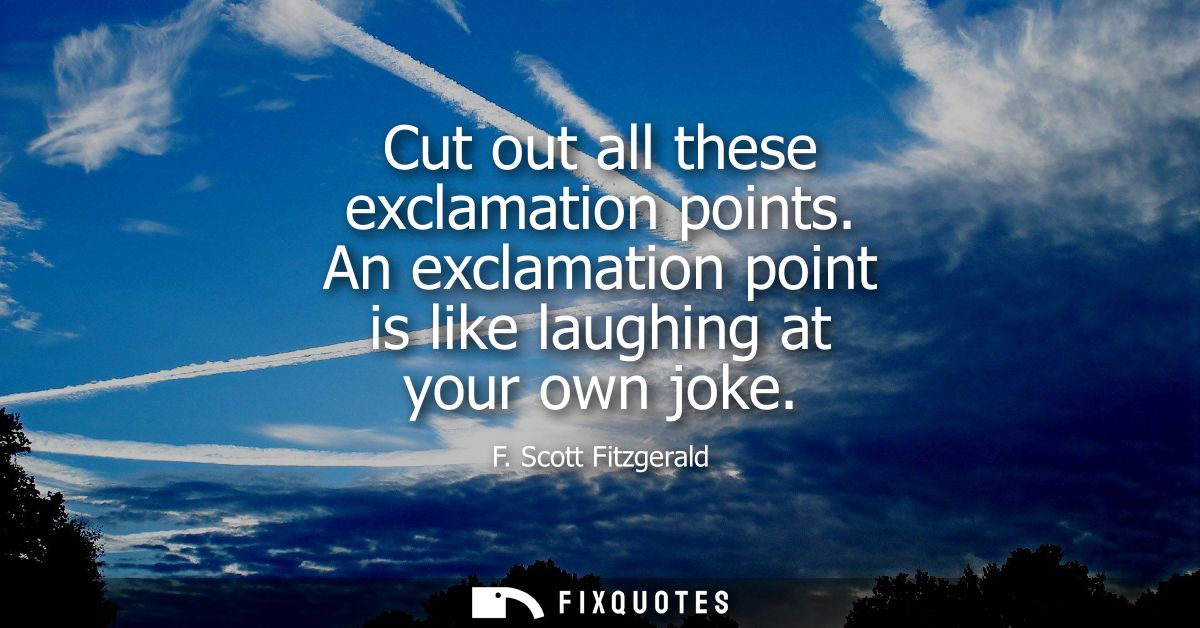
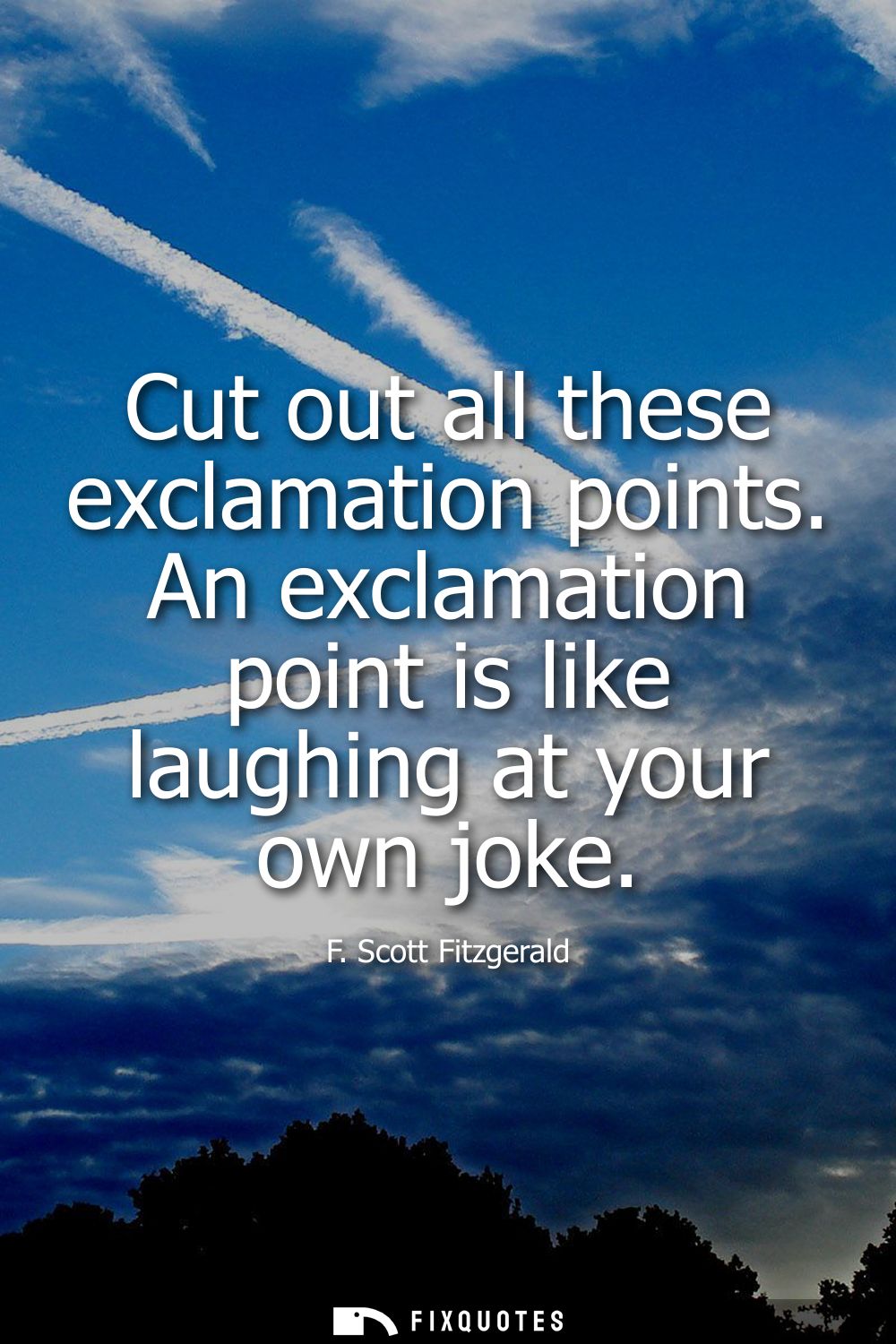
"Cut out all these exclamation points. An exclamation point is like laughing at your own joke!"
About this Quote
The subtext is craft-as-composure. Fitzgerald wrote in an era when mass-market magazines, advertising copy, and popular fiction increasingly competed for attention with volume and flare. The exclamation point reads as salesmanship: a bright storefront sign that makes the prose feel eager, a little desperate, and therefore less serious. For a writer obsessed with surfaces - the glamour of parties, the fragile performance of class, the ruin beneath the shine - that eagerness is a tell. It’s the prose equivalent of trying too hard to be charming.
He’s also defending a modernist ethic: meaning should emerge from rhythm, implication, and restraint. If you have to shout, the line isn’t doing its job. The best Fitzgerald sentences seduce by control, not force; they let irony and longing sit in the same glass without spilling. In that sense, the quote doubles as an editorial note and a moral posture: trust the reader, earn the laugh, and don’t clap for yourself in print.
Quote Details
| Topic | Witty One-Liners |
|---|---|
| Source | Help us find the source |
| Cite |
Citation Formats
APA Style (7th ed.)
Fitzgerald, F. Scott. (2026, February 20). Cut out all these exclamation points. An exclamation point is like laughing at your own joke! FixQuotes. https://fixquotes.com/quotes/cut-out-all-these-exclamation-points-an-14423/
Chicago Style
Fitzgerald, F. Scott. "Cut out all these exclamation points. An exclamation point is like laughing at your own joke!" FixQuotes. February 20, 2026. https://fixquotes.com/quotes/cut-out-all-these-exclamation-points-an-14423/.
MLA Style (9th ed.)
"Cut out all these exclamation points. An exclamation point is like laughing at your own joke!" FixQuotes, 20 Feb. 2026, https://fixquotes.com/quotes/cut-out-all-these-exclamation-points-an-14423/. Accessed 21 Mar. 2026.