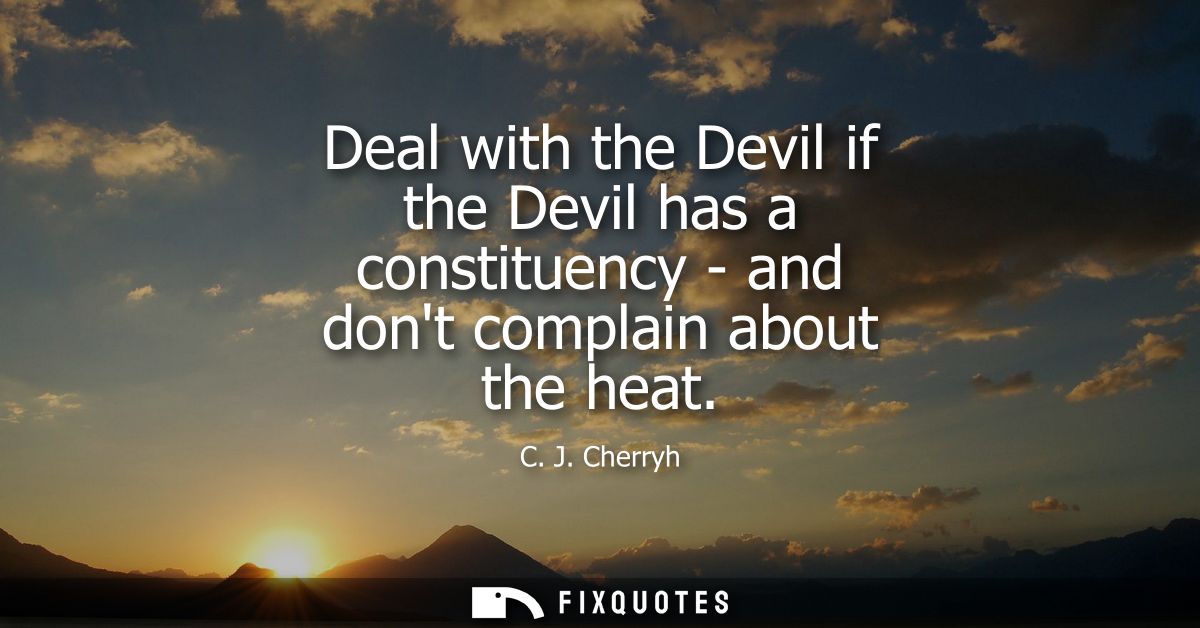
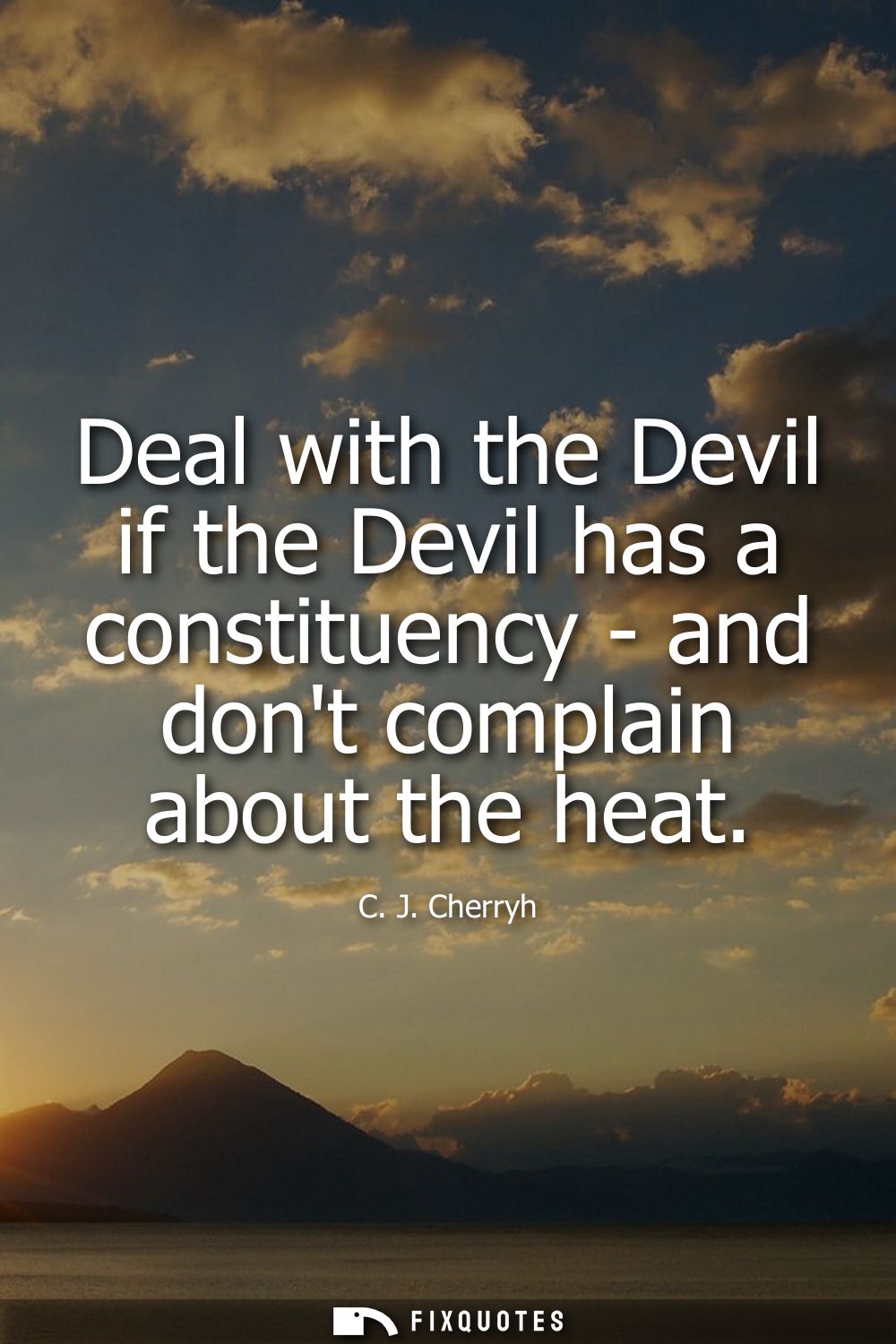
"Deal with the Devil if the Devil has a constituency - and don't complain about the heat"
About this Quote
The first clause is a cold instruction to adults in charge: you negotiate with whoever can move outcomes, not whoever flatters your self-image. “Constituency” is the killer word, importing the language of elections and legitimacy into something we’d rather treat as aberration. It implies complicity runs through institutions, not just individuals. If the Devil has constituents, then someone benefits from him, someone is protected by him, someone’s identity is wrapped up in him. Ignoring that doesn’t make it go away; it just leaves you negotiating from a position of delusion.
The second clause flips the moral reflex that follows compromise: the urge to lament, to posture, to outsource responsibility to “the system.” Don’t complain about the heat: you chose the kitchen. Cherryh is warning against sanctimony after the fact, the way leaders will take the bargain for its utility and then act surprised by its costs - cruelty, corruption, blowback, reputational stain. It’s also a subtle jab at audiences who demand clean hands while rewarding messy victories. In the universe her fiction often inhabits, survival depends on seeing the world as it is, then owning the consequences of what you do with that sight.
Quote Details
| Topic | Decision-Making |
|---|---|
| Source | Help us find the source |
| Cite |
Citation Formats
APA Style (7th ed.)
Cherryh, C. J. (2026, January 15). Deal with the Devil if the Devil has a constituency - and don't complain about the heat. FixQuotes. https://fixquotes.com/quotes/deal-with-the-devil-if-the-devil-has-a-79040/
Chicago Style
Cherryh, C. J. "Deal with the Devil if the Devil has a constituency - and don't complain about the heat." FixQuotes. January 15, 2026. https://fixquotes.com/quotes/deal-with-the-devil-if-the-devil-has-a-79040/.
MLA Style (9th ed.)
"Deal with the Devil if the Devil has a constituency - and don't complain about the heat." FixQuotes, 15 Jan. 2026, https://fixquotes.com/quotes/deal-with-the-devil-if-the-devil-has-a-79040/. Accessed 31 Mar. 2026.