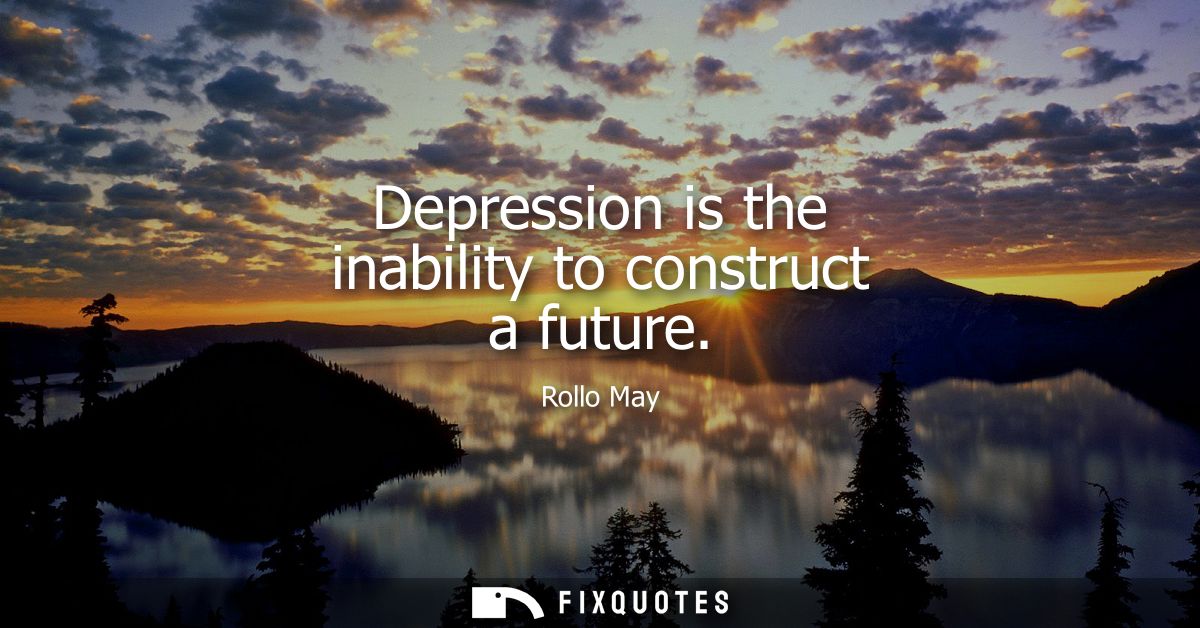
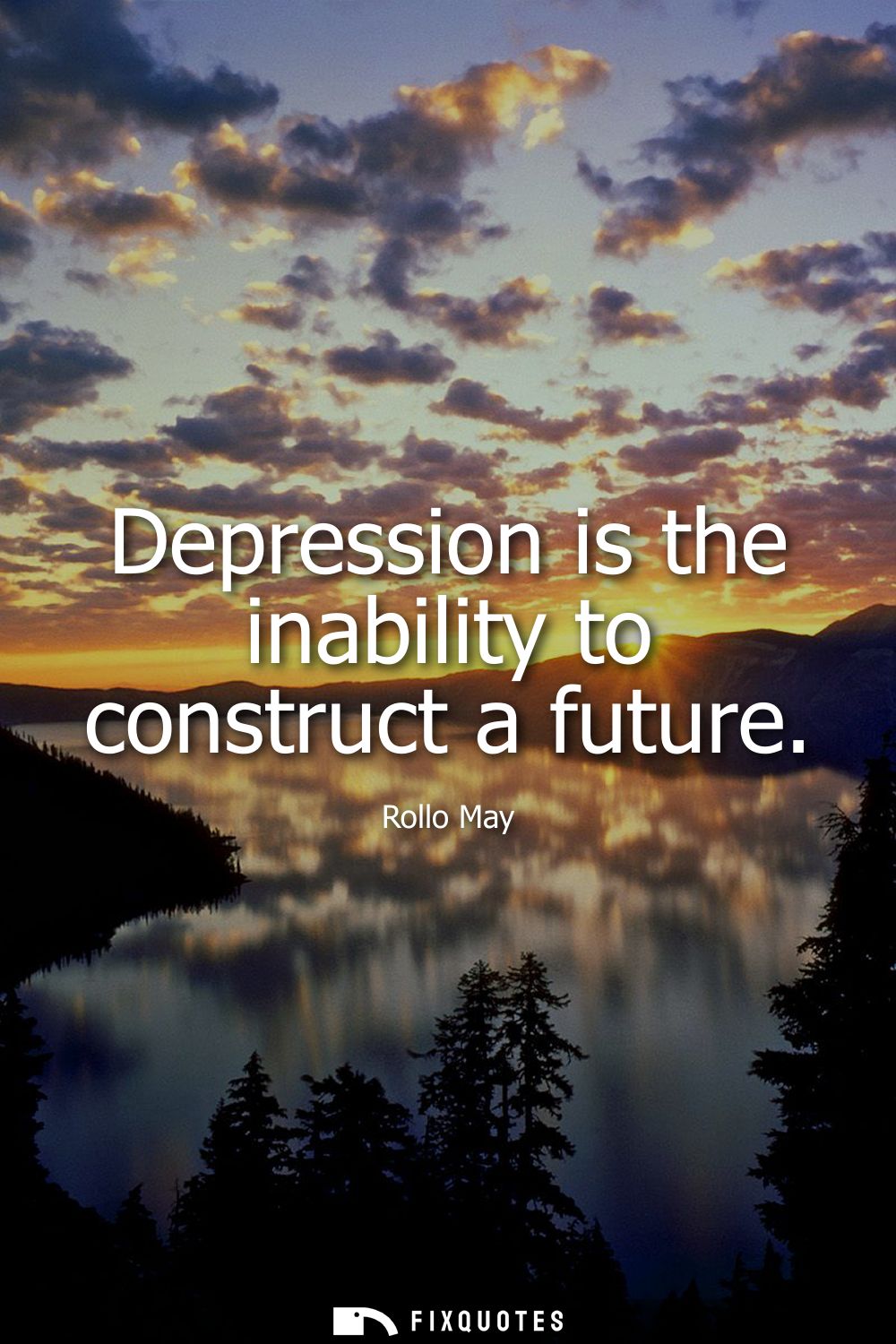
"Depression is the inability to construct a future"
About this Quote
Depression, in Rollo May's hands, isn’t framed as a mood so much as a temporal collapse. Calling it "the inability to construct a future" shifts the problem from feeling bad to losing the basic human craft of projecting yourself forward: imagining options, making plans, telling a coherent story in which you still exist with agency. The phrasing is clinical but it lands like a moral diagnosis of time. "Construct" matters; it implies the future isn’t discovered, it’s built. Depression, then, isn’t just sadness but a breakdown in meaning-making.
That idea fits May’s existential psychology, shaped by mid-century anxieties and his dialogue with Kierkegaard and Tillich. In a postwar culture selling progress as a birthright, May points to the private catastrophe of being unable to believe in progress at all. The subtext is quietly defiant toward purely biochemical or symptom-checklist accounts: you can medicate distress and still be stranded if you can’t envision tomorrow as inhabitable. He’s also nudging responsibility into the frame, not as blame but as a therapeutic aim. If the illness is a failure of future-building, treatment becomes partly about rebuilding imagination, choice, and commitment - small acts of authorship.
It’s a line that still bites because it explains depression’s dullest cruelty. You don’t just lose pleasure; you lose the plausibility of change. Hope isn’t a sentiment here, it’s a cognitive construction project. When that machinery stalls, everything in the present feels permanent, and permanence is what turns pain into a life sentence.
That idea fits May’s existential psychology, shaped by mid-century anxieties and his dialogue with Kierkegaard and Tillich. In a postwar culture selling progress as a birthright, May points to the private catastrophe of being unable to believe in progress at all. The subtext is quietly defiant toward purely biochemical or symptom-checklist accounts: you can medicate distress and still be stranded if you can’t envision tomorrow as inhabitable. He’s also nudging responsibility into the frame, not as blame but as a therapeutic aim. If the illness is a failure of future-building, treatment becomes partly about rebuilding imagination, choice, and commitment - small acts of authorship.
It’s a line that still bites because it explains depression’s dullest cruelty. You don’t just lose pleasure; you lose the plausibility of change. Hope isn’t a sentiment here, it’s a cognitive construction project. When that machinery stalls, everything in the present feels permanent, and permanence is what turns pain into a life sentence.
Quote Details
| Topic | Mental Health |
|---|
More Quotes by Rollo
Add to List