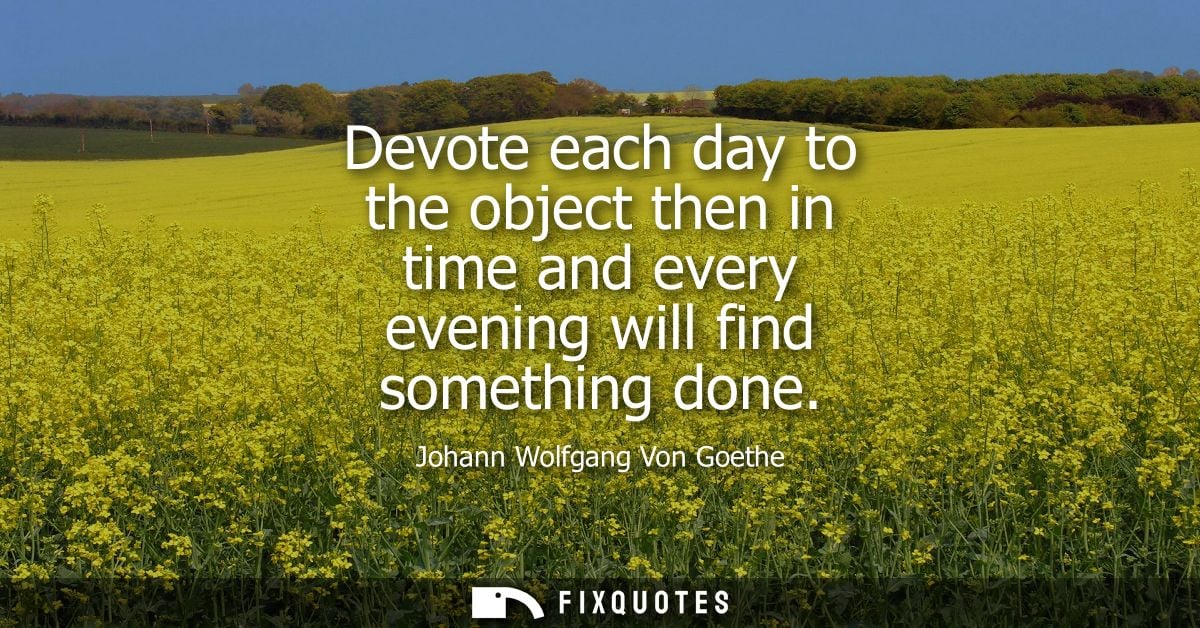
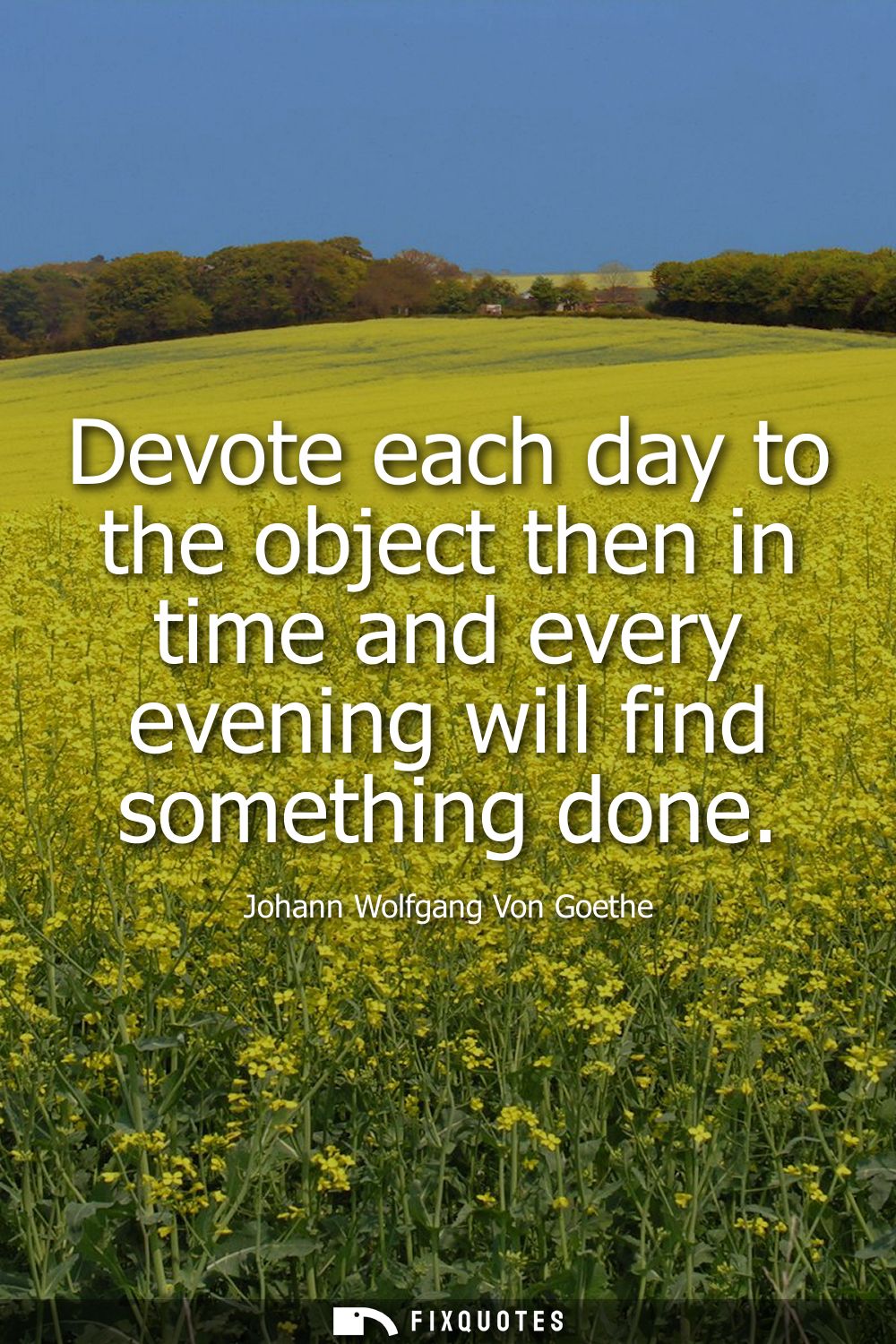
"Devote each day to the object, then in time, and every evening will find something done"
About this Quote
The subtext is gently tyrannical. “Then in time” implies compounding interest, the slow magic of accumulation. Goethe doesn’t promise inspiration; he promises arithmetic. You do the work, time does the rest. The payoff arrives not in some grand, cinematic breakthrough but in a quieter ritual: “every evening will find something done.” Evening is a daily audit, a reckoning that turns progress into a habit of self-respect. It’s also a prophylactic against the romantic myth of the artist who waits for lightning. Goethe, the writer who was also a statesman and a restless polymath, knew that output is less about being visited by genius than about building a life where genius has to show up to meet you.
Context matters: this comes from an era that was beginning to prize method, productivity, and self-fashioning alongside the old ideals of inspiration. The sentence works because it flatters and disciplines at once: it offers the consolation of “something done,” while quietly insisting that “nothing done” is, most days, your own choice.
Quote Details
| Topic | Work Ethic |
|---|---|
| Source | Help us find the source |
| Cite |
Citation Formats
APA Style (7th ed.)
Goethe, Johann Wolfgang Von. (2026, February 19). Devote each day to the object, then in time, and every evening will find something done. FixQuotes. https://fixquotes.com/quotes/devote-each-day-to-the-object-then-in-time-and-33746/
Chicago Style
Goethe, Johann Wolfgang Von. "Devote each day to the object, then in time, and every evening will find something done." FixQuotes. February 19, 2026. https://fixquotes.com/quotes/devote-each-day-to-the-object-then-in-time-and-33746/.
MLA Style (9th ed.)
"Devote each day to the object, then in time, and every evening will find something done." FixQuotes, 19 Feb. 2026, https://fixquotes.com/quotes/devote-each-day-to-the-object-then-in-time-and-33746/. Accessed 15 Mar. 2026.