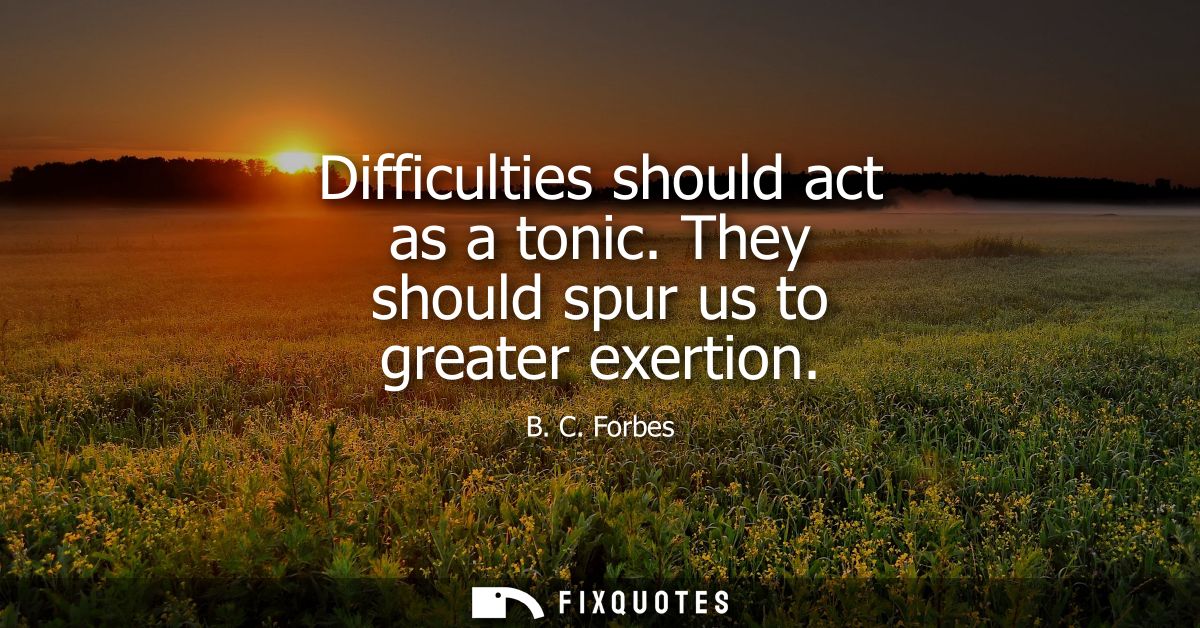
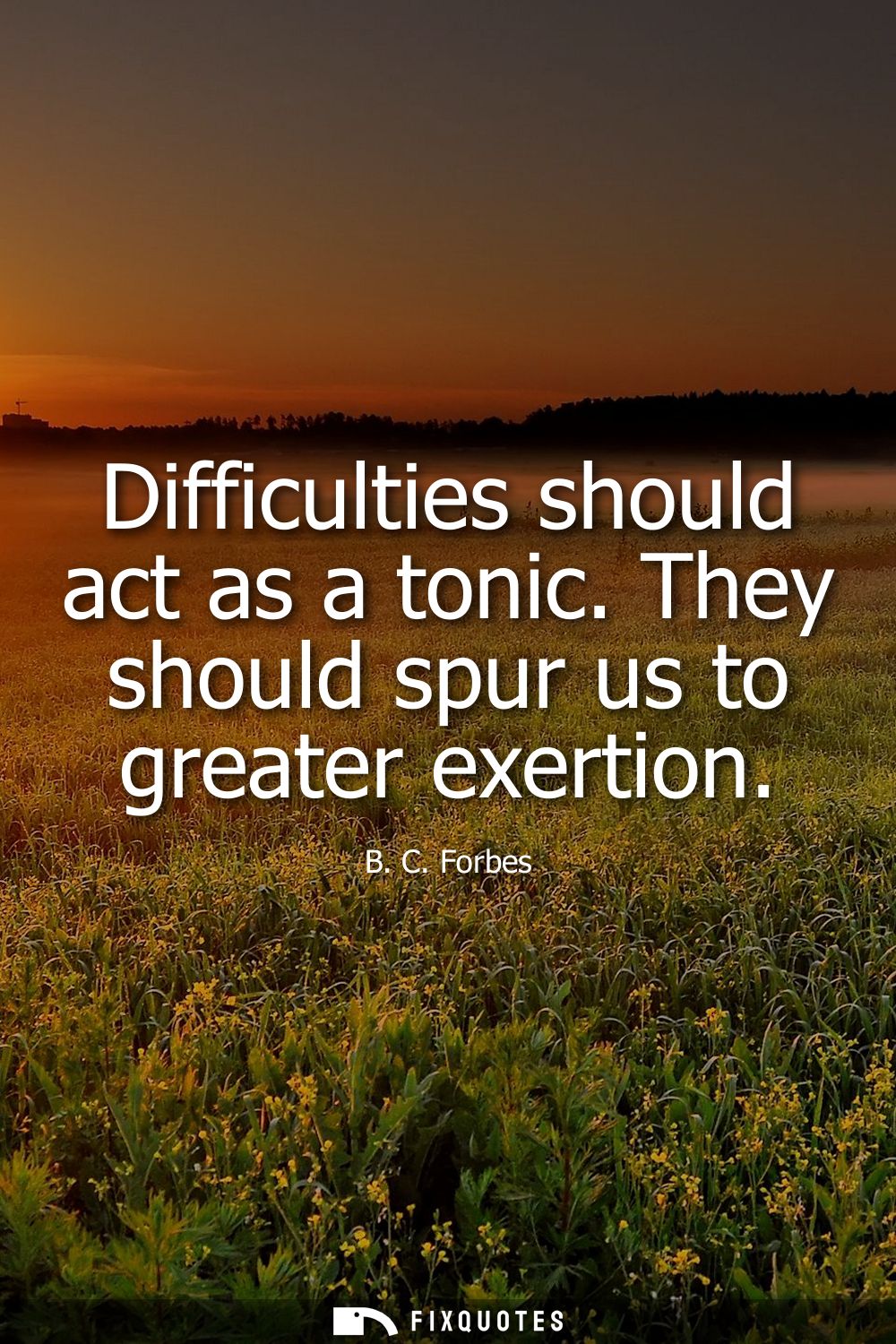
"Difficulties should act as a tonic. They should spur us to greater exertion"
About this Quote
The intent is unmistakably managerial. As a journalist who built an empire chronicling business, Forbes is speaking in the idiom of the early 20th-century striver: efficiency, self-command, progress through effort. “Should” does heavy lifting here. It’s not describing how people naturally respond; it’s prescribing the acceptable reaction. Difficulty becomes less an external condition than a cue for correct behavior, a switch that ought to flip you into “greater exertion.”
The subtext is both empowering and unforgiving. On one hand, it offers a clean, portable optimism: you can metabolize obstacles into momentum. On the other, it quietly naturalizes a work-centric worldview where the “right” relationship to pain is to extract output from it. If difficulties fail to spur you, the failure starts to look personal.
Contextually, this fits a period when industrial capitalism needed not only labor but belief: narratives that dignify strain as character-building and make endurance feel like upward mobility. Forbes isn’t selling suffering; he’s selling the idea that the strongest response to an unstable world is to tighten your grip and work harder - a creed that still underwrites modern hustle culture, for better and for burn-out.
Quote Details
| Topic | Perseverance |
|---|---|
| Source | Help us find the source |
| Cite |
Citation Formats
APA Style (7th ed.)
Forbes, B. C. (2026, January 16). Difficulties should act as a tonic. They should spur us to greater exertion. FixQuotes. https://fixquotes.com/quotes/difficulties-should-act-as-a-tonic-they-should-137869/
Chicago Style
Forbes, B. C. "Difficulties should act as a tonic. They should spur us to greater exertion." FixQuotes. January 16, 2026. https://fixquotes.com/quotes/difficulties-should-act-as-a-tonic-they-should-137869/.
MLA Style (9th ed.)
"Difficulties should act as a tonic. They should spur us to greater exertion." FixQuotes, 16 Jan. 2026, https://fixquotes.com/quotes/difficulties-should-act-as-a-tonic-they-should-137869/. Accessed 6 Mar. 2026.