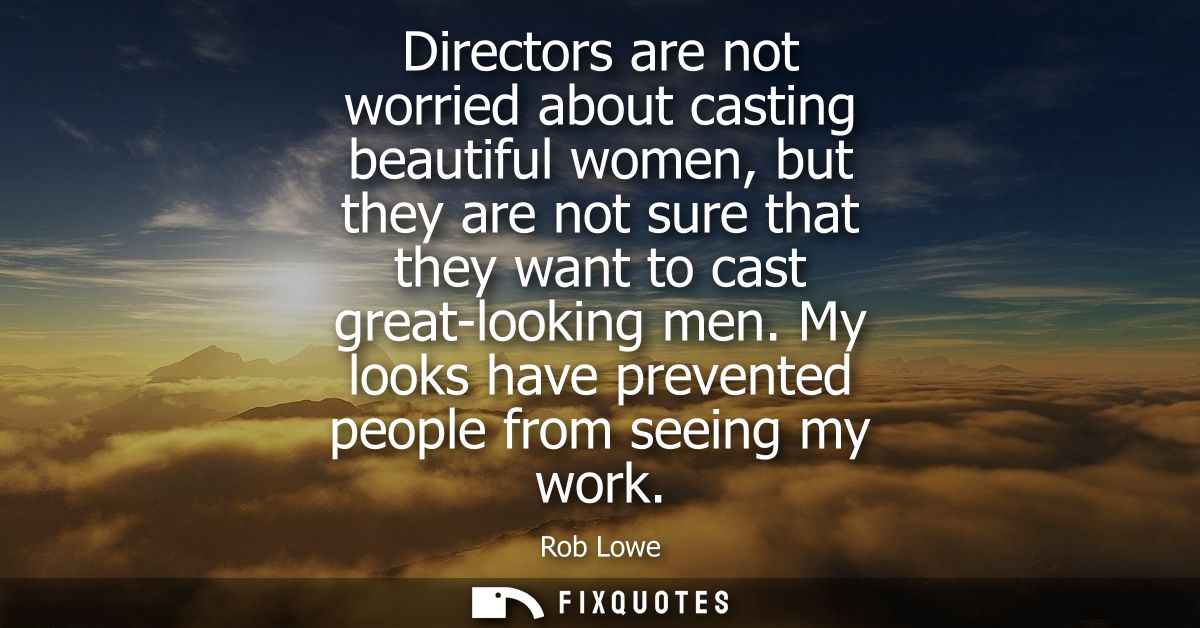
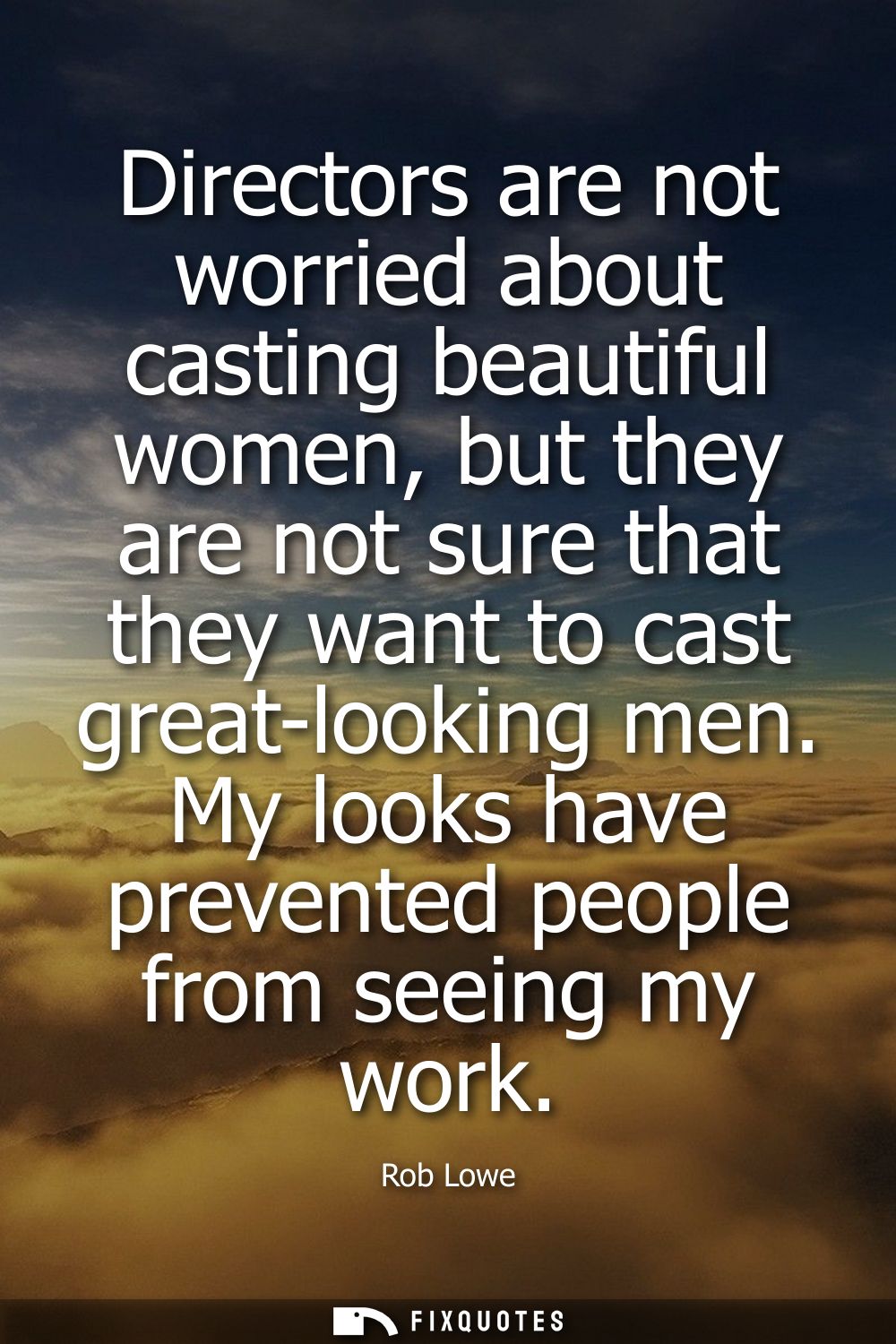
"Directors are not worried about casting beautiful women, but they are not sure that they want to cast great-looking men. My looks have prevented people from seeing my work"
About this Quote
The line works because it flips the usual lament. Instead of arguing that beauty opened doors, he’s arguing it closed them by narrowing the roles people imagine him inhabiting. That’s not self-pity so much as brand friction. In the 1980s and 1990s, Lowe’s face became a cultural shorthand: Brat Pack, tabloid heat, glossy charisma. When a public image hardens into a logo, audiences (and executives) stop watching for craft; they watch for confirmation of the image they already purchased.
The subtext is about legitimacy. Acting is an invisible labor, and Lowe is describing how good looks become “noise” that drowns out technique. There’s also an implied critique of casting conservatism: producers worry that viewers will resent or distrust a handsome man in serious parts, as if masculinity requires a little roughness to read as real. Lowe’s frustration is ultimately about control - the gap between who he is on screen and what the culture insists on seeing.
Quote Details
| Topic | Movie |
|---|---|
| Source | Help us find the source |
| Cite |
Citation Formats
APA Style (7th ed.)
Lowe, Rob. (2026, January 15). Directors are not worried about casting beautiful women, but they are not sure that they want to cast great-looking men. My looks have prevented people from seeing my work. FixQuotes. https://fixquotes.com/quotes/directors-are-not-worried-about-casting-beautiful-152183/
Chicago Style
Lowe, Rob. "Directors are not worried about casting beautiful women, but they are not sure that they want to cast great-looking men. My looks have prevented people from seeing my work." FixQuotes. January 15, 2026. https://fixquotes.com/quotes/directors-are-not-worried-about-casting-beautiful-152183/.
MLA Style (9th ed.)
"Directors are not worried about casting beautiful women, but they are not sure that they want to cast great-looking men. My looks have prevented people from seeing my work." FixQuotes, 15 Jan. 2026, https://fixquotes.com/quotes/directors-are-not-worried-about-casting-beautiful-152183/. Accessed 12 Feb. 2026.