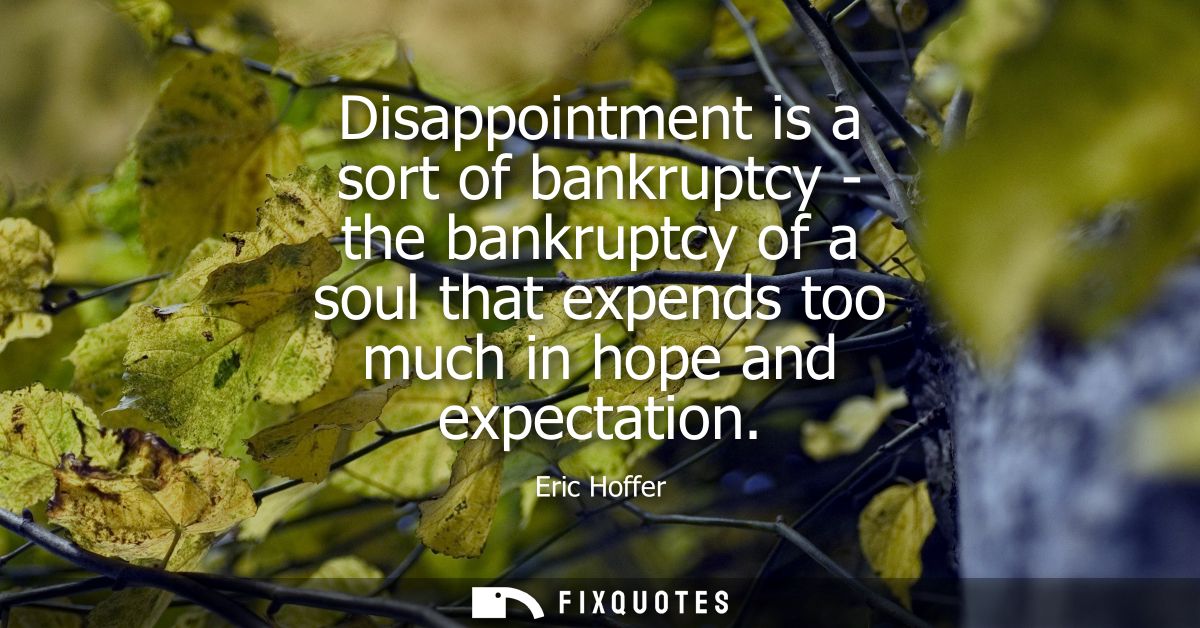
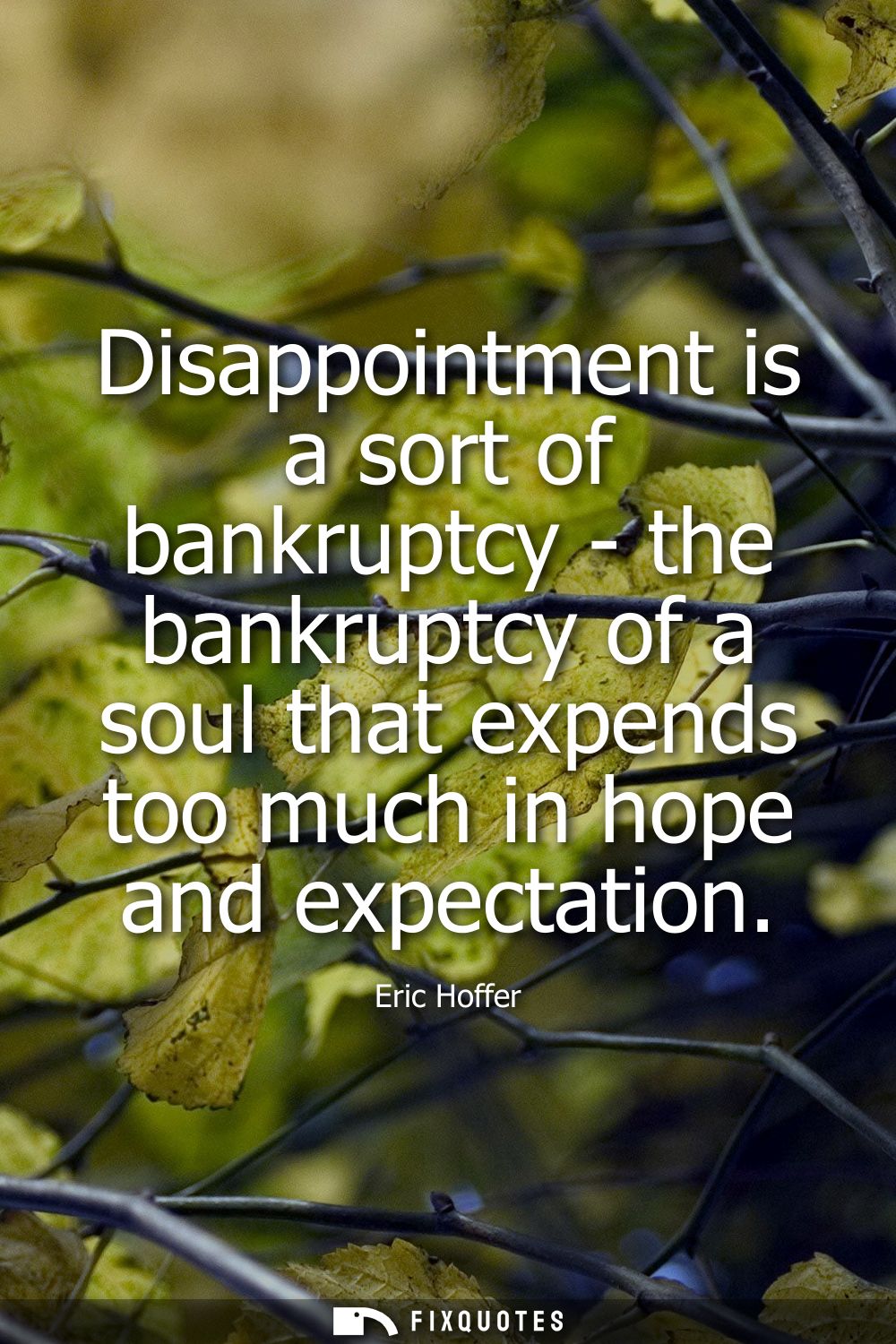
"Disappointment is a sort of bankruptcy - the bankruptcy of a soul that expends too much in hope and expectation"
About this Quote
The subtext is a warning against the moral hazard of optimism. Not optimism as cheerfulness, but as entitlement. If you "expend too much", the problem isnt fate's cruelty; its your budgeting. Hoffer is skeptical of the inner consumer who keeps buying visions of how things should turn out, then blames the world when the delivery fails. That skepticism reflects his broader interest in mass movements and the psychology of grievance: people with depleted inner accounts are easier to recruit, because they need someone to underwrite their sense of loss.
Context matters. Writing in the mid-century American moment of rising prosperity and ideology, Hoffer watched big promises collide with ordinary limits. The quote reads like a piece of stoic accounting for an era intoxicated with guarantees. Its not anti-hope so much as pro-solvency: keep expectations proportionate, or disappointment wont just visit you; it will repossess you.
Quote Details
| Topic | Sadness |
|---|---|
| Source | Help us find the source |
| Cite |
Citation Formats
APA Style (7th ed.)
Hoffer, Eric. (2026, January 15). Disappointment is a sort of bankruptcy - the bankruptcy of a soul that expends too much in hope and expectation. FixQuotes. https://fixquotes.com/quotes/disappointment-is-a-sort-of-bankruptcy-the-31078/
Chicago Style
Hoffer, Eric. "Disappointment is a sort of bankruptcy - the bankruptcy of a soul that expends too much in hope and expectation." FixQuotes. January 15, 2026. https://fixquotes.com/quotes/disappointment-is-a-sort-of-bankruptcy-the-31078/.
MLA Style (9th ed.)
"Disappointment is a sort of bankruptcy - the bankruptcy of a soul that expends too much in hope and expectation." FixQuotes, 15 Jan. 2026, https://fixquotes.com/quotes/disappointment-is-a-sort-of-bankruptcy-the-31078/. Accessed 17 Mar. 2026.