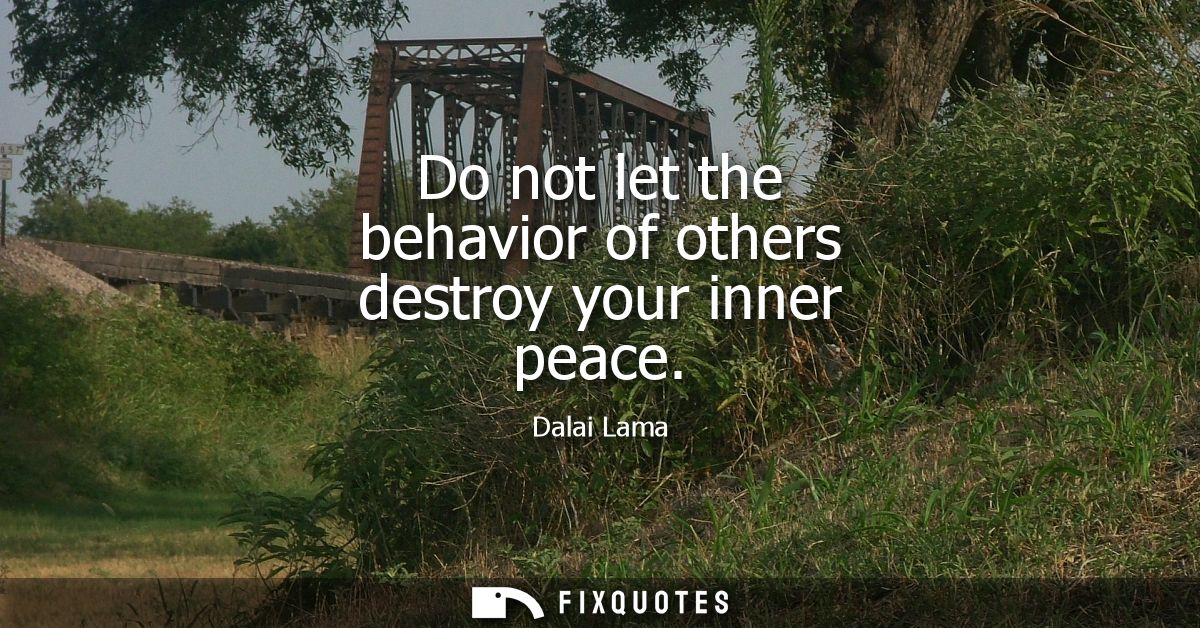
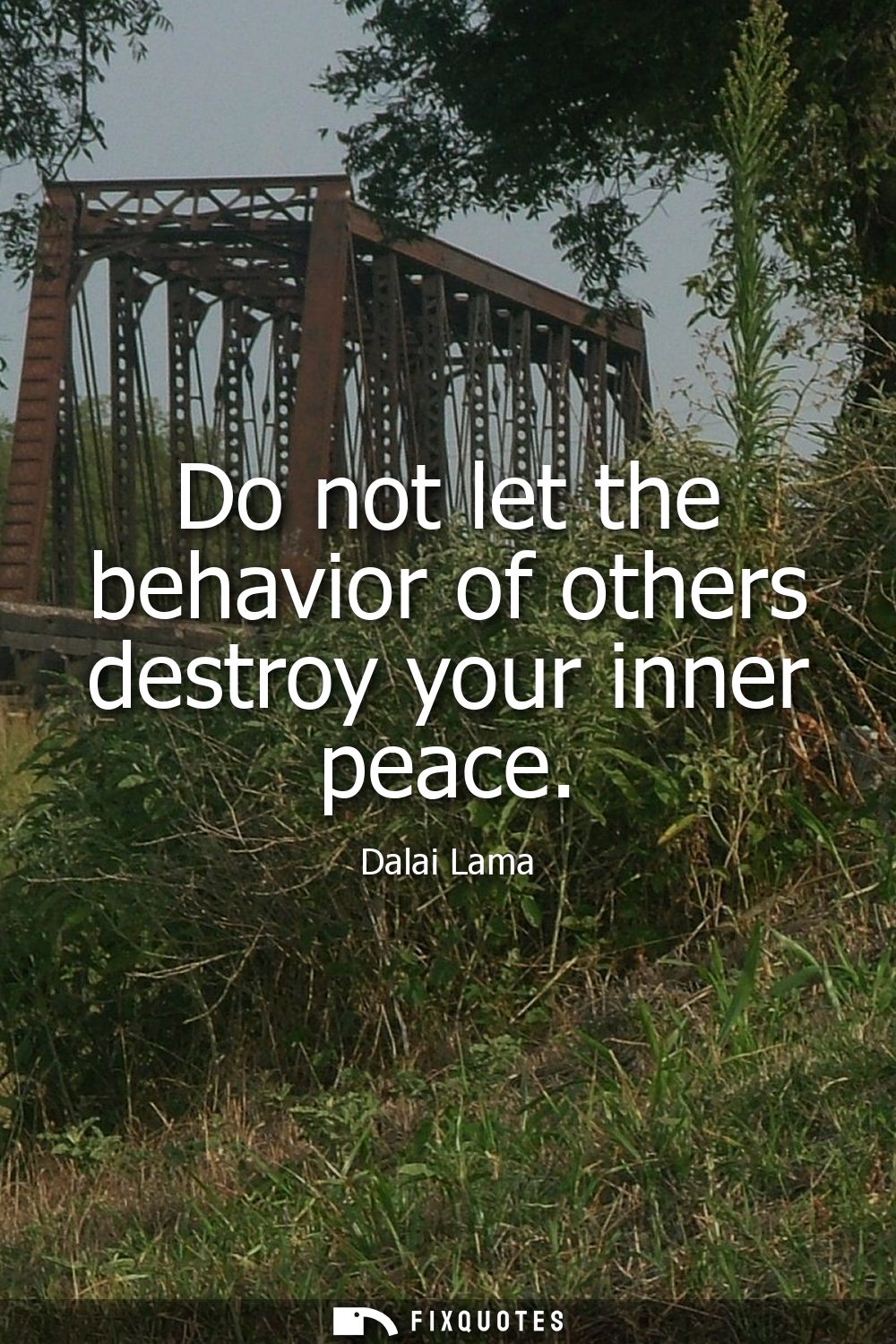
"Do not let the behavior of others destroy your inner peace"
About this Quote
The line lands like a small act of defiance: other people can be loud, unfair, petty, even cruel, but they don’t get to occupy the one territory you can plausibly govern - your own mind. Coming from the Dalai Lama, it’s not a Pinterest-grade call to “stay positive.” It’s a political and spiritual survival strategy forged in the long shadow of exile, global scrutiny, and the daily reality of negotiating with powers that would prefer his composure to crack into rage.
Its intent is pragmatic. “Do not let” frames peace as something actively protected, not passively received. Inner peace becomes a discipline with borders, a choice you re-make when provoked. The subtext is sharper than it first appears: other people’s behavior is uncontrollable, but your reaction is where freedom still lives. That’s classic Buddhist psychology - suffering is amplified not just by what happens, but by the mental story you attach to it. The quote quietly shifts the locus of power away from the offender and back to the self.
There’s also an ethical stake. Refusing to let others “destroy” your peace isn’t the same as excusing them; it’s declining to let their actions recruit you into becoming a worse version of yourself. For a leader defined by nonviolence, this is rhetoric with consequence: anger may feel like moral clarity, but it can also be a leash. The sentence offers an alternative form of strength - not the performative dominance of winning the moment, but the sustained steadiness required to keep choosing the long game.
Its intent is pragmatic. “Do not let” frames peace as something actively protected, not passively received. Inner peace becomes a discipline with borders, a choice you re-make when provoked. The subtext is sharper than it first appears: other people’s behavior is uncontrollable, but your reaction is where freedom still lives. That’s classic Buddhist psychology - suffering is amplified not just by what happens, but by the mental story you attach to it. The quote quietly shifts the locus of power away from the offender and back to the self.
There’s also an ethical stake. Refusing to let others “destroy” your peace isn’t the same as excusing them; it’s declining to let their actions recruit you into becoming a worse version of yourself. For a leader defined by nonviolence, this is rhetoric with consequence: anger may feel like moral clarity, but it can also be a leash. The sentence offers an alternative form of strength - not the performative dominance of winning the moment, but the sustained steadiness required to keep choosing the long game.
Quote Details
| Topic | Peace |
|---|---|
| Source | Help us find the source |
| Cite |
Citation Formats
APA Style (7th ed.)
Lama, Dalai. (2026, January 15). Do not let the behavior of others destroy your inner peace. FixQuotes. https://fixquotes.com/quotes/do-not-let-the-behavior-of-others-destroy-your-172819/
Chicago Style
Lama, Dalai. "Do not let the behavior of others destroy your inner peace." FixQuotes. January 15, 2026. https://fixquotes.com/quotes/do-not-let-the-behavior-of-others-destroy-your-172819/.
MLA Style (9th ed.)
"Do not let the behavior of others destroy your inner peace." FixQuotes, 15 Jan. 2026, https://fixquotes.com/quotes/do-not-let-the-behavior-of-others-destroy-your-172819/. Accessed 12 Feb. 2026.
More Quotes by Dalai
Add to List